

Papua New Guinea is preparing to enter a new frontier in offshore petroleum exploration, with the country's first ultra-deepwater exploration well scheduled to be drilled within the next two months offshore between Central and Milne Bay provinces.
The Mailu-1 exploration well, jointly developed by TotalEnergies EP Kundu Limited and PETRONAS, is regarded as one of the most ambitious offshore exploration campaigns undertaken in PNG. Industry leaders and government officials believe the project could attract significant foreign investment and help establish the country as an emerging deepwater petroleum province.
Details of the project were presented during a consultative workshop between TotalEnergies and the Central Provincial Government on June 3. The meeting brought together provincial officials, district administrators, sector managers, local leaders and other stakeholders to receive updates on project objectives, operational timelines, environmental safeguards, safety standards and stakeholder engagement plans.
Acting Central Provincial Administrator Magini Raga said the consultation was an important step in ensuring government agencies and communities remained informed about a project with potentially significant implications for the country's energy sector.
The venture could create opportunities for economic growth, employment, business participation and infrastructure development while supporting PNG's long-term energy ambitions.
"This project has the potential to contribute significantly to Papua New Guinea's energy sector while creating opportunities for economic growth, employment, business participation and infrastructure development within our province," Raga said.
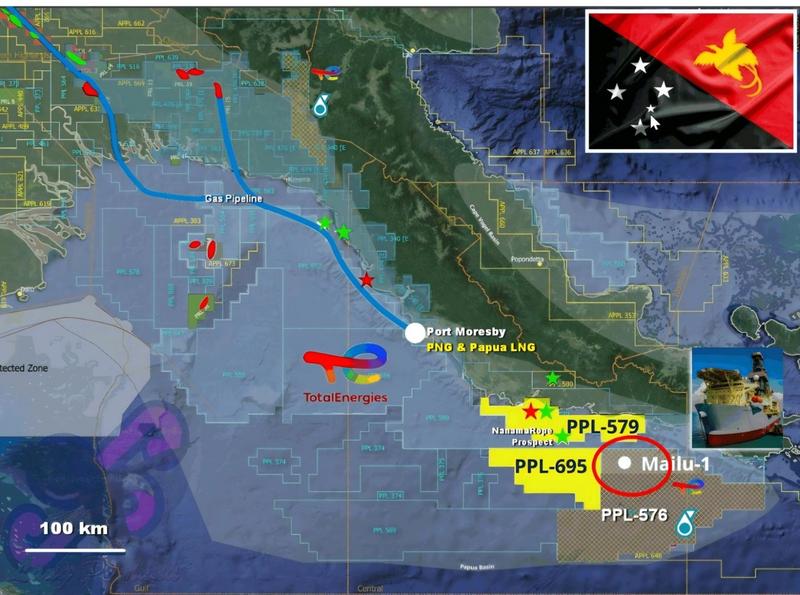
Located about 60 kilometres offshore within the Torres Sub-Basin, the Mailu-1 prospect straddles the maritime boundary between Central and Milne Bay provinces. The well will target a large Eocene carbonate structure in water depths exceeding 2,000 metres, making it the deepest offshore drilling operation ever attempted in PNG.
The project is being undertaken through a 50-50 partnership between French energy major TotalEnergies and Malaysian state-owned energy company PETRONAS, which acquired a 50 per cent interest in the licence in September 2024.
If successful, the exploration campaign could open a new phase of petroleum development in PNG by extending exploration activities into offshore areas that have remained largely unexplored.
Deputy Governor for Central Province and President of the Aroma Coast Local Level Government Desmond Baira emphasised the importance of maintaining close engagement between the developer, provincial authorities and local communities as drilling preparations advance.
Baira said clear communication with affected communities would be critical to securing broad support for the project.
"We hope that through these engagements, both the Central Provincial Government and the Amazon Bay Local Level Government will be fully informed so that we can collectively work together to support this ultra-deepwater drilling program, which is a first in Papua New Guinea," Baira said.
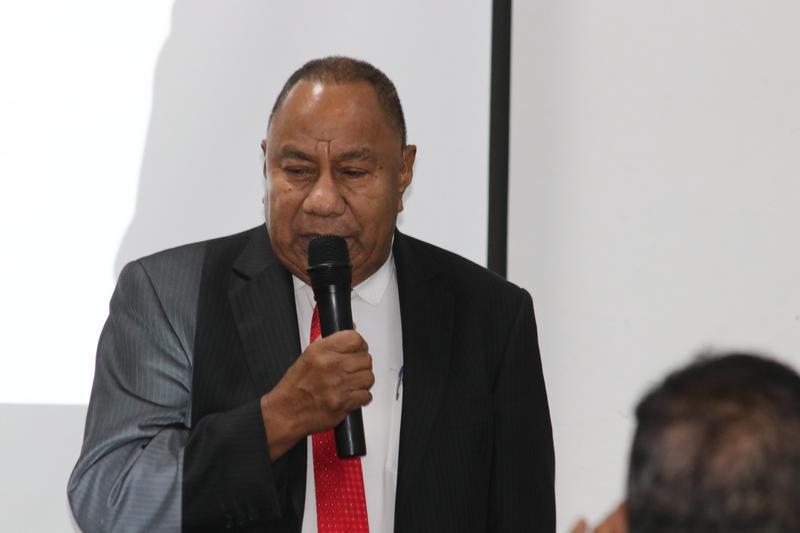
TotalEnergies Deputy Public Affairs Manager Ian Marru outlined the regulatory framework governing the project, noting that all activities are being conducted under Petroleum Prospecting Licence 576 and in accordance with PNG's Oil and Gas Act 1998.
Marru stressed that Mailu-1 remains an exploration project and that discussions on resource development, social mapping and broader stakeholder consultations would only proceed if commercially viable hydrocarbons are discovered.
"Remember this drilling is only the exploration stage. Once drilling occurs offshore and we do find gas or oil, then consultations will continue and this is where social mapping and related processes take place," Marru said.
TotalEnergies HSSE Director Claire Viaud said drilling is expected to begin within two months and continue for approximately 47 to 50 days.
Viaud described Mailu-1 as a frontier wildcat well designed to test a previously unexplored geological structure in a region where deepwater exploration has been limited.
"A successful discovery could have far-reaching implications for Papua New Guinea's energy future. We have the highest standards for safety whilst drilling and for the environment," Viaud said.
Beyond its exploration objectives, Mailu-1 is being closely watched by investors and industry participants. A commercial discovery could position PNG among a growing group of countries attracting investment into deepwater petroleum developments.
Recent offshore discoveries in countries such as Guyana and Namibia have demonstrated how successful frontier exploration campaigns can generate substantial government revenues and attract significant foreign direct investment.
The project will also test PNG's capacity to support technically complex offshore energy developments. Ultra-deepwater drilling requires substantial capital investment, advanced technology and rigorous environmental and safety management systems.

During the workshop, stakeholders raised questions about technical challenges, operational costs, environmental protection measures and geological uncertainties associated with drilling at depths exceeding two kilometres below sea level. Project representatives responded by outlining the safety protocols, environmental management plans and regulatory oversight mechanisms that will govern the programme.
Recognising the project's cross-provincial significance, TotalEnergies confirmed that similar consultation sessions will be held with the Milne Bay Provincial Government and the Suau Local Level Government to ensure stakeholders on both sides of the project area remain informed throughout the exploration process.
As preparations continue, government officials and industry stakeholders increasingly view Mailu-1 as a strategic opportunity to expand PNG's petroleum sector into new offshore areas and potentially unlock a significant source of long-term economic growth.
Central Province Governor Rufina Peter has been regularly briefed on developments, alongside national agencies including the National Petroleum Authority, as PNG moves closer to what could become one of the most significant offshore exploration campaigns in its history.


