In operating theatres, surgery can change a life in a matter of hours. For physiotherapist Cathy Pius, however, true transformation unfolds in the weeks and months that follow — in the slow, determined journey of rehabilitation, recovery and renewed hope.
Based at Modilon General Hospital in Madang, Cathy works under the Madang Provincial Health Authority (MaPHA), delivering rehabilitation services to patients recovering from general surgery, trauma, burns, and complex plastic and reconstructive procedures. Her role extends beyond bedside care; she also supervises physiotherapy students and junior staff, helping to build a stronger and more skilled health workforce in Papua New Guinea.
“I don’t think everyone realises how critical physiotherapy is,” she says. “Surgery repairs the structure, but rehabilitation restores function — helping people return to their families, their work and their communities.”
A journey shaped by service
Cathy’s professional journey has been deeply influenced by her longstanding involvement with Interplast, an international organisation delivering reconstructive surgery and specialist training across Asia and the Pacific. She was first introduced to the program in 2014 during her early training years at Modilon Hospital.
“At the time, Interplast was looking for local health workers who could provide ongoing care, stay in touch with the visiting team and support patients after surgery,” she recalls. “I took on that role for rehabilitation in Madang, and from there my involvement grew.”
Over the years, Cathy has worked closely with visiting hand therapists, receiving mentoring and specialist training. When Interplast expanded its outreach to other provinces, including East Sepik, she was invited to join the team — most recently supporting a two-week specialist visit to Wewak.
Growing complexity, growing capacity
During the Wewak visit, Cathy observed a clear shift in both the scale and complexity of cases being treated.
“We’re seeing more patients, a greater variety of conditions, and much more complex injuries,” she explains. “Cases are carefully screened by local surgeons, and those selected require both surgical expertise and intensive rehabilitation.”
This growing caseload has also led to larger, more diverse teams, with local and international surgeons, anaesthetists, nurses and therapists working side by side. Importantly, programs are now being extended to allow more time for post-surgical care and hands-on training for local staff.
“This makes a huge difference,” Cathy says. “Patients receive better follow-up care, and local physiotherapists gain practical skills they can continue using long after the visiting teams have left.”
Why specialist outreach matters
Like Madang, East Sepik Province sees a high number of congenital conditions, trauma cases and burn injuries, often caused by bush knife wounds or domestic accidents. When these injuries affect hands or limbs, the consequences can be life-altering.
“Without specialist surgery and rehabilitation, people can be left with permanent deformity or disability,” Cathy explains. “That affects everything — their ability to work, care for themselves, and participate in daily life.”
While local medical teams work tirelessly with limited resources, Cathy emphasises that specialist outreach programs like Interplast are essential not only for patient care but also for building long-term clinical capacity.
Rehabilitation: where healing continues
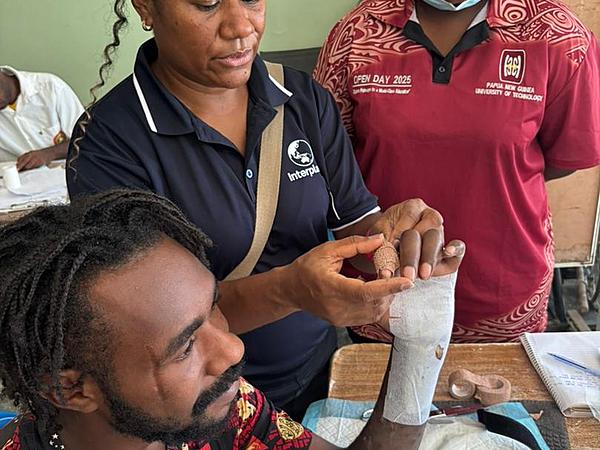
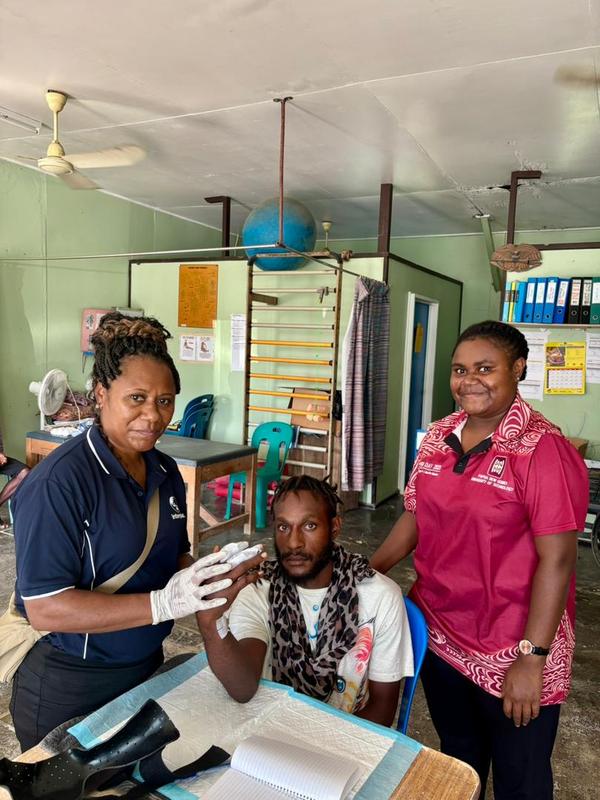
Cathy’s work with post-surgical patients begins even before an operation takes place. Pre-operative sessions focus on education, emotional preparation and physical conditioning. After surgery, her attention shifts to pain management, swelling reduction, mobility restoration and carefully guided exercises.
“For hand injuries, we start by protecting the repair — making sure splints are comfortable, swelling is controlled, and movement is introduced safely,” she explains. “As healing progresses, we gradually increase activity until the patient can return to real-life tasks.”
The goal is always functional recovery — whether it’s holding a pen, returning to gardening, caring for a baby, or earning a living.
“Sometimes the improvement seems small,” Cathy says. “But for the patient, it can mean everything.”
The human challenge behind recovery
Despite successful surgery, many patients struggle to complete their rehabilitation. Long distances to hospital, financial pressures, emotional stress and limited family support can all become barriers. Some patients believe surgery alone is sufficient, only to return later with complications.
“To address this, we take a holistic approach,” Cathy explains. “We educate patients, encourage early and safe movement, and involve families as much as possible. When patients understand the process and see progress, their confidence grows.”
For Cathy, seeing patients complete the journey and return with success stories remains the most rewarding part of her work.
Building skills, strengthening systems
Beyond patient care, Cathy sees one of Interplast’s greatest impacts in skills transfer. Each outreach visit includes mentoring, teaching sessions and on-the-job training, creating ripple effects across the health system.
“I was once a trainee myself,” she says. “Now I assist my mentors in training others, and I pass that knowledge on to students and junior colleagues.”
Back at Modilon Hospital, Cathy applies these skills daily, helping ensure that patients in Madang and beyond can access specialist-level care closer to home.
A quiet pride in service
Asked what being part of Interplast means to her as a Papua New Guinean health worker, Cathy pauses.
“It’s a sense of humble pride,” she says. “Knowing that I’m helping rebuild the lives of my own people — restoring function, dignity and hope.”
For her patients, that hope often begins with a simple movement — a hand opening, a step forward, a life restarting.
Cathy’s recent participation in the Wewak outreach was made possible through the support of Frieda River Limited (FRL), whose partnership with Interplast continues to strengthen access to specialist healthcare services in Papua New Guinea. Through this collaboration, FRL supported Cathy’s travel, meals and accommodation, enabling her to contribute her expertise and provide critical post-surgical rehabilitation to patients.
By investing in local health professionals, FRL is helping ensure that specialist knowledge and care extend well beyond a single outreach visit — building local capacity and delivering lasting benefits to communities most in need.