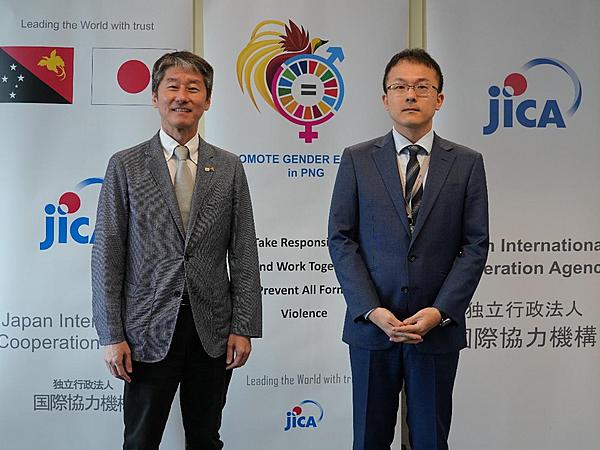
The Japan International Cooperation Agency (JICA) has appointed Shirouzu Kenichi as chief representative of its Papua New Guinea office, effective 15 April, replacing Matsuoka Hideaki, who will depart the country on 19 April to return to the agency’s headquarters in Tokyo.
Shirouzu has served as senior representative (deputy chief) since April 2025 and assumes leadership as JICA continues to expand its development programmes in the country.
In a farewell message, Matsuoka said his tenure since September 2023 had been marked by close cooperation with the government and communities across Papua New Guinea, underscoring the long-standing partnership between the two countries. “I have had a wonderful time working with the government and people of Papua New Guinea over the past two years and seven months,” he said.
JICA has operated in Papua New Guinea since 1974, a year before independence, delivering Japan’s official development assistance through loans, grants and technical cooperation. The agency’s cumulative support has reached about 6.8 billion kina, alongside the deployment of more than 3,000 experts and missions, over 800 volunteers, and training for nearly 5,000 Papua New Guinean officials in Japan.
Matsuoka highlighted several milestones during his tenure, including the opening of Nadzab Tomodachi International Airport in October 2023, attended by Prime Minister James Marape. “There’s no reason PNG businesses and communities should be left behind as infrastructure improves,” he said, noting the airport’s name, derived from the Japanese word for “friendship”, reflected bilateral ties.
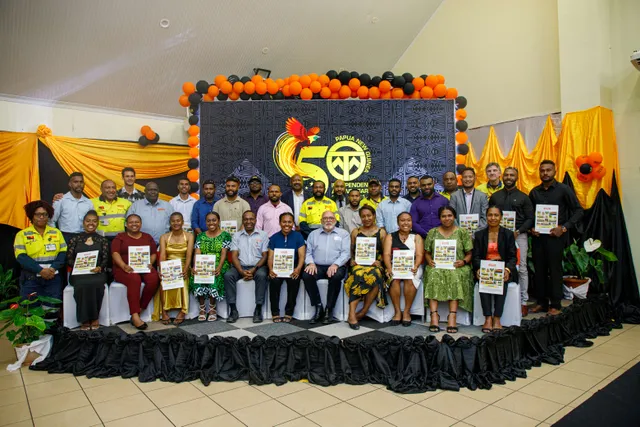
He also cited the 50th anniversary of Japan’s ODA in Papua New Guinea, marked in October 2024, and continued cooperation with the National Fisheries Authority, including efforts to expand the National Fisheries College in Kavieng. “I sincerely appreciate the strong support of the Papua New Guinea government and our partners in making these initiatives possible,” he said.
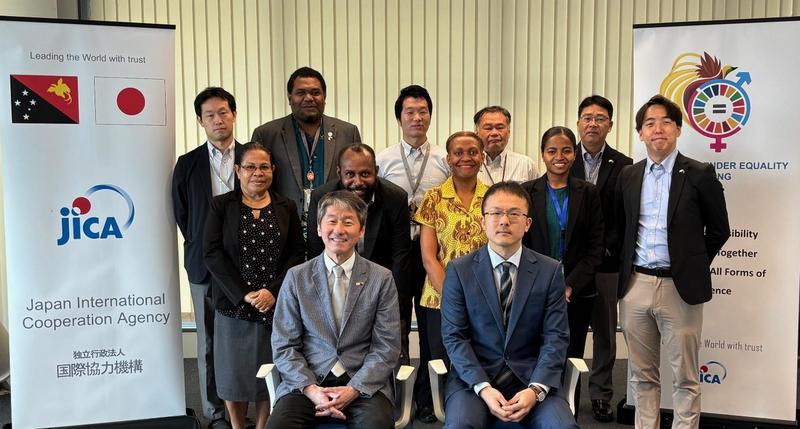
JICA’s volunteer programme, which resumed in August 2023 after a pandemic-related pause, has since deployed personnel to multiple provinces, supporting sectors such as education, agriculture, health and community development. “Our volunteers play an important role in sustaining the friendship between our two nations,” Matsuoka said.
In education, JICA partnered with the National Department of Education to develop and distribute mathematics and science textbooks for Grades 3 to 6 nationwide — the first locally produced materials of their kind. The initiative has since been extended to lower grade levels with support from development partners.
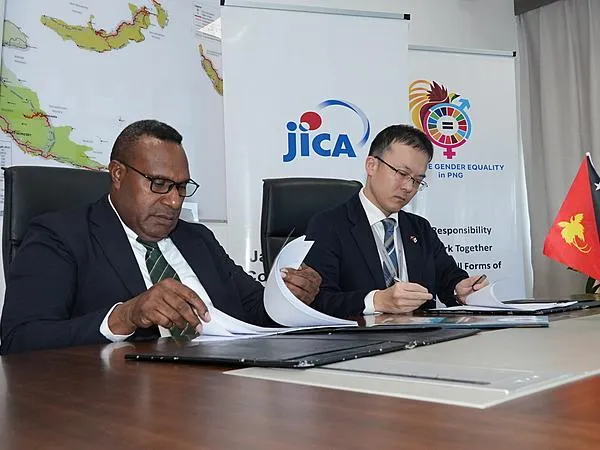
Matsuoka said gender equality and community engagement remained central to JICA’s work, including participation in International Women’s Day activities in Port Moresby. “We should always remind ourselves of the importance of gender equality and take action to protect women and girls,” he said.
Despite ongoing development challenges, he expressed confidence in Papua New Guinea’s long-term prospects. “This country has great potential to develop further with its rich natural and human resources,” he said. “With the right will and integrity, Papua New Guinea has a bright future.”
Shirouzu, who has worked on JICA projects across Southeast Asia, including the Philippines, Thailand and Myanmar, said he intends to build on existing programmes and deepen bilateral cooperation. “While Papua New Guinea faces development challenges in infrastructure, education and health, I also see significant potential,” he said.
“I would like to continue contributing to the development of this beautiful country and to strengthening the relationship between Papua New Guinea and Japan,” Shirouzu added.
JICA said it would continue working with the government and stakeholders to support economic and social development while strengthening ties between Papua New Guinea and Japan.