

Augustus Minerals is expanding its footprint across Papua New Guinea’s gold sector through licence applications and a strategic position in the approval queue for the Mount Kare Gold Project, while advancing early-stage drilling at its Music Well Gold Project in Western Australia.
The company’s dual-track strategy reflects a balance between near-term exploration activity in Australia and longer-term positioning in Papua New Guinea, where progress remains contingent on regulatory approvals and stakeholder processes.
Mt Kare positioning highlights conditional upside
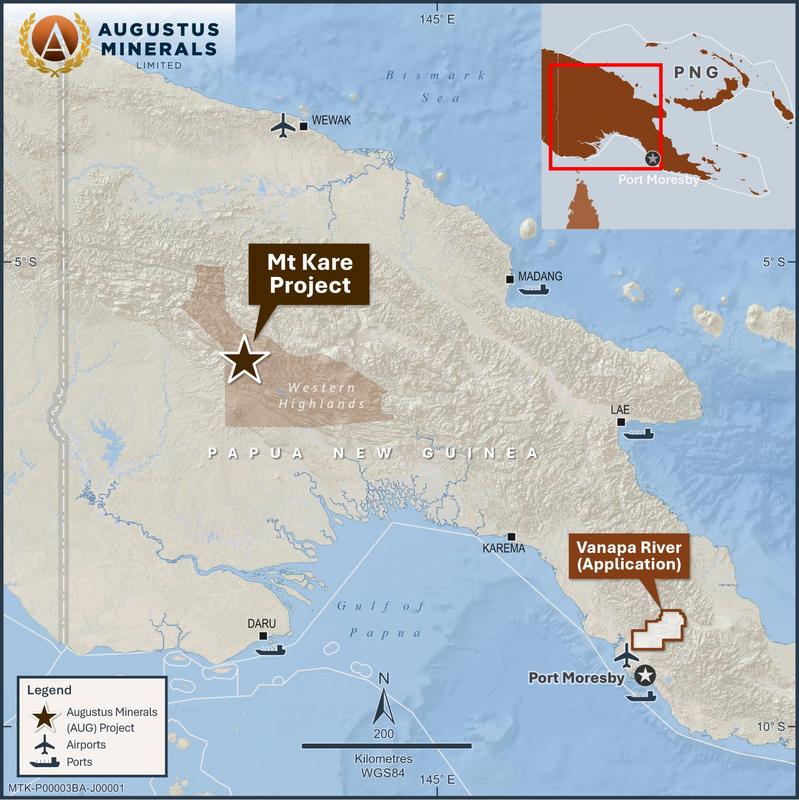
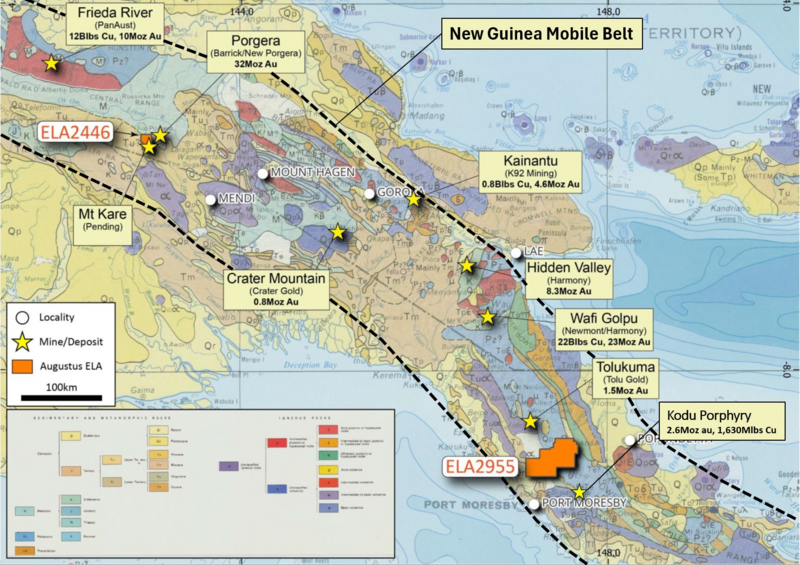
Augustus’ wholly owned subsidiary, ACMPNG, is currently second in line to be considered for Mt Kare following the removal of a prior application from Papua New Guinea’s tenement register. The project lies about 15 kilometres south of the Porgera Gold Mine and sits within the same regional mineralised corridor.
Mt Kare hosts a historical, non-JORC-compliant resource of approximately 2.1 million ounces of gold and 18 million ounces of silver, placing it among the larger undeveloped gold deposits in Australasia. However, Augustus does not hold the licence, and its position in the queue means the project will only become available if the leading application fails to meet regulatory or landowner requirements.
Under Papua New Guinea’s mining framework, the granting of development rights depends on approvals from the Mineral Resources Authority and alignment with customary landowners. As such, the Mt Kare opportunity represents potential upside rather than a secured asset.
Tolukuma corridor application expands footprint
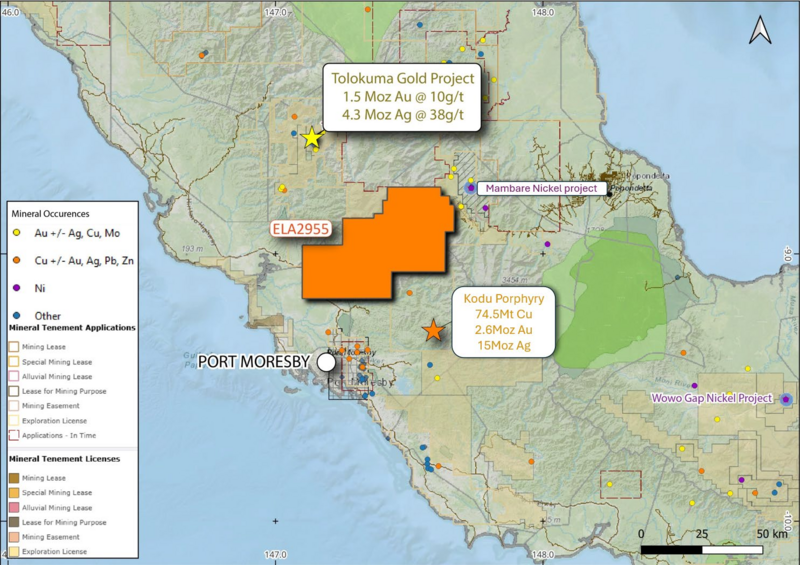
In parallel, Augustus has applied for exploration licence ELA2955, covering roughly 1,900 square kilometres along strike from the Tolukuma Gold Mine within the Papua New Guinea Mobile Belt — a 2,300-kilometre mineralised corridor known for hosting large gold and copper deposits.
The licence area lies within trucking distance of Port Moresby and near the historic Kodu copper-gold prospect, although no fieldwork has yet been undertaken and the application remains subject to approval.
WA drilling delivers early indications of broader system
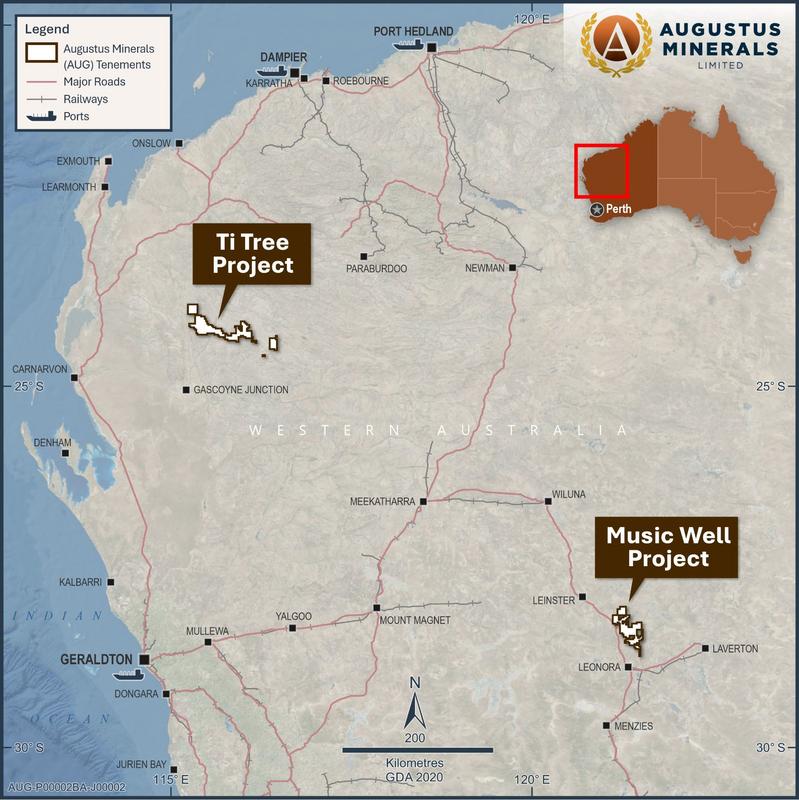
While its PNG assets remain at an early stage, Augustus’ most immediate activity is centred on the Music Well Gold Project, where the company has completed its maiden drilling campaign at the Clifton East prospect.
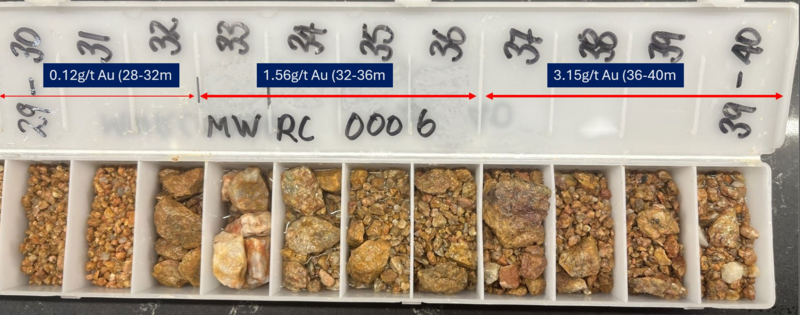
The programme comprised 11 reverse circulation holes for a total of 1,100 metres, representing the first drilling undertaken across the broader tenement area. Results from 4-metre composite samples returned multiple gold intersections, including:
- 16 metres at 1.46 grams per tonne (g/t) gold from 28 metres, including 12 metres at 1.91g/t
- 12 metres at 0.80g/t gold from 68 metres
- 32 metres at 0.90g/t gold from 40 metres, including 4 metres at 2.72g/t
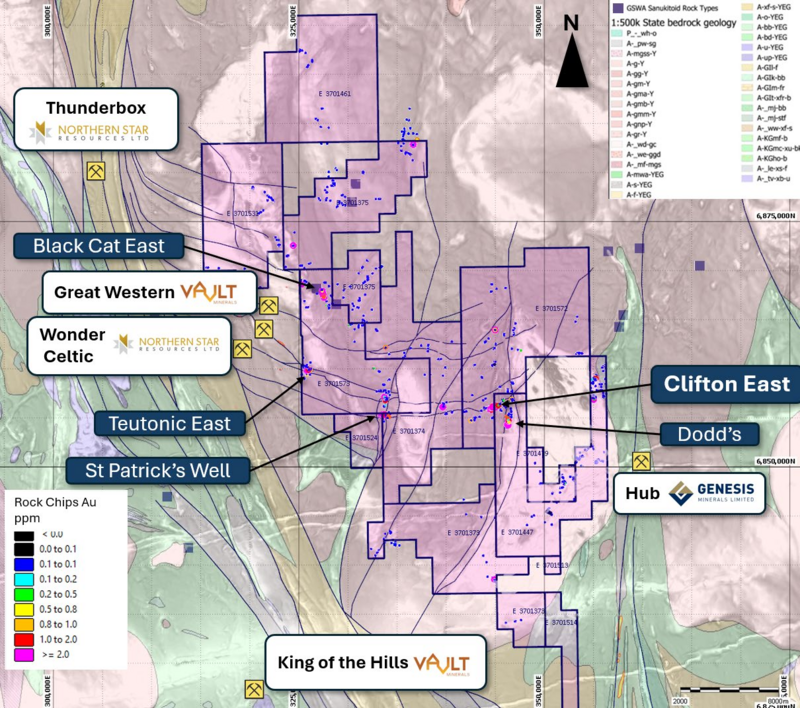
Gold mineralisation above 0.1g/t was intersected in 8 of the 11 holes, with drilling to date covering approximately 350 metres of a broader 1.2-kilometre trend defined by soil anomalies and high-grade surface rock chips.
Mineralisation is hosted predominantly within granitic rocks of the Bundarra Batholith, with associated dolerite and lamprophyre dykes interpreted to reflect structurally controlled systems. Geochemical signatures showing a silver-bismuth-molybdenum-tellurium association and low arsenic levels are consistent with a granitic-related setting.
Surface sampling has returned high-grade rock chip results of up to 50.3g/t gold, supporting the prospectivity of the target area. Mineralised zones are interpreted to dip moderately to the northwest, although true widths remain uncertain as results are reported as downhole intervals.
Follow-up work to define continuity
The current results are based on 4-metre composite sampling, with one-metre assays yet to be completed. These are expected to provide greater clarity on grade distribution and continuity, and will guide follow-up drilling at Clifton East.
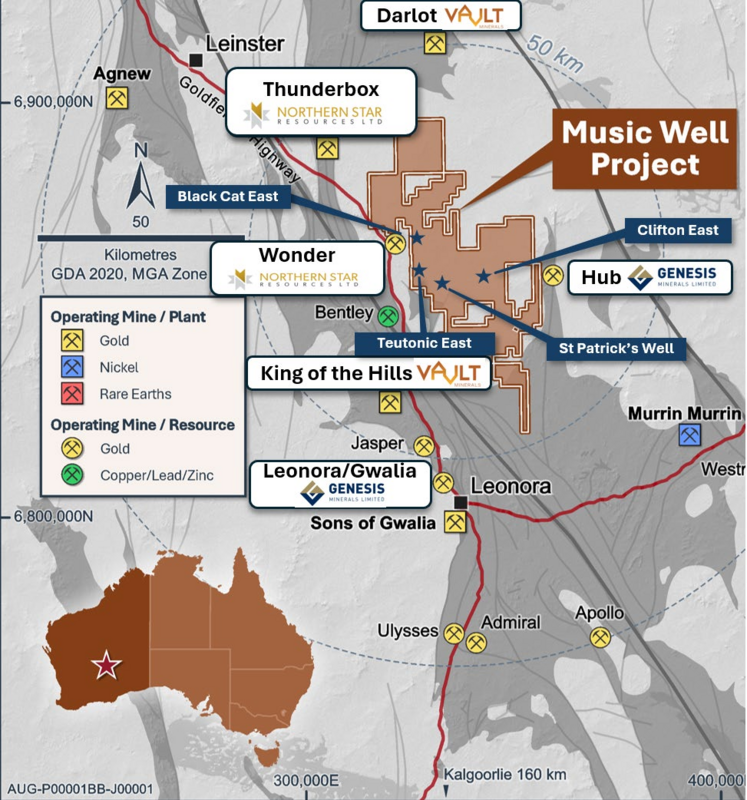
Additional targets across the Music Well project — including St Patrick’s Well, Black Cat East and Teutonic East — are scheduled for further exploration, with drilling planned through 2026.
Despite the encouraging early results, the company noted that current data spacing remains insufficient to establish the degree of geological and grade continuity required to support a Mineral Resource estimate.
Early-stage profile underscores execution risk
Augustus remains an early-stage explorer, with progress across both jurisdictions dependent on exploration success and access to funding.
Its approach — combining near-term drilling in Western Australia with longer-term exposure to Papua New Guinea — reflects a typical junior exploration strategy aimed at balancing discovery potential with high-impact optionality.
Outlook tied to drilling results and tenure progress
In the near term, investor focus is likely to centre on the pending one-metre assay results from Clifton East, which will provide a clearer indication of the grade profile and scale of mineralisation at Music Well.
At the same time, progress on Mt Kare and the Tolukuma corridor application will determine whether Augustus can convert its Papua New Guinea positioning into tangible project ownership.
For now, the company remains at an early stage, with its valuation closely tied to exploration outcomes and regulatory developments.


