October 03, 2022

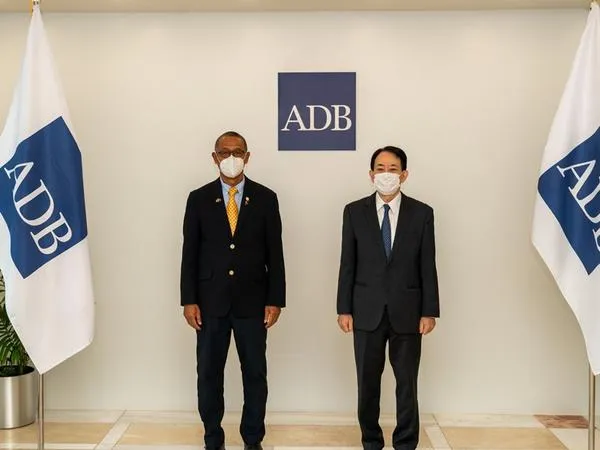
Photo credit: ADB

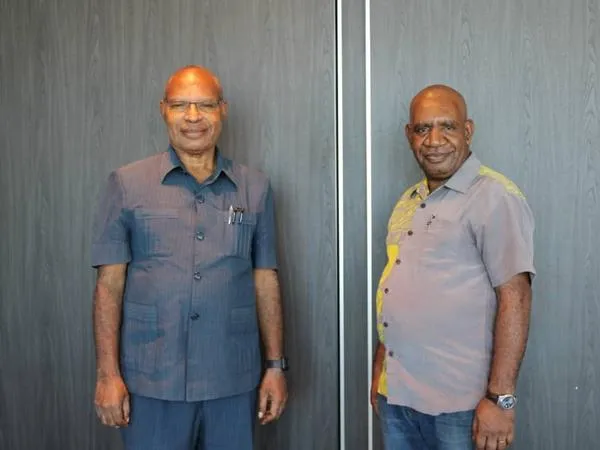
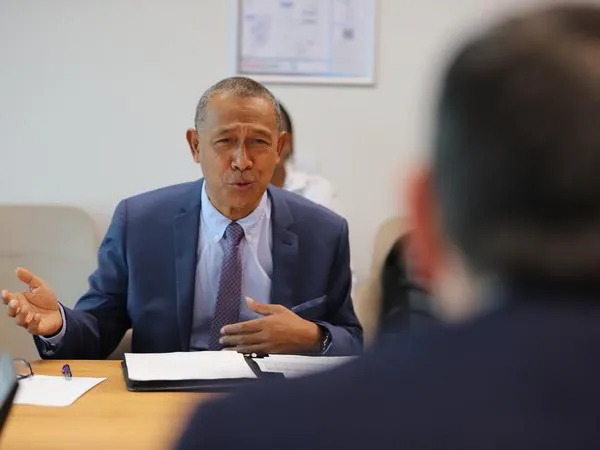
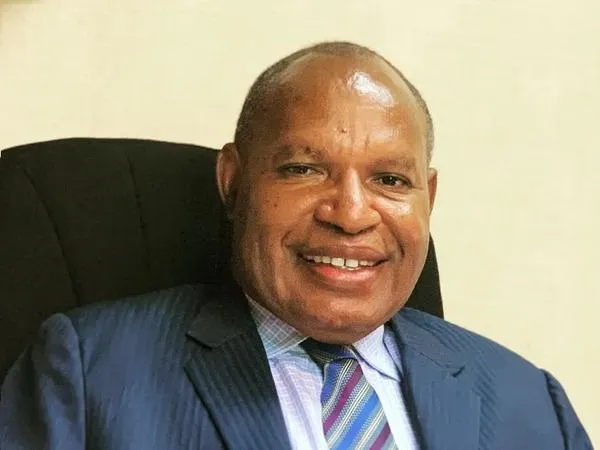
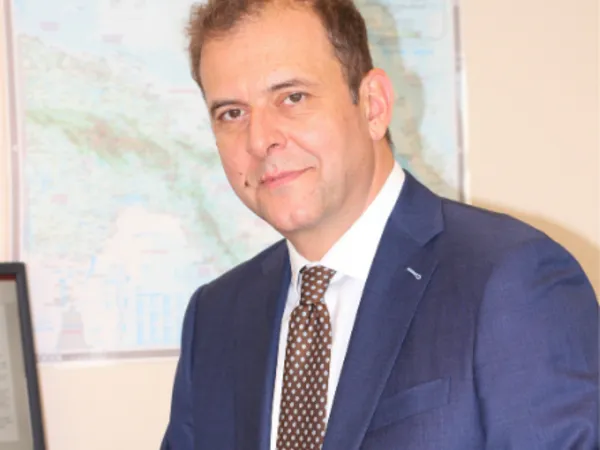
Masatsugu Asakawa, the president of the Asian Development Bank, and Treasurer Ian Ling-Stuckey recently met in Manila, Philippines.

Following this meeting, Treasurer Ling-Stuckey stated that the ADB has been PNG's largest and most dependable multilateral aid donor, having contributed approximately $US4.26 billion (K15 billion) in aid to PNG since 1977, encompassing 292 projects.

He claimed that the majority of this assistance went to the transportation industry, including airports and road projects. Twenty percent of it went to the crucial health industry, and significant sums were also given to public sector management, energy, agriculture and rural development, finance, education, and water projects.

In honouring these 45 years of service, Mr. Ling-Stuckey thanked ADB on behalf of the James Marape-led PNG government.

“We continue to face uncertain economic times, and it is reassuring that we have the ADB as a friend to stand with us now and as we continue the Marape-Rosso Governments economic reform program.

“In the discussions, I also highlighted the valuable interactions we have with the local ADB office headed by Mr. David Hill. His leadership is well-admired across government as a good listener and pro-active contributor to policy discussions within PNG,” Mr. Ling-Stuckey said.

“He leads a good team located in Port Moresby but extensively traverses PNG.

“I explored further possibilities for expanding technical assistance through his office.

“The President and I then discussed the challenging environment facing all countries in the region.

The global impacts of COVID-19 were still depressing the speed of economic recovery.”

The difficulties brought on by climate change, as well as ADB's desire to help, according to Mr. Ling-Stuckey.

“There was also a good discussion of the broader strategic environment and challenges facing the region.

I greatly welcomed listening to the ADB President’s wisdom on such issues, as well as sharing some PNG perspectives” stated the Treasurer.


Reference: Post-Courier (27 September 2022). “ADB President Welcomes Treasurer In Manila”. 

October 03, 2022

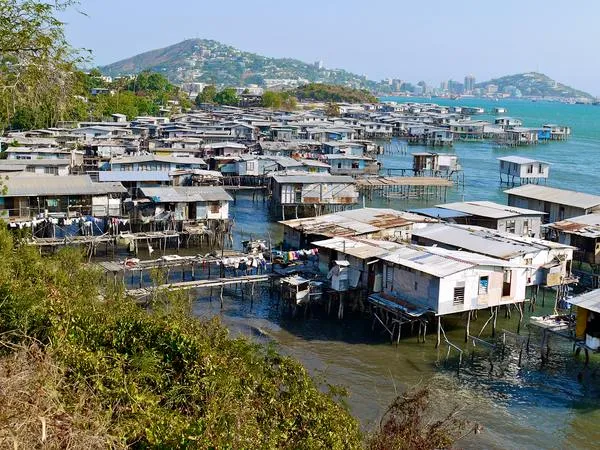
The long-awaited realization of quality services from the government has seen a real estate boom mainly from property owners in the Small to Medium Enterprise Sector (SME) in the Moresby South electorate of NCD. A rapid transformation from the shanty colonial suburbs to a modern looking electorate has created an abundance of opportunities for property owners, small businesses, and residents in and around the electorate.

Recently after retaining his seat current Member for Moresby South and newly appointed Minister for Foreign Affairs and International Events, Hon Justin Tkatchenko highlighted that he was humbled and overwhelmed by the huge support shown by the people of Moresby South and stressed on the development aspects of his electorate.

 “I am satisfied that Moresby South is setting the standard in many different ways under my leadership and I thank the administrative staff and others who have ensure that requirements by laws are fulfilled. “This is important in the use of public funds,” Mr. Tkatchenko said.

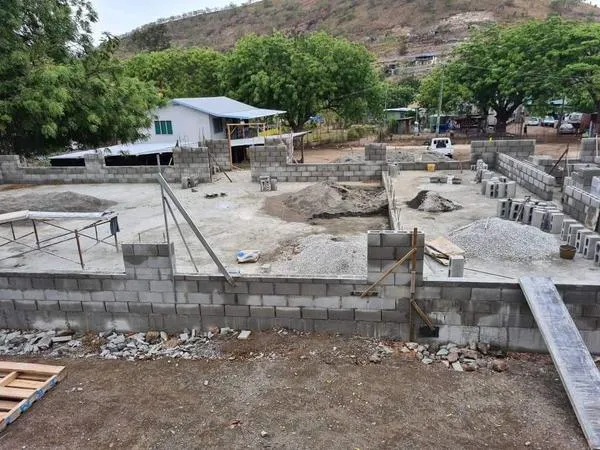
The development in the electorate has made way for the creation of businesses with the building of Housing and rental properties along the Motu Koitabu villages of Mahuru, Kilakila, Pari and around the suburbs of Sabama and Joyce bay has been quite a remarkable turnaround from its original state and has fast become a potential prospect for the real estate industry.

A notable example is the back-hill road that connects from scratchy road leading towards the Joyce bay sewerage plant. The hillside area along this back road is now occupied with newly built Modern styled houses and the area has been largely in demand for land purchases particularly because of the magnificent view and also from the lighting at night that overlooks the shoreline from Joyce bay and continues up around to the newly built state of the art Butuka Academy School and stretches across Scratchly road down to Badili.

There is already a hotel in place in the area which has created opportunities for residents and the growth of business has prompted property owners into becoming competitive with rental fees directly resulting in the influx of residents from other parts of the city which has really worked well to the advantage of businesses. The vicinity of shops, markets and bus stops are all within walking distance from each other and is much more convenient for residents which mainly contrast of Public Servants, middle to low income earners and SME's

The sale, leasing and purchasing of land has also become a lucrative market for landowners both at a large and small scale and businesses that are keen for change and development have been at the forefront of purchasing large portions of land for housing and business purposes. Most Homeowners in the area have also sold or renovated and refurbished their homes into quality houses and Duplexes with all the conveniences of a modern home and have ventured into the real estate market as well.

The major factor for this real estate growth is due to the competition of rental properties which have in one way relaxed the constraints of daily livelihood for the residents of the electorate due to reduced rentals. Many residents have stated that the developments taking place around the surrounding suburbs have triggered a population increase in the electorate.

Retired Police officer and Long-time resident and Community leader in the Moresby South area, Anthony Aphranick Guken said “In the past, Moresby South was regarded and labelled as a notorious place in the city, but now there is huge change in infrastructure, roads, markets, schools and health services, this is because of the hard work put in by the business community and the local member to develop and change the electorate”

Adding significantly to this is the construction of a state-owned hospital and recreational facility which will consist of a modern Gym, park and playground. This facilities are all currently in progress with the beautification process slowly taking shape along the footpaths leading to the intended area of construction.

Once a notorious part of the city is now fast becoming a jewel greatly because of the outstanding and tireless efforts of the elected member and the business community in developing and creating a solid profile for the suburbs in this electorate.

September 28, 2022

Treasurer Ian Ling-Stuckey is dismayed at how the 2022 National Elections were conducted and is now looking forward to a complete review of the allocated funds that were spent on the elections.

Ling-Stuckey recently stated in parliament that the government had allocated and funded enough money for the election process to be conducted this year.

“We provided a further K50 million to cover the costs for the 2022 election, bringing the total funding for the election to nearly double the level of expenditure in the 2017 national elections. There was enough money to support a much better election this year, so I look forward to the proposed parliamentary committee examinations of what went wrong and what can be done better” he said.

The Treasurer also expressed concern that there was a decrease in the public servants’ salaries.

He explained that “Once again there is a salary cost overrun. This is K201 million much lower than in previous years, and out of this, over 70 percent is related to teacher wage overruns. We contributed to bring this area under control. After no pay increases during the latest part of the Covid-19 crisis, it is now time to start increasing some salary payments”.

“There is also the need to provide additional funding for the seven new districts that have been created and K3 million each has been provided. There are also new members in existing electorates, and it is appropriate that they be given some funds for commencing programs through to the end of the year. For equity reasons all districts and provinces needed to benefit the same so an additional 2 million per district and province have been allocated bringing the funding back to 10 million per districts and provinces” he said.

Meanwhile there was an announcement on Thursday last week that the Department of personnel management, Treasury and Finance are working together to ensure that there will be a three percent pay increment in the salary of public servants.

This pay increment is to be adjusted and effective by December this year, the welcoming news for public servants was confirmed by the Secretary of the Department of Personnel Management, Taies Sansan.

September 26, 2022

One of the most important issues that is currently affecting lives of low-income earners in Papua New Guinea is Inflation. This vital issue needs to be seriously addressed and implemented by the new government under the leadership of Prime Minister, James Marape and his Deputy, John Rosso.

Treasurer Ian Ling-Stuckey recently passed the supplementary budget of K610 million to particularly address inflation, this is good as it will ease the burden of workers who are paying tax.

The supplementary budget allowed for the reduction of the current inflation rate from 10 percent to about 6.2 percent which shows a difference of 3.8 percent.

When presenting the budget treasurer Ling-Stuckey said as of June 1, this year (2022) wage earners who are paying tax had received up to an extra K42.30 in their fortnightly pay packets. He highly commended this approach and said it was a significant gain to the household pay-packet of a wage earner.

With the scenario of high-income earners and low-income earners in PNG, this is something that can be seen clearly as a big gap difference between these two groups.

For Instance, when comparing a high earner who earns around K10, 000-K12, 000 per fortnight with a low-income earner who gets about K250-K350, it is quite easy to see that the low earner is really affected by inflation regardless of the incentives put in place by the supplementary budget.

Ling-Stuckey when presenting the budget said the package will cover prices of key household commodities. He added that in April this year the Government announced the arrangement made with the Internal Revenue Commission (IRC) and local companies to lower the cost on key household items and they will be granted an equivalent reduction in tax.

Unfortunately, this measure is waiting to be implemented. IRC however has clarified that the change will require some additional legislation in October to be implemented.

With these measures slowly taking shape, goods and services in stores continue to rise with both basic cost of household food items and fresh produce sold in the local vegetable markets.

Expenses such as Bus fare, rentals, school fees for children and hospital bills are also increasing, putting extra burden on low-income earners in the country.

Ling-Stuckey when presenting the budget said the largest component of the package was removed for taxes on all retail fuel products. Even with these changes, it requires time for Public Motor Vehicles to cut down on additional fees that were charged earlier when fuel prices where high.

Belden Namah recently stressed on the floor of parliament that inflation is real, and he is surprised of the impacts it has on the price of goods and services.

PNG Trade Union Congress when congratulating the newly appointed Minister for Labour and Immigration, Bryan Kramer proposed a full review on the minimum wage board (MWB). Currently the MWB approved rate for a low-income earner is about K3.75 per hour but this rate is yet to be fully implemented by some organizations.

Since the rate is yet to come into effect, the question still lingers on the implementation and the monitoring of this approved minimum wage rate. Are there any penalties charged to those employers who are not implementing these rates?

PNG Trade Union Congress General Secretary, Clemence Kanau during a recent press conference asked if Minister Kramer could seek cabinet approval for the institution and the convention of the Minimum Wage Board to be fully reviewed.

Kanau said the increasing price of goods and services is overpowering the value of a meager kina that a worker earns weekly or fortnightly, it cannot sustain the worker for the next one or two working weeks. As it is now the low-income earners of the country are being greatly affected by this dilemma and left to struggle at will.

Effects of this Inflation is also said to be a global crisis arising from factors such as COVID-19 and the Ukraine-Russian War, but it is not good for PNG as we are struggling economically and have about K160 billion in debts to be repaid.

So, if the Government is serious in taking back PNG and making it the richest black nation, it has to take a bold stance to address inflation and hopefully the reviewing of the Minimum Wage Board (MWB) could also be considered.

September 26, 2022

On Papua New Guinea’s Independence Day last Sept. 16, Acting Prime Minister John Rosso assured heads of government, departmental heads, the diplomatic corps, and the country that the government is better and well prepared to deliver services to the people.

During his inaugural independence speech as Acting Prime Minister, Mr. Rosso said: “We are not the new government. We are a continuing government that is better prepared and in the right position to effectively coordinate and deliver on development priorities in the next five years.”

He was speaking on behalf of Prime Minister James Marape and Governor General Sir Bob Dadae, who were in London to condole with King Charles III following the death of Queen Elizabeth II.

Mr. Rosso added: “This government is now more targeted and focused on critical areas of economic growth that will bring development to all of us.”

“The 2019 Loloata outcome continues to serve as the blueprint and guideline for targeted sectorial reforms by aligning them with overall development policies and plans,” he said.

Mr. Rosso stated: “We cannot just keep talking about concepts. We already have some good policies in place and what we need is total and equitable commitment and hard work to implement existing policies to achieve industrialization and economic growth for our people.”

“Most of these policy concepts are in line with the recent government restructure, which included the creation of new ministries, which are International Trade and Investment, Livestock, Oil Palm and Coffee.”

Mr. Rosso said: “We are looking at restructures that can reform and harness the potential of various sectors such as renewable resources and non-renewable resources that have been dormant for the last 46 years. Our people must also be included and empowered to be participants in ensuring economic growth.”

“No one will do this for our people, we must do this for our children and our future. Let us all build Papua New Guinea together, this effort will include collaboration from the public and private sector, Businesses, farmers, and ordinary citizens throughout the country to play their individual roles,” he explained.

“For many years, the government’s focus has been on non-renewable resources, especially the extractive industry, which can be depleted and only serves 10 percent of the economy,” Mr. Rosso said.

“The government is now giving equal attention to renewable resources, which mainly serve 80 percent of our rural population. In doing so, the rural population can be meaningfully engaged in the agricultural sector to sustain themselves.”

September 26, 2022

Picture: Minister for International Trade and Investment, Hon. Richard Maru and the Chief Trade Officer from the National Trade Office, Mr. Richard Yakam in Tokyo, Japan

Papua New Guinea Minister for International Trade and Investment,  Richard arrived in Tokyo, Japan over the weekend as part of the delegation who will be representing Papua New Guinea at the Funeral of Former Prime Minister of Japan, Late Shinzo Abe which will be held on Tuesday, September 27, 2022.

In addition to his 2018 APEC tour, the late Mr. Abe also paid a three-day bilateral visit to Papua New Guinea in 2014, during which he visited the Peace Park in Wewak, East Sepik.

Late Mr. Abe was referred to be a "Great Leader" by Minister Maru.

“I am really sad to hear about his passing and how he passed on,” said Minister Maru.

“I treasure the two meetings with him that I attended both in his office in Tokyo and during his visit to Wewak,” he said.

While in Tokyo, Minister Maru will also take advantage of the chance to meet with the Japanese Ministry of Trade to discuss ways that Papua New Guinea and Japan can strengthen their partnership in terms of trade, investment, and other areas of cooperation. This will include more trade, particularly in the fields of forestry, coffee, and cocoa exports to Japan.

“Japan is one of the most important trading partners that we’ve had for a very long time, and we highly value this relationship that we have,” said Minister Maru.

With a clear mission to attract greater foreign investment from Japan into Papua New Guinea, Minister Maru and the Prime Minister will also be engaging with current and potential investors in Japan.

In order to have the first bilateral trade negotiations with the trade ministers of these two nations as well as possible investors there, Minister Maru will be returning to Papua New Guinea via Singapore and the Philippines.

His top objective will be to speak with prospective investors for the primary and downstream processing of rice and other agricultural goods.

Additionally, he would look for greater technical assistance for the Securities Commission and the Special Economic Zone Authority.


Reference: Papua New Guinea Today (25 September 2022). “PNG International Trade and Investment Minister Richard Maru visits Japan”.

September 26, 2022

Photo credit: James Marape News Page

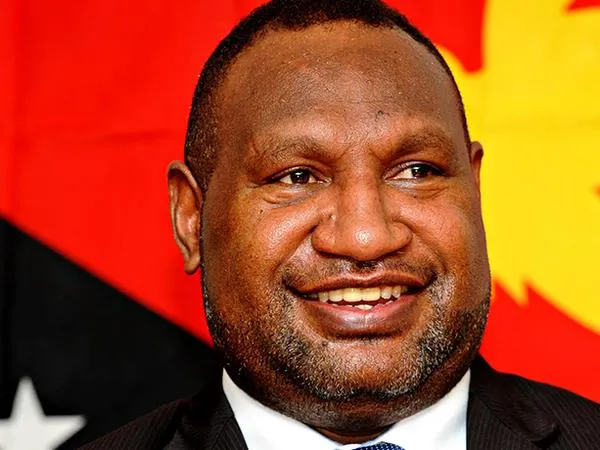
Prime Minister James Marape was pleased with the outcomes of the engagement of Pacific Leaders with the United Nations Secretary-General, Antonio Guterres and the General Assembly 77th session General Debate.

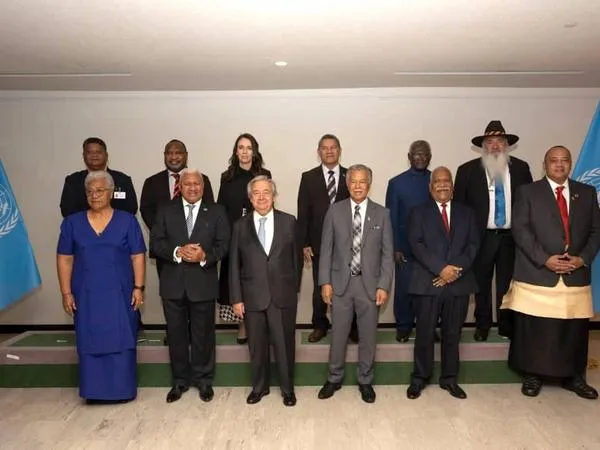
Prime Minister Marape recently attended his final meeting at the United Nations General Assembly annual world leaders dialogue, where he joined his fellow Pacific Islands Forum colleague leaders, for a meeting with the United Nations Secretary-General Antonio Guterres that lasted nearly an hour.

This is an annual meeting that takes place at the margins of the General Debate of the General Assembly.

This session was the first in-person leaders meeting since the COVID-19 pandemic outbreak.

Prime Minister Marape joined the Forum Chair, Fiji Prime Minister Frank Bainimarama and also the President of the Federated States of Micronesia, and the Prime Ministers of New Zealand, Samoa, Tonga, Solomon Islands, Tuvalu and Vanuatu and other representatives of the Forum Members. They were joined by the Forum Secretary-General Henry Puna.

The meeting, prior to its opening, had a moment of silence in honour of Forum Leaders that have passed on since the last in-person meeting, as well as paid respect to Forum members affected by COVID-19 and recent natural disasters, including the devastating earthquake in Papua New Guinea.

The Forum Chair and the Prime Ministers of Samoa, Vanuatu and Forum Secretary-General spoke on behalf of the Forum members.

Fiji provided an overview of the Forum’s work since last year, whilst Samoa spoke to the economic challenges and support to Small Island Developing States (SIDs) - COVID-19 response and recovery, food and fuel crises, technology and connectivity, reforms to the international financial architecture; Vanuatu spoke on climate change agenda whereas Federated States of Micronesia (FSM) addressed the global and regional landscape, Pacific regionalism and 2050 Strategy for the Blue Pacific Continent.

Overall, the Forum leaders underscored the Pacific region’s strong united stance under the 2050 Strategy for the Blue Pacific Continent, in taking all necessary measures in the climate-ocean nexus and in the post-COVID-19 pandemic efforts to protect Pacific peoples, communities and way of live and their willingness to work in partnerships with international development partners to address the priorities of the region.

In his address to the Forum Leaders the UN Secretary-General was candid in expressing his serious and growing concerns with the state of the world, where he noted it was in “turmoil” from the multiple crisis related to “climate and energy, hunger and poverty to conflicts and war and above all, a fear that worse is yet to come."

He underscored his pain of seeing the Pacific countries and others in the “frontlines of climate chaos and paying the highest price yet they did not create this crisis”.

The Secretary-General strongly lauded the powerful, consistent, and united voice of the Pacific urging climate action at a scale commensurate with the scope of the challenge.

“I share your concerns that we are off track from the goals of the Paris Agreement.

“At a time when we should be urgently accelerating actions, we are backtracking and finger pointing," said the Secretary-General.

The UN Secretary-General was even more blunt, stating that “the world is not making enough progress. Not even close: Not on emission cuts that could keep the 1.5 degrees goal within reach. Not on scaling finance for adaptation. And not on loss and damage".

He, however, implored Forum leaders “not to lose hope".

“Instead, I ask you to raise your voices even more loudly. We need the strong moral voice and leadership of the Pacific to impel everyone – especially G20 countries who account for 80% of global emissions – to take urgent actions," said the Secretary-General.

He also called for major carbon emitters to phase out fossil fuels; turbocharge a renewables revolution; meet finance commitments in full – on the $100 billion and on collectively doubling adaptation finance to $40 billion a year; ensure that countries that need it most have access to that finance; and scale up finance for the burning issue of loss and damage.

The UN Secretary-General also highlighted his concerns over the continuing aftermath of the COVID-19 pandemic, noting that “Small Island Developing States have one of the steepest hills to climb, confronted by years of lost tourism revenue, fractured supply chains, and disrupted transport and communication, which is further compounded by the food and fuel crisis arising from the war in Ukraine that has resulted into a “global cost of living crisis".

The Secretary-General encouraged Forum leaders to invest in resilience and preparedness, in health and education; and in infrastructure and decent jobs, as a way to respond to the multiple crisis involved but also recognizes the serious unfair and unequal access to the financial and other resources needed to support them address issues of debt relief and to enable fiscal capacity to save lives and livelihoods and invest in the future and therefore called for reforms in this area at the global financial and other such institutions.

He particularly welcomed and commended the Forum Leaders’ efforts for developing and launching the 2050 Strategy for the Blue Pacific Continent and leadership on the Small Island Developing States Multidimensional Vulnerability Index (MVI) for improved eligibility for concessional finance.

“Together, the 2050 Strategy and the 2030 Agenda for Sustainable Development are our blueprints for the future we want and need," said the UN Secretary-General.

He further underscored that “the United Nations is proud to stand with you in partnership and solidarity as we work together to make this future a reality across the Pacific and the world”.

It was pleasing to also note the Secretary-General’s commitment to form a team to work closely together with the Forum members on issues of mutual interest.

The Secretary-General also welcomed Forum members recent commitment to the revitalisation of the Pacific Leaders Gender Equality Declaration. He added that “whatever the challenge we face, there can be no successful response without increasing women’s political, social, and economic participation".

Prime Minister Marape said that he is extremely pleased that the views of the UN Secretary-General are exactly alike, as I had articulated yesterday (Thursday 22nd September, 2022 New York Time) in his General Debate Statement delivered to the UN General Assembly on behalf of our country.

“The bold message to the Forum leaders from the UN Secretary-General that “your fight is my fight and your people are my people” was most welcomed and heartening and I look forward to working closely with my fellow Forum leaders and our people and governments with the UN Secretary-General, going forward.

“I know that more work lies ahead of us at the country-level and as a Pacific region but I am satisfied with the level of engagement with the UN Secretary-General and at the United Nations General Debate session as we continue to make important strides to ensure that our national and regional interests are fostered globally and more importantly to garner the necessary support we need to implement effectively our development priorities to take our country forward in the right direction," said Prime Minister Marape.

Prime Minister Marape concluded the meetings on Friday 23rd September 2022, New York time before departing for Brisbane, Australia where he will meet up with his Australian counterpart Anthony Albanese where the two leaders will together attend the funeral of former Japanese Prime Minister late Shinzo Abe in Tokyo on September 27th.


Article courtesy of James Marape News Page

September 26, 2022

Prime Minister Hon. James Marape says Papua New Guinea can become a food supplier to the world with its abundance of land and sea.

PM Marape, when addressing the 77th United Nations General Assembly (UNGA) in New York on Friday (April 23, 2022), invited new international development partners to work with PNG in the agriculture sector, particularly in downstream processing.

Earlier in the week, UN Secretary-General António Guterres, when addressing the UNGA, talked about the emerging world food crisis as a direct result of the Russia-Ukraine war.

PM Marape said many parts of the world were facing food insecurity, hunger and poverty and PNG could be a country of food production.

He said PNG’s people lived in a land mass of 462,840 square km and also had a large sea area which supplied tuna to Asia and Europe.

“PNG has enough land, sea and people to be a food supplier to the world, Mr Secretary-General, in response to your concerns for global food security,” PM Marape said.

“For the first time, in our country, my Government has inserted efforts to address this imminent problem by placing more emphasis on the agriculture sector.

“This is viewed not only as a revenue source for our economy, but also a conduit to empower the majority of our rural communities through introduction of innovative farming methods in cash crop production, livestock and poultry to take ownership and leadership of their development needs, and livelihoods, and at the same time also foster poverty alleviation and food security.

“It is from this perspective that we have established new ministerial portfolios for Oil Palm, Coffee and Livestock.

“That will assist us cater better not only for needs of the majority of our rural communities and their local economies to be integrated into the national and global markets, to improve their lives and livelihood but be the source for food security, and hunger and poverty alleviation for other countries.

“We therefore welcome new international development partners to work with us in the agriculture sector, particularly in the downstream processing of products that add value and support local communities and the country.”


Article courtesy of James Marape News Page

September 26, 2022

To show its commitment to a trade deal with Indonesia, PNG will, according to International Trade and Investment Minister Richard Maru, attend the Trade Expo Indonesia (TEI) 2022, which will be held next month.

Maru said it was appropriate given a recent declaration to make commerce with Indonesia a priority and that he had received an official invitation to lead a Papua New Guinea (PNG) trade mission to the exhibition in Jakarta from October 19–23.

With more than 1,000 exhibitors and more than US$6 billion (about K20.62 billion) in transactions over its seven zones of exposition, TEI draws around 40,000 people from all over the world each year.

Manufacturing, healthcare, beauty, home furnishings, food and drink, clothing and accessories, medical equipment, and digital and services are a few of them.

Andriana Supandy, the ambassador of Indonesia to Papua New Guinea, extended an invitation to Maru.

Maru stated that his office would seek funding to send a sizable delegation that would include ministers, lawmakers, representatives of SMEs, state-owned companies, the business community, as well as individuals from the border provinces of East Sepik, West Sepik, and Western, as well as individuals from other provinces, industries, and organisations.

He said that it would be a wonderful chance to establish interpersonal and commercial relationships.

“We want to show you our commitment by going there right after our policy pronouncements.”


Reference The National (15 September 2022). “PNG to attend trade expo in Indonesia”. 

September 26, 2022

The potential benefits of an extended labour mobility programme between the two countries have been emphasised by Treasurer Ian Ling-Stuckey and his Australian colleague Jim Chalmers.

The doors would be open through Australia's recently expanded labour mobility policies, according to Mr. Ling-Stuckey, if people in PNG opted to travel and fill some of those jobs. The Australian Treasurer has acknowledged the labour shortages confronting Australia.

“I agreed strongly, noting how we have started expanding our labour mobility program rapidly. Under the former PNG administration, there had been only around 120 workers each year.

Post COVID-19 border barriers, the number had already increased by over 500 per cent to 750,” Mr Ling-Stuckey said.

“I indicated to the Australian Treasurer that I recently had very positive discussions with the labour mobility area of the Australian Department of Foreign Affairs and the Gold Coast Hospital and there is a clear interest in continuing the schemes’ rapid expansion.

“There is a need to evolve our management arrangements for a larger scheme, ensuring continued protection for our workers pay and conditions.

This is indeed a very positive area for expanding our relationship.

“The potential economic importance of a greatly expanded labour mobility program is often underestimated in PNG.

Based on World Bank data showing that employees earn an average take-home wage of about K26,000, having 30,000 Papua New Guineans in Australia would be comparable to exporting K800 million worth of logs.

“Having 45,000 workers (so only about 1 per cent of our workforce) would be equivalent to the entire Australian bilateral aid program of over K1.1 billion last year. Labour mobility schemes clearly have massive potential to modernise the PNG economy and lift our skills development, jobs and incomes.”

The Marape-Rosso Government, according to him, is continuing to talk about ways to widen the scope of economic benefits for both parties.

“Further meetings are occurring with officials from the Australian Treasury and Department of Foreign Affairs,” Mr Ling-Stuckey said.

“There is lots of hard work ahead to convert the promise into a reality. I thank the many members of parliament and other workers that have already been supporting this initiative, along with the individual workers, their families and communities, and our valued Australian employers.

I am proud of this plan to grow the economy, create jobs and incomes for our people.”


Reference: Post-Courier (20 September 2022). “PNG, Aust Treasurers Discuss On Labour Mobility Growth”.

September 21, 2022

PRIME Minister Hon. James Marape recently (20/09/22) paid a courtesy visit to John Swire of John Swire & Sons Ltd, the principal shareholder and parent of Papua New Guinea’s oldest company – Steamships Trading Company.

The meeting with John Swire & Sons at their London head office, was to thank the shareholder for keeping their investments going over a long time in PNG and still continuing in the face of everything PNG has gone through.

The meeting was also to reassure the investor of the current efforts the Marape-Rosso Government is now putting into expanding the economy through the development of enabling infrastructure, Agriculture and downstream processing.

PM Marape said: “Steamships has PNG truly at its heart. It has been operating in the country for over 90 years, with a history that is entwined with the country’s own history. Still, it is going strong.

“Swire is a big company globally, with substantial shareholding in Cathay Pacific also.

“My meeting with John Swire today was to reassure him that the future of PNG is looking up as we begin on the efforts to expand the economy toward the K200 billion mark within the next 10 years. We are doing this by opening up the rest of the country through infrastructure development, Agriculture and downstream processing.

“I also reassured him that my government is more than willing to work with companies that have stood the test of time with PNG, and Swire – through Steamships – is the longest and most loyal.

“The Government is looking forward to seeing Steamships and Swire consolidate their positions in PNG, and diversify and expand even further.

“Steamships has been with us long before our own Independence and knows the PNG business environment like no other. Nothing would make us happier than to see it expand into the areas we are working at such as Agriculture, downstream processing and building MSMEs among Papua New Guineans,” said PM Marape.

The Prime Minister said the Government was working at upgrading enabling infrastructure to support investors through the Connect PNG Program covering roads, bridges, wharves and jetties, airports and airstrips, including electricity which was mentioned by Swire as one of the challenges being faced by Steamships.

PM Marape said power supply should be upgraded to full capacity within the next three to four years in the Southern region, and the Lae – Highlands area all the way to Hides utilising gas (Western end) and hydro (Eastern end).

The Prime Minister once more gave credence to the link as established through the Commonwealth with the United Kingdom.

“The country would know my view by now on maintaining our arrangements with the Commonwealth, especially with UK. UK is just like the United States; it is the capital of the free world, capitalistic society. This is where commerce and trade took off from, with huge markets here. At the moment they buy our oil palm, tuna and exports that find their way into the European market,” said PM Marape.


Article courtesy of PMNEC

September 19, 2022

Photo credit: Sam Moko

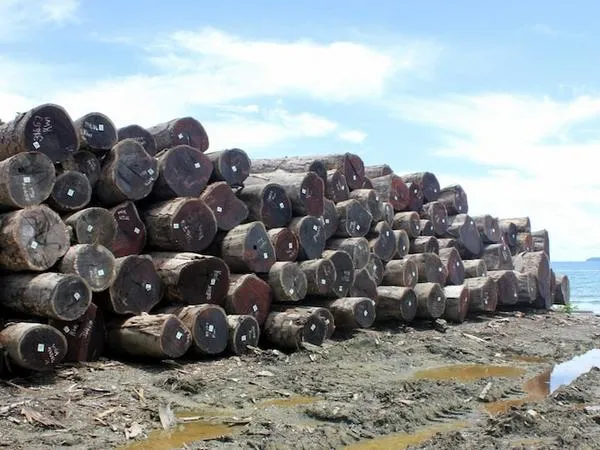
Prime Minister James Marape has ordered officials to halt the issuance of new logging licences until the 205 active ones have undergone "a comprehensive stock-take."

“We want to make more money for our country but at a sustainable rate,” he said during a visit to the PNG Forest Authority office in Port Moresby.

“This sector is a sleeping giant. We’ve been playing marbles (with it) for too long,” Marape said.

“I want you to recommend to the (forestry) minister through the board and MD (managing director) how best we can ramp up our production in this sector without compromising sustainability and good environment practises.”

Marape is also interested in learning how long the 205 permits have been active.

“And businesses not (owned by) landowner (companies) must have an element of downstream processing built into their business plan,” he said.

“(After) three years, I come to this place and I am very discouraged because we have not done much.

“There is no substantial progress in the downstream processing phase.

“No new license is to be issued. Let’s take stock of the 205 first. Inform stakeholders that the Government wants a serious placement on downstream processing.”

He requests that all already operating forestry-related firms submit their business plans on down-streaming to the Forest Authority.

“No more renewal of permits until this comes in. For those that do not have an association with downstream in their business plan, the State will exercise its right in the state marketing option that all logs cut will be put into our log ports.”

For every log that leaves the nation, a "corresponding Kina or dollar must come back into the country," he added, adding that Treasury will work on a regulation enforcing this.

“I may seem hard but I make no apology to anyone.

“It’s not just for Forestry. We will do the same for fisheries and agriculture.

“Gold, oil, and gas will follow the same process as well,” he said.

“Our resources have been plundered (with) minimum return to our country.”


Reference: Mauludu, Shirley. The National (8 September 2022). “PM halts logging permits”.

September 19, 2022

Photo: Richard Maru

According to Richard Maru, the minister for international trade and investment, the feasibility study for a free trade agreement with the People's Republic of China should be carried out before the end of the year.

Maru reiterated PNG's commitment to a potential free trade deal with China during a meeting he conducted with Chen Jiliang, the charge de affairs of the People's Republic of China embassy.

The cost and advantages of such an arrangement would be determined by the study, he claimed.

“Both parties need to agree to the terms of reference for the study and agree to hire a neutral independent global expert to undertake the study. Without that, we cannot proceed with the study,” he said.

He anticipates that the two nations will be debating the adoption of the study's findings by January or February of the following year.

It was a result of discussions between Li Keqiang, the Chinese premier, and former prime minister Peter O'Neill in 2016.

During a trip to Beijing last year, Prime Minister James Marape repeated it.

Maru praised the Chinese government for contributing K1 million so that Papua New Guinea could hire a consultant to carry out the study's PNG portion.

Additionally, he is pleading with both domestic and foreign investors to collaborate with the government in the downstream processing sector.

“We need local and international investors to support the government in aggressively pursuing its new policy direction of replacing all food imports by investing in the downstream processing industries,” he said.

He said that before they are shipped, PNG must prepare fish, coconut, cocoa, and coffee.

“(They should) also invest in large-scale oil palm plantations in the savannah land especially in the Sepik Plains, Western, Madang and Morobe, and in cattle and other agriculture projects as well, and in the PMIZ,” he said.


Reference: The National (9 September 2022). “Maru firm on trade agreement”.

September 19, 2022

The newly formed Papua New Guinea Parliamentary Election Committee has received the backing of the New Zealand Government in order to handle election-related concerns that arose during this election.

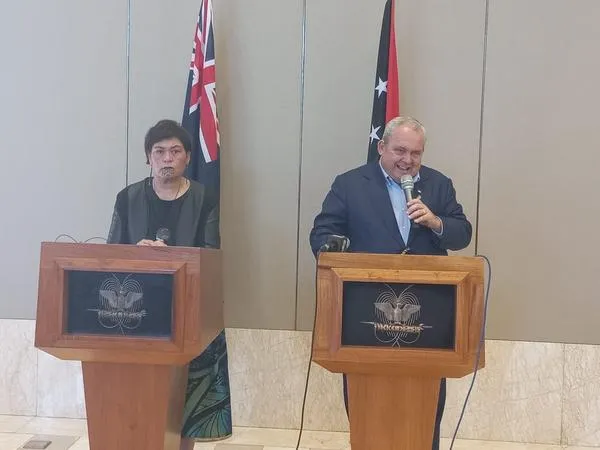
This was said by Nanaia Mahuta, the minister of foreign affairs for New Zealand, at a news conference that both nations held in Port Moresby.

In order to ensure that the electoral reform process is done correctly, the New Zealand government will advise and support the committee, according to her PNG counterpart, PNG's Foreign Affairs Minister Justin Tkatchenko.

''We have just come out of an election and we have just set up a Parliamentary Committee to address election-related issues encountered in this election and East Sepik Governor Allan Bird will Chair the Committee.

''We are pleased that the New Zealand government is very keen in offering its assistance in providing advice and other necessary support as we have many electoral issues such as the common roll,'' said Tkatchenko.     

Meanwhile, PNG has always been a solid partner, according to New Zealand's Foreign Minister Nanaia Mahuta, and the country is still dedicated to helping PNG.

''Every democratic society continues to shift and improve its electoral process and New Zealand is happy to assist PNG to improve its electoral process and strengthen the integrity of the electoral process,'' said Mahuta .


Reference: Papua New Guinea Today (8 September 2022). “New Zealand Government to support PNG Election committee Electoral Process”.

September 19, 2022

Prime Minister Hon. James Marape recently (September 13, 2022) announced 12 Vice-Ministerial allocations, in line with his Government’s focus on ‘Growing the Economy’ and ‘Strengthening Internal Security’.

He made the announcements before he left for London to attend the funeral service of Queen Elizabeth II.

Of the 12 Vice-Ministers, four will be directly assisting PM Marape, in his role as Prime Minister and Minister for National Planning.

The four Vice Ministers assisting PM Marape are:
• Hon. Jimmy Maladina (Office of State Negotiations);
• Hon. Kinoka Feo (Strategic Planning);
• Hon. Muguwa Dilu (Constitutional Matters); and
• Hon. James Nomane (Planning PIP Budgeting)

The other eight Vice-Ministers and their allocations are:
• Hon. Solen Loifa (Treasury);
• Hon. John Boito (Finance and Implementation);
• Hon. Kessy Sawang (International Trade and Investment);
• Hon. Miki Kaeok (Works and Highways);
• Hon. Thomas Opa (Petroleum and Energy);
• Hon. Raphael Tonpi (State Enterprises);
• Hon. Graham Piniau Rumet (Cocoa and Copra); and
• Hon. James Donald (Mining and Border Issues).

“The four Vice-Ministers have been given specific tasks to assist me, likewise, the other eight Vice-Ministers,” PM Marape said.

“We are timebound and want to achieve results

“It is not just a ceremonial office they are holding, unlike the past, and they have been given specific tasks just like Ministers.

“We expect the Vice-Ministers to achieve in the tasks that they have been given.”

PM Marape said Ministers’ jobs were so “wide and huge” with Papua New Guinea not being like it was back in 1975, especially population growth.

He said when he returned from his international tour-of-duty, he would sit down with individual Ministers and Vice-Ministers, and tell them what was expected of them.

“All Ministers have already been given Key Result Areas, and when I return, I will sit down with them and the Vice-Ministers,” PM Marape said.

“Likewise, when I come back, I will meet all Governors at a Governors’ Forum and engage with them on what they must do.

“We will focus especially on provinces being less dependent on Waigani for finances, with more focus on agriculture, downstream processing of forestry, fisheries, tourism and other businesses.

“I want provinces to step up in these areas and take ownership of businesses instead of just being spectators and waiting for handouts from Waigani.

“This will complement our focus on Special Economic Zones (SEZ) in all provinces and the Autonomous Region of Bougainville.

“This, I believe, will really jumpstart our economy.”


Article courtesy of PM James Marape News Page

September 15, 2022

The economy in Papua New Guinea is forecast to expand by four percent in 2022, up from one percent in the previous year, according to the latest World Bank Economic Update, released recently. This return to growth following a sharp contraction of -3.5 percent in 2020 was mostly driven by strong performance in the non-extractive sector, with agriculture being among the key contributors to economic recovery.

The report, Benefiting from High Commodity Prices, looks at recent key developments in PNG’s economy, and places these in the longer-term global and regional context where growth is decelerating, and inflation is surging in many countries due to rising food and energy prices, largely caused by disruptions in the supply chain triggered by the Russia-Ukraine war.

Despite the challenging external environment, the economic outlook in PNG remains positive, underpinned by a projected recovery in the extractive sector, higher commodity prices, and gradual recovery in economic activity. On top of this, the easing of COVID-19 policies by local authorities is increasing domestic economic activity.

“It is encouraging to see the economy returning to growth after a very challenging few years,” said Stefano Mocci, World Bank Country Manager for Papua New Guinea. “Now is the time to consolidate economic reforms that focus on key development challenges for the benefit of all the people in the country.”

Agriculture played a key role in the economic recovery beginning in 2021 driven by higher export volumes of tea, palm oil, and copra. The extractive sector did not rebound in 2021 also due to disruptions to mining operations. Nonetheless, elevated prices for commodities – in particular natural gas – will likely provide the country with additional revenue this year.

“International commodity markets have been performing well for PNG, helping the economy to grow, and revenue coming into the national budget has increased. However, these conditions are not likely to remain for long,” said Ruslan Piontkivsky, World Bank Country Economist for Papua New Guinea. “A reduction in commodity prices, and a lower demand for exports from the decelerating global economy are significant risks, and might result in slower than expected economic growth. Authorities should be prepared for this, in particular by continuing fiscal reforms that include higher revenue mobilization.”

The PNG Economic Update also includes a special focus on Boosting Economic Growth. Given the country’s abundant geographic and natural resources, the report argues that PNG’s economy can – and should – grow faster. Although the economy has more than tripled in size since independence in 1975, real GDP per capita has increased by only 0.9 percent per year; a low growth rate compared to peer countries.

The report recommends a renewed policy focus on economic growth, not only on the short-term factors affecting the outlook for the next year, but also on the longer-term drivers of the growth and welfare of the people. To achieve this, PNG should aim to renew its growth strategy to address three interrelated challenges: excessive macroeconomic volatility, low productivity growth, as well as excessive reliance on natural capital and not enough investment in human and institutional capital.

“With a growing young population, PNG’s future growth and quality of life hinge on improving human capital,” said Stefano Mocci, World Bank Country Manager for Papua New Guinea. “While PNG’s wealth has been dominated by natural capital, over the decades PNG has made limited progress in improving human capital and it is vital for government and its partners to invest in this area."

“We will continue to work closely with the PNG Government to help create opportunities and improved access to markets, education, and health– this will be essential to creating sustainable growth.”


Article courtesy of the World Bank