Category:
AIFFP pledges US$150m for energy infrastructure in PNG
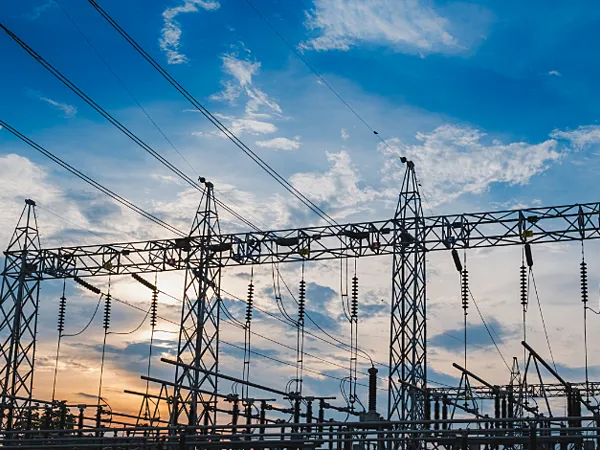
The Australian Infrastructure Financing Facility for the Pacific has pledged a grant and concessional loan package totaling USD150 million to Papua New Guinea for the purpose of enhancing and repairing crucial energy infrastructure. This commitment was affirmed during Prime Minister Marape’s visit to Canberra on February 8, 2024.
The funding will be allocated towards various projects including the refurbishment of the Ramu 1 hydropower plant, the construction of the Gerehu transmission substation, and the installation of smart meters in both commercial establishments and residential areas throughout Papua New Guinea.
Additionally, Australia, through its Pacific Climate Infrastructure Financing Partnership, is also participating in a new initiative focused on solar entrepreneurship. This partnership aims to provide renewable energy solutions to approximately 4,000 households in the Milne Bay and West New Britain Provinces.
These upgrades and investments are anticipated to enhance access to reliable and sustainable electricity for communities residing in urban centres, towns, and remote villages. This improved access is expected to foster economic growth and provide better opportunities for accessing essential services such as healthcare and education.
Fifth Annual Leaders Dialogue
During Prime Minister James Marape’s visit to Canberra, Australian Prime Minister Anthony Albanese and Mr Marape convened the fifth Papua New Guinea-Australia Annual Leaders’ Dialogue on February 8 in Canberra.
Discussions centred on bilateral security cooperation, highlighted by the signing of the Bilateral Security Agreement in December 2023. Both leaders welcomed Australia’s AUD100 million law and justice investment over 2024-2027 and prioritized planning for a Police Recruit and Investigations Training Facility in Bomana, among other initiatives.
The leaders reiterated their commitment to regional peace, prosperity, and resilience, underscoring contributions to collective Pacific security responses and humanitarian efforts. They also discussed enhanced cyber security cooperation and Papua New Guinea’s fiscal sustainability plans.
Acknowledging the importance of people-to-people ties, both leaders unveiled plans for streamlined visa processes and expanded labour mobility arrangements. They pledged to boost economic growth, critical infrastructure development, and support for agriculture, emphasising inclusive growth and sustainability.
Climate change, health and education highlighted
Efforts to address climate change were a focal point, with Australia pledging support under the PNG Climate FIRST initiative to access climate finance. Both leaders emphasized the importance of Papua New Guinea’s rainforests as a global carbon sink.
Health and education partnerships were highlighted, including initiatives like the Partnerships for Improving Education Program and support for health services targeting tuberculosis, malaria, and maternal and child health.
Recognising their shared love for sports, especially rugby league, the leaders looked forward to boosting high-performance rugby league capability through renewed partnerships and participation in sports series.
Both leaders reaffirmed their commitment to strengthening regional unity through Pacific-led and owned regional architecture, guided by the Pacific Islands Forum’s 2050 Strategy for the Blue Pacific Continent.
In anticipation of Papua New Guinea’s 50th Independence anniversary in 2025, both nations pledged to commemorate the occasion by establishing a memorial to honour the role of Australian Kiaps in Papua New Guinea’s nation-building.
Article courtesy of the Australia - Papua New Guinea Business Council
PM Marape emphasises ‘family’ ties with Australia in historic speech
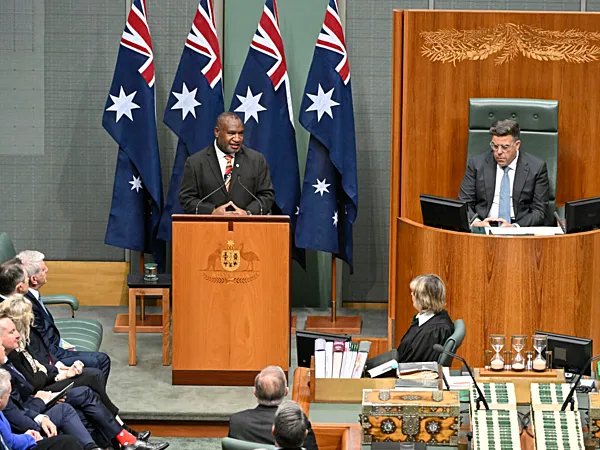
Papua New Guinea’s Prime Minister, James Marape, made history by addressing Australia’s parliament in Canberra on 8 February, marking the first occasion a leader from a Pacific Island nation has done so. Marape’s speech underscored the deep-rooted ties between Papua New Guinea and Australia, characterising the latter as PNG’s “big brother” and emphasising the familial nature of their relationship.
The visit comes at a critical juncture as Papua New Guinea grapples with internal unrest sparked by incidents of violence and looting in Port Moresby in early January that claimed at least 16 lives.
Amidst these challenges, Marape’s address served as an opportunity to reaffirm Papua New Guinea’s longstanding partnership with Australia. He expressed gratitude for Australia’s support, particularly in times of crisis, and called for continued collaboration in addressing shared challenges and promoting regional stability.
Peter Dutton, Australia’s Opposition Leader, echoed sentiments of cooperation and mutual respect in his welcoming remarks for Marape. He underscored the importance of sovereignty and autonomy for Pacific Island nations, implicitly cautioning against external interference.
Central to discussions between the two leaders was Australia’s role as Papua New Guinea’s largest donor of foreign aid. Australia has provided crucial financial assistance to Papua New Guinea, including a notable $650 million loan granted in 2021 to alleviate a budget shortfall exacerbated by the COVID-19 pandemic. Mr. Albanese, in his speech welcoming Mr. Marape, emphasized Australia’s commitment to supporting Papua New Guinea’s future, highlighting a recent $200 million security agreement signed in December aimed at bolstering Papua New Guinea’s security infrastructure.
Beyond financial aid, both nations expressed a shared commitment to cooperation in various sectors, including security, development, and regional diplomacy. The signing of the $200 million security agreement represents a tangible manifestation of this commitment, signalling a deeper partnership between Australia and PNG in addressing common challenges and fostering mutual prosperity.
Marape’s historic address to Australia’s parliament underscored the enduring partnership between the two nations, rooted in shared history, mutual respect, and common interests. Despite the complexities and challenges facing the region, both Australia and PNG remain steadfast in their commitment to cooperation and collaboration, underscoring the importance of diplomatic engagement in promoting peace, stability, and prosperity in the Pacific.
Article courtesy of the Australia - Papua New Guinea Business Council
New High Commissioner John Feakes presents credentials
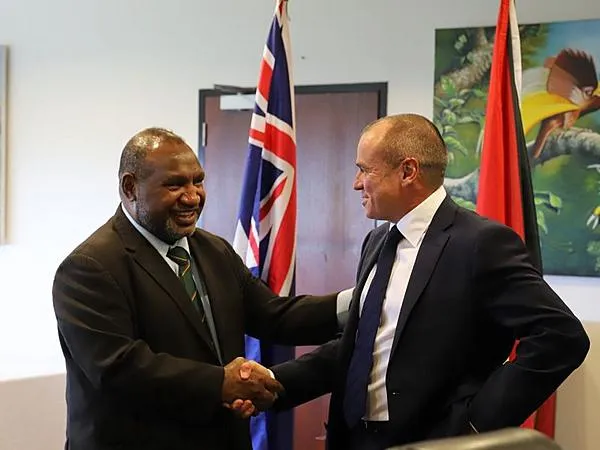
Australia’s new High Commissioner to Papua New Guinea, His Excellency John Feakes has officially presented his letter of introduction to Papua New Guinea Prime Minister James Marape.
Australian Foreign Minister Penny Wong announced Mr. John Feakes’ appointment as Australia’s next High Commissioner to the Independent State of Papua New Guinea in September last year, reaffirming the deep-rooted and enduring relationship between the two nations.
Australia values our unique, strong and enduring relationship with Papua New Guinea, reflected in our Comprehensive Strategic and Economic Partnership.
At the time of his appointment, Minister Wong’s media release said, “Our partnership is founded on shared values, deep historical and cultural connections, and common economic and security interests.
“Australia and Papua New Guinea share a unique and robust partnership, characterised by a Comprehensive Strategic and Economic Partnership that underlines their common values, profound historical and cultural ties, and mutual economic and security interests. Both nations are united in their commitment to fostering a peaceful, prosperous, and resilient region.”
Mr. Feakes is a distinguished career officer with the Department of Foreign Affairs and Trade. Prior to his appointment as High Commissioner to Papua New Guinea, Mr. Feakes served as Australia’s High Commissioner to Fiji.
Throughout his career, Mr. Feakes has garnered a wealth of international experience, including previous roles as Australia’s High Commissioner to Kenya and Deputy High Commissioner and Counsellor in PNG. His diplomatic service has also taken him to the United States of America and the Philippines, where he contributed to advancing Australia’s diplomatic objectives.
Article courtesy of the Australia - Papua New Guinea Business Council
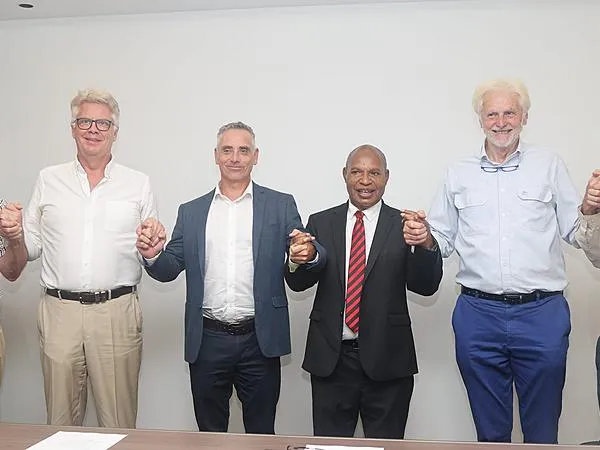
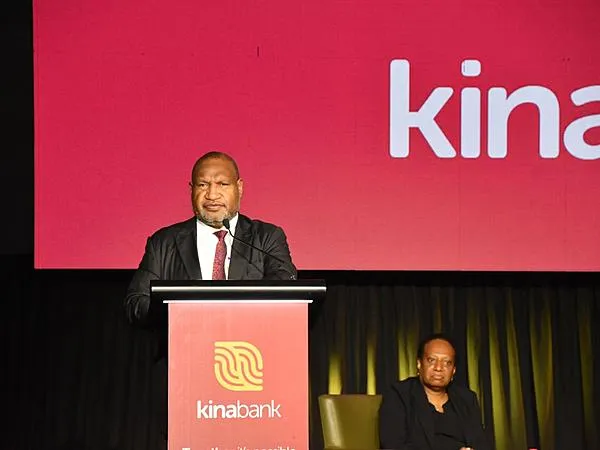
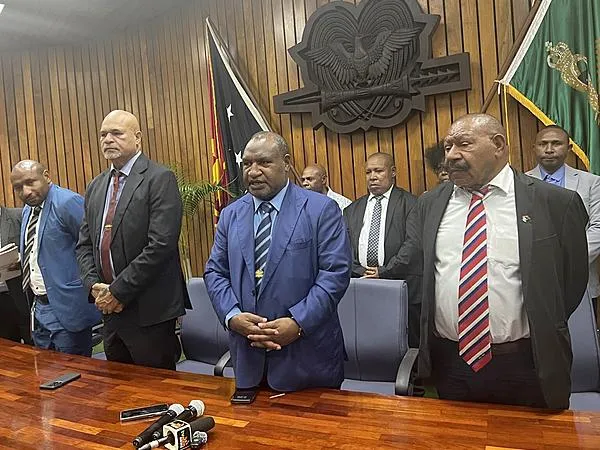
ADB-Supported PPP Framework to Improve Infrastructure Service Delivery in PNG
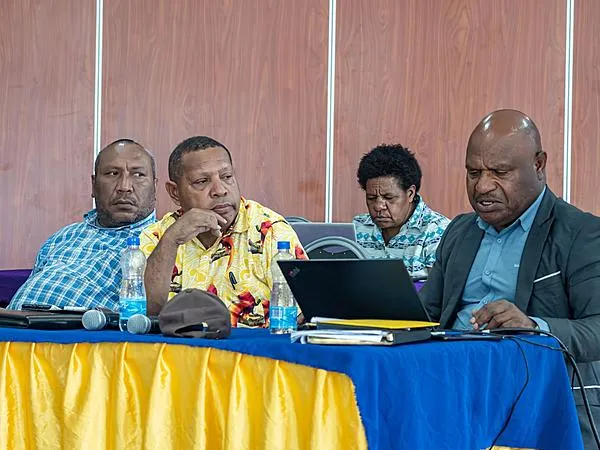
The Asian Development Bank (ADB) welcomes a new framework for public–private partnerships (PPPs) in Papua New Guinea (PNG) aimed at unlocking private investment and know-how, and allowing PNG to expand and improve infrastructure service delivery.
The new framework was developed with the support of ADB’s Pacific Private Sector Development Initiative (PSDI) and creates a transparent and robust process for identifying, developing, procuring, and implementing infrastructure PPPs in PNG. It establishes a governance structure to oversee this process. It also establishes a center of expertise—the PPP Centre—which will work alongside sponsoring agencies to develop PPP projects.
Through the framework, new infrastructure investments are required to be assessed for their potential to be procured as PPPs, and transactions must be developed transparently and predictably. Project risk assessments and competitive tendering processes are now also legal requirements for all PPPs.
“PPPs create opportunities for private sector involvement in service provision, which can lead to better service delivery, reduced costs for businesses, and improvements to government balance sheets,” said ADB Country Director for PNG Said Zaidansyah. “That’s why ADB actively supports PPP implementation in the Pacific and why we are so pleased to see the final pieces of this framework operational.”
The framework was activated by the recent publication of the Public Private Partnership Regulation 2023 and the Public Private Partnership (Amendment) Act in the National Gazette. PNG’s broader state-owned enterprise reform program is supported in part by an ADB policy-based loan, and implemented with the support of PSDI, an ADB technical assistance program delivered in partnership with the governments of Australia and New Zealand.
“I congratulate the PNG government for achieving another important milestone in its ambitious reform agenda,” Australian Acting High Commissioner to PNG Joanne Loundes said. “PNG has the potential to benefit from further private sector investment in infrastructure development. Through our support for PSDI, Australia is proud to assist improvements to the delivery of essential services for the people of Papua New Guinea.”
Established in 2006, PSDI works with ADB's 14 Pacific developing member countries to improve the enabling environment for business and support inclusive, private sector-led economic growth.