March 24, 2025

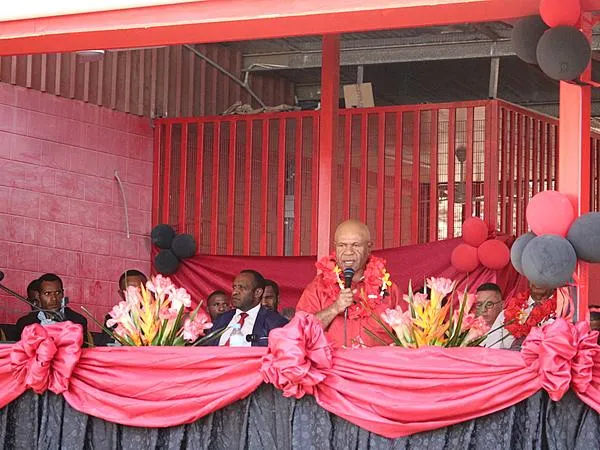
Prime Minister Hon. James Marape has reaffirmed his government’s unwavering commitment to the Bougainville peace process, emphasising the significance of the 2001 Bougainville Peace Agreement (BPA) and the necessity for continued dialogue between Papua New Guinea and Bougainville.

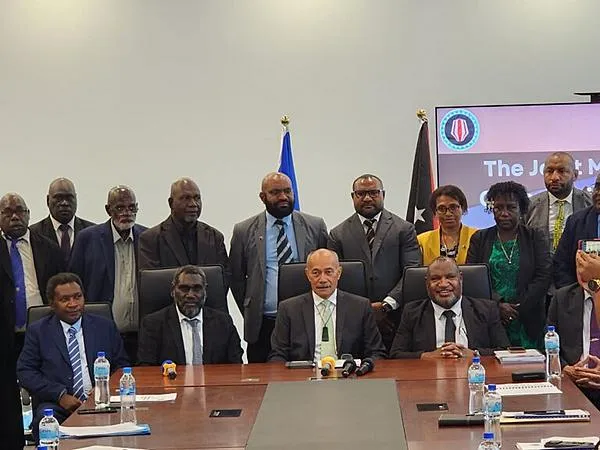
Speaking at the opening of the First Joint Consultation Meeting with Bougainville Moderator Sir Jerry Mateparae, Bougainville President Hon. Ismael Toroama, United Nations representatives, international stakeholders, and other distinguished leaders, Prime Minister Marape acknowledged the historical journey that has led to the current stage of the peace process.

“This process was born out of the sacrifices of many, and it is our duty to ensure that the intentions of the peace agreement remain the foundation for our discussions,” said Prime Minister Marape. “August 30 this year will mark 24 years since the signing of the agreement, and for 24 years, peace has been maintained without the firing of a single bullet. This in itself is an achievement that we must continue to build upon.”

Honouring the Bougainville Peace Agreement and Constitutional Process

The Prime Minister reaffirmed that the 2001 Bougainville Peace Agreement is now enshrined in Part XIV of the PNG Constitution, providing a legal framework for dialogue and post- referendum consultations. He recognised the dedication of those who negotiated the agreement, stating that their work continues to shape the ongoing discussions.

“I was not there in 2001 when the agreement was signed, but as Prime Minister, it is my duty to study the past records and ensure that we honour the spirit and intention of the peace agreement,” he said.

The Prime Minister acknowledged the results of the 2019 Bougainville Referendum, in which 97.7% of voters chose independence, and reaffirmed that Parliament will ultimately deliberate and decide on the matter.

“Let me make this absolutely clear – my government allowed the referendum to take place, and we stand by our commitment to the process,” Prime Minister Marape stated. “However, it is now a constitutional matter that requires Parliament’s deliberation and decision-making.”

He highlighted that Section 342 of the PNG Constitution explicitly calls for post-referendum consultations, ensuring that both parties engage in structured dialogue before a final decision is made.

“The wisdom of the 2001 peace agreement is that it does not impose a strict timeline for resolution, but it does outline the importance of consultation and agreement,” he explained.

Economic Independence Must Precede Political Independence

Prime Minister Marape urged Bougainville’s leadership to consider the importance of economic independence alongside political aspirations. He pointed out that 95% of Bougainville’s budget is currently reliant on external support, including funding from the PNG Government and international donors.

“Economic independence must precede political independence. The long-term sustainability of Bougainville must be factored into these discussions,” he added. “Today, as we speak, Bougainville generates only 5% of its own budget. This is a serious conversation that we must address as part of the broader negotiations.”

He acknowledged Bougainville’s resource potential but stressed that economic structures must be strengthened before full political independence can be realised.

“My duty as Prime Minister is not only to Bougainville but to the whole of Papua New Guinea. We must ensure that any decision we take is in the best interest of all parties,” he emphasised.

Addressing the Risks of Regional Fragmentation

The Prime Minister also highlighted the broader national implications of Bougainville’s push for independence, warning that other regions of PNG may also seek similar autonomy if the issue is not managed carefully. “Papua New Guinea is the most-diverse nation on earth. We have over 800 languages, 20 provinces, one National Capital District and Autonomous Bougainville Government. If we do not manage this process responsibly, we risk opening the door to similar movements in other parts of the country,” he cautioned.

He stressed that PNG must preserve national unity while respecting Bougainville’s aspirations, urging diplomatic partners and the United Nations to continue supporting a structured, peaceful transition.

Commitment to Continued Dialogue

Prime Minister Marape reassured all stakeholders that the PNG Government remains fully committed to dialogue and consultation, as stipulated in the Bougainville Peace Agreement.

“We have held multiple rounds of consultations, and we will continue these discussions in good faith. There is no rush, as the Constitution does not impose a deadline. Our goal must be to reach a decision that ensures peace, stability, and prosperity for both Bougainville and Papua New Guinea,” he said.

The PNG Government and Bougainville leadership are expected to continue consultations in the coming months, with further discussions on the political and economic future of Bougainville.

March 24, 2025

Following the recent announcement of its Energy Transition Policy, the Papua New Guinea Chamber of Resources and Energy (PNG CORE) provides further details on this initiative, which focuses on promoting sustainable energy practices and addressing climate change.

This policy underscores PNG CORE's commitment to facilitating a just and equitable transition towards a more sustainable and resilient energy future for Papua New Guinea (PNG). Energy Transition is a strategic agenda for PNG CORE.

PNG CORE envisions a Papua New Guinea where clean, renewable energy powers sustainable development, enhances energy security, and fosters prosperity for all.

PNG CORE Sustainability and Climate Change Committee Chair Felix Kipalan states, “We are dedicated to promoting and facilitating the transition to a sustainable energy future in PNG by advocating for policies, fostering collaboration, and driving innovation within the energy and resources sector.”

“We aim to promote renewable energy by advocating for policies and incentives that encourage the development and deployment of renewable energy sources to diversify PNG's energy mix and reduce reliance on fossil fuels. Additionally, support efforts to improve energy efficiency across all sectors through the adoption of energy-efficient technologies, practices, and standards.”

“We also seek to foster innovation and research by promoting investment in research, development, and innovation to drive technological advancements in clean energy, energy storage, and energy management solutions tailored to PNG's unique context.”

PNG CORE also aims to strengthen the capacity and skills of Papua New Guineans to participate in and contribute to the energy transition, particularly in areas such as renewable energy development, energy management, and sustainable resource utilisation.

“PNG CORE advocates for the alignment of energy transition policies with broader national development goals, including poverty alleviation, rural development, and environmental conservation, to ensure a holistic and integrated approach to sustainable development.”

Engaging stakeholders is also a key objective, with PNG CORE fostering a collaborative approach by engaging with all relevant stakeholders, including government bodies, local communities, industry partners, and civil society, to ensure inclusivity in decision-making processes,” says PNG CORE Sustainability and Climate Change Committee Chair Felix Kipalan.

PNG CORE is committed to minimising environmental and social impacts by advocating energy transition projects in an environmentally responsible and socially equitable manner, ensuring that initiatives minimise adverse environmental impacts and respect community rights.

“We aim to adapt to climate change by aligning and incorporating climate adaptation strategies into energy transition efforts, recognising PNG's vulnerability to the impacts of climate change and ensuring resilience in energy infrastructure.”

“We will collaborate closely with our members, government agencies, industry stakeholders, and other pertinent entities. This includes establishing baselines and benchmarks, conducting sector assessments, and transparently reporting on progress towards promoting sustainable energy transition strategies and initiatives.”

PNG CORE remains committed to leading the charge in energy transition within PNG's resources and energy sectors, ensuring a sustainable and resilient future for all.

March 17, 2025

Papua New Guinea started its countdown for its participation in the Osaka World Expo, which is expected to attract up to 28 million visitors with more than 160 countries already confirming their participation.

Prime Minister James Marape commissioned the launch event for PNG and hosted it along with the Minister for International Trade and Investment, Hon. Richard Maru.

Key government leaders, diplomatic corps, stakeholders and business leaders gathered at the Parliament House State Function Room on March 6 to witness the nation’s preparations to strengthen its international trade, tourism, arts, and culture sectors through this global event.

The Expo, set to commence on April 13 and continue for six months, will offer PNG a platform to display its rich cultural diversity to a global audience. Additionally, it will provide a platform for PNG to engage Japanese businesses and attract investment in key sectors such as technology, energy, and agriculture.

Minister Maru said PNG is ready to participate in the Expo, and after 50 years of bilateral and diplomatic relationship between PNG and Japan, he said it is time “to expand connections.” He expressed his gratitude to the Marape government for accepting Japan’s invitation to participate despite challenges.

“Despite all our critics, there are also a lot of people wondering why we are going to Japan. After 50 years of political and diplomatic relations with Japan, it is time to showcase what we have achieved together as friends and partners,” he said.

The minister emphasized the importance of economic cooperation between the two nations, noting that Japan’s exports to Papua New Guinea amount to approximately $3 billion, while PNG exports just under $500 million worth of goods to Japan.

Maru stressed the need for a more balanced trade relationship and called for stronger market access.

“We do not have a trade and investment agreement with Japan. What do we do with the European Union? We don't have a policy agreement with Japan. It’s time to ask the question: Why?”

He highlighted Japan’s infrastructure contributions to PNG such as bridges, roads, and volunteer programs, but pointed out the lack of Japanese tourist arrivals in Papua New Guinea.

Maru said that while 300,000 Japanese tourists visit Australia annually, only 293 visited PNG last year. He stressed the need to tap into Japan’s tourism market, comparing figures with destinations such as Fiji, which attracts 20,000 Japanese tourists annually.

Maru acknowledged Japan as a major international investor but lamented that PNG had not fully leveraged this opportunity, citing Japan’s increasing investments in the Philippines and Thailand.

PNG is set to take an unprecedented approach by establishing a presence at both the Osaka Expo site and a dedicated commercial space in Tokyo. Maru explained that the Tokyo venue would be crucial for business engagements, particularly for promoting PNG’s coffee and seafood exports.

“The event should not just be about showcasing products but should lead to tangible economic benefits. We must reset and strengthen our relationship with Japan. This Expo is our opportunity to make a statement and secure a fairer and more equitable trade relationship,” Maru added.

Commitment to Strengthening Ties

PM Marape, in his keynote address, reiterated the nation's commitment to strengthening its economic and diplomatic relations with Japan as part of PNG’s participation in the Expo. He outlined the government’s strategic focus on expanding trade, investment, and tourism ties with Japan.

“Through this Expo, we aim to take our partnership to a new level and solidify the economic opportunities between our nations,” he added.

The PNG tourism sector will be showcased with a commitment from the Minister for Art, Culture, and Tourism, Hon. Beldan Namah, that Osaka is a “special ring” for tourism, arts, culture, and international trade.

Namah pointed out that Japan is renowned for promoting indigenous art and culture, making it an ideal venue for Papua New Guinea to highlight its diverse traditions and artistic heritage.

Namah noted that Japan's tourism sector is the 22nd largest in the world but stressed the importance of PNG having direct flight access to Japan to fully tap into this market. He urged the government to consider subsidizing flights between Japan and PNG to facilitate tourism and business exchange.

Namah also acknowledged Japan’s contributions to PNG’s infrastructure development, such as the Nadzab Tomodachi International Airport in Morobe Province.

The Minister noted that PNG’s tourism sector aligns with the theme of the Expo, as the event could elevate the country’s profile as a destination for tourists seeking cultural authenticity.

“We are a nation of incredible diversity, with rich traditions, languages, and tourist attractions that deserve to be showcased to the world. This is a pivotal moment for us to unite and show the world our journey as a nation, particularly in the tourism sector, which has become one of our most promising economic drivers,” Namah said.

“Tourism is at the heart of economic growth. It can be a powerful tool for alleviating the challenges faced by our country, including the current economic situation. Tourism, arts, and culture, together with international trade, will allow us to showcase the best of Papua New Guinea on the world stage,” he added.

March 17, 2025

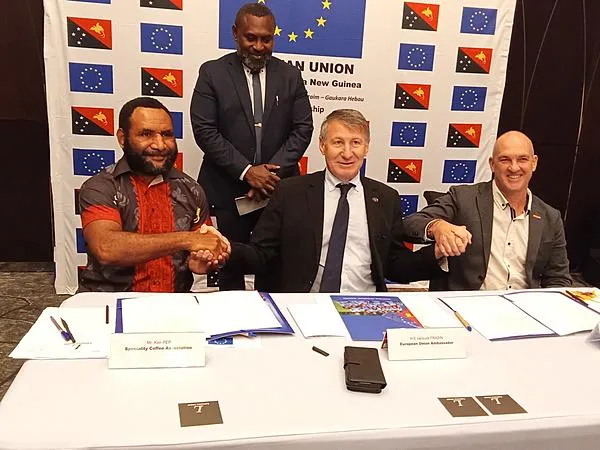
In celebration of International Women’s Day 2025, the European Union (EU) has signed two new Human Rights thematic grant contracts to support women’s economic empowerment in Papua New Guinea (PNG).

The initiative aligns with the United Nations’ global theme, “For ALL women and girls: Rights. Equality. Empowerment,” which aims to accelerate action toward gender equality.

The EU’s Roadmap for Women’s Rights serves as a strategic framework to combat gender-based violence, protect women’s and girls’ rights, and create equal opportunities in all sectors of society.

As part of this commitment, the EU exclusively funds PNG Civil Society Organizations (CSOs) to drive human rights and democracy, enhance economic participation, and support policy changes that promote equality.

Following a Call for Proposals in 2024, which focused on removing economic barriers for women and marginalized groups, the EU Delegation has awarded two key projects:

  • World Vision PNG – Receiving a 3.5-million-kina (€818,750) grant, this project, titled “Sapotim Strongpla Meri: Empowering AROB Women in Business” will assist 150 women entrepreneurs in Bougainville by enhancing their skills, knowledge, and access to market systems.
  • Specialty Coffee Association of PNG – Also receiving 3.5 million kina, this project will provide women and girls in the specialty coffee sector, particularly in the Highlands, with entrepreneurial training, financial services, and leadership development.

Speaking at the signing event, EU Ambassador Jacques Fradin praised the strong collaboration between the PNG Government, World Vision, the Specialty Coffee Association, and civil society in championing gender equality and human rights.

The event was attended by the Minister for Security and Bougainville Regional MP, Hon. Peter Tsiamalili Jr, along with representatives from civil society and the media.

March 17, 2025

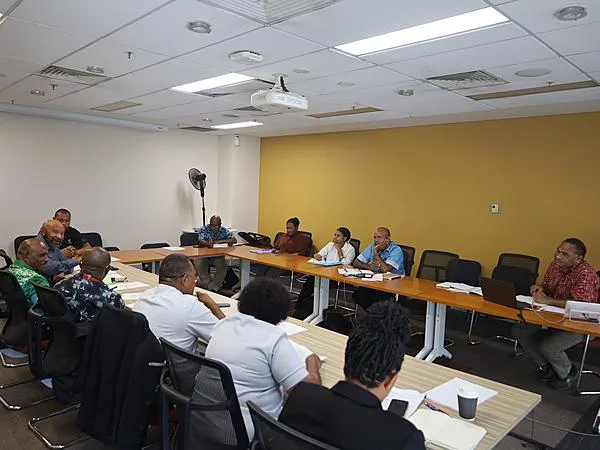
The Papua New Guinea Extractive Industries Transparency Initiative (PNGEITI) convened a Beneficial Ownership (BO) Technical Working Group meeting, bringing together key stakeholders to discuss strategies for enhancing BO transparency within the extractive sector. Representatives from the Bank of Papua New Guinea’s Financial Analysis and Supervision Unit (FASU), the Investment Promotion Authority (IPA), the Mineral Resource Authority (MRA) and Department of Petroleum participated in the discussions aimed at accelerating efforts towards full implementation of BO disclosure for the extractive industries sector in PNG.

The meeting provided an opportunity to update stakeholders on the progress made so far in advancing BO transparency and to outline the next steps necessary to further strengthen governance and accountability in the extractive industry.

Significant progress has been made in PNG’s efforts to enhance BO transparency, dating back to the initial scoping study in 2017. The study identified key challenges, including legal gaps, lack of awareness, and data collection difficulties. Key milestones achieved since then include:

  • Scoping Study and Roadmap Development (2017), this study assessed the state of BO transparency in PNG, leading to the development of a roadmap that outlined strategic steps for BO disclosure, including legal reforms, stakeholder engagement, and capacity building.
  • Implementation Phase (2019), the roadmap was put into action, involving stakeholder consultations, capacity building, and the development of systems for BO data collection and management.
  • BO Disclosure Report (2020), this report provided crucial insights into BO ownership in the extractive sector, highlighting both successes and challenges encountered in implementation.
  • Amendment of the IPA Companies Act (2022), where a key milestone in PNG’s BO journey, this amendment introduced a mandatory BO disclosure requirement, strengthening regulatory frameworks and increasing transparency.

A critical issue raised during the meeting by FASU concerned the scope of BO disclosure under Anti-Money Laundering (AML) standards. While AML regulations mandate BO disclosure to competent authorities such as law enforcement agencies, PNGEITI’s Standard 2023 and Requirement 2.5 calls for public disclosure of BO information in the extractive industries sector. The discussion underscored the need for a clear boundary of public access to BO data while ensuring compliance with both national and international standards.

Investment Promotion Authority (IPA) representative, Mr. Maru, highlighted that the Amended Companies Act 2022, specifically Section 72(a), mandates companies to provide Beneficial Ownership (BO) information and identify the beneficial owners of shares. He further noted that the IPA serves as the custodian of BO data.

PNGEITI Director for Projects and Procurement, Mr. Diclah Taureka, emphasized the need for a standardized BO disclosure framework, stating, “To progress beneficial ownership disclosure in line with PNGEITI requirements, we are proposing the development of a contextualized BO disclosure reporting template, which will be refined in consultation with key stakeholders.”

Supporting this, PNGEITI Director of Policy and Programs, George Kauli, reinforced that while PNG adheres to EITI Global Standards, implementation strategies must be tailored to the local context. He stated, “What is practiced in Papua New Guinea may differ from other EITI-implementing countries. The Companies Act 2022 provides the legal foundation for BO disclosure across all companies operating in PNG. For PNGEITI purposes, our focus for 2025 is to develop a contextualized BO disclosure template specifically focused on extractive industries.”

To further advance Beneficial Ownership (BO) transparency, the Papua New Guinea Extractive Industries Transparency Initiative (PNGEITI) and key stakeholders have outlined priority actions for 2025. These initiatives include conducting comprehensive training sessions for government officials, companies, and other stakeholders on BO requirements, disclosure processes, and compliance measures. Additionally, PNGEITI will develop and distribute guidance documents to assist companies in fulfilling their BO disclosure obligations.

A nationwide awareness campaign will also be launched, utilizing television, radio, print media, and social media platforms to educate the public on the importance of BO transparency. Furthermore, PNGEITI will host public forums and town hall meetings to facilitate open discussions among civil society, industry associations, and government agencies. Lastly, ongoing support will be provided to companies to strengthen their capacity in meeting BO requirements effectively.

PNGEITI remains committed to fostering transparency, accountability, and good governance within the extractive sector. The outcomes of the BO Technical Working Group meeting reaffirm Papua New Guinea’s dedication to implementing global best practices in BO disclosure while ensuring alignment with local regulatory frameworks.

March 17, 2025

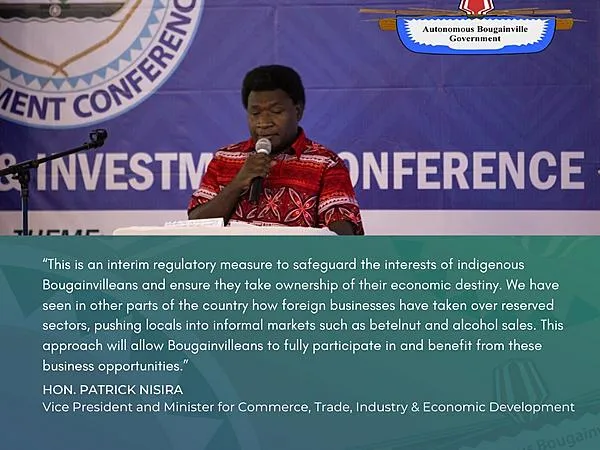
The Autonomous Bougainville Government (ABG) has imposed a moratorium on new foreign investments in business sectors reserved exclusively for indigenous Bougainvilleans.

This directive, issued under the authority of the Minister for Commerce, Trade, Industry and Economic Development, Hon. Patrick Nisira, is in line with Bougainville Executive Council (BEC) Decision No. 18 of 2024 on the Bougainville Indigenous Business Protection List.

The moratorium includes the following key directives:

  • Implementation of BEC Decision No. 18 of 2024 on the Bougainville Indigenous Business Protection List;
  • A moratorium on new foreign investment business activities reserved for local Bougainvilleans;
  • A total ban on new foreign investment in sectors reserved for Bougainvilleans, including retailing and wholesaling, whether through joint ventures or standalone businesses; and
  • A restriction on joint ventures and proposed investments through marriage, specifically involving Bougainvillean men and women with foreign spouses.

Minister Nisira in announcing the moratorium, emphasized the need to protect the growth of indigenous Bougainville businesses, particularly in the small and medium enterprise (SME) sector.

“This is an interim regulatory measure to safeguard the interests of indigenous Bougainvilleans and ensure they take ownership of their economic destiny,” Nisira said. “We have seen in other parts of the country how foreign businesses have taken over reserved sectors, pushing locals into informal markets such as betelnut and alcohol sales. This approach will allow Bougainvilleans to fully participate in and benefit from these business opportunities.”

He reiterated that his Ministry and Department remains committed to enforcing policies that support economic sector growth while protecting the rights of indigenous Bougainvilleans in business.

The Minister however reassured that the moratorium does not hinder Foreign Direct Investment (FDI) in unrestricted sectors and welcomed investors to explore opportunities in other industries within Bougainville.

“We welcome foreign businesses to invest in areas not included in the reserved list. This means the moratorium does not impede Foreign Direct Investment in unrestricted sectors. Therefore, on behalf of the Toroama-Nisira government, I welcome investors to invest in Bougainville.”

For further information or clarification on the Bougainville Indigenous Business Protection List, investors and stakeholders are advised to contact the Department of Commerce & Trade in Buka.

March 17, 2025

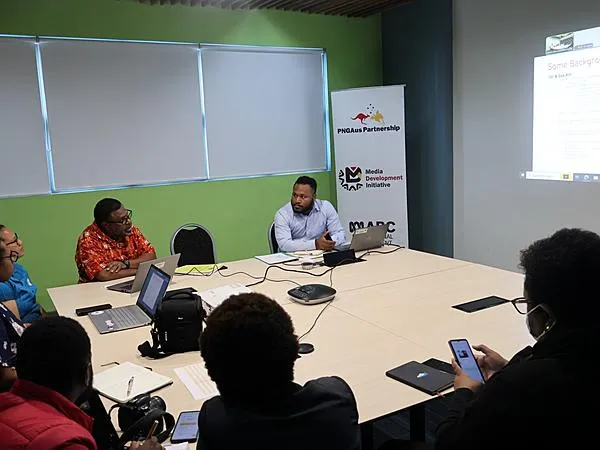
The Papua New Guinea Chamber of Resources & Energy (PNG CORE) successfully hosted a media briefing on Benefit Sharing Agreements in collaboration with ABC International Development - Media Development Initiative, PNG (ABC-MDI) on Friday, March 7, 2025, in Port Moresby.

This media briefing provided valuable insights on Benefit Sharing Agreements (BSAs) in the petroleum and energy development projects to more than 15 participants both in person and online.

Key Topics Covered:

  • Benefit Sharing Agreements or Development Agreements are a culmination of consultations between the National Government, Provincial Government, Local Level Government and Landowners.
  • What is a Benefit Sharing Agreement (BSA) and what are the Oil and Gas Act 1998 requirements?
  • At what stage of project development does a BSA come in?
  • Examples of current BSAs, such as the Umbrella Benefit Sharing Agreement related to the PNG LNG project.
  • Challenges faced with reaching an agreed distribution of benefits from the extractive industries in PNG.

PNG CORE’s Petroleum Industry Working Group Chair Mr. Sam Koyama led this briefing. With over 27 years of experience in the petroleum sector in Papua New Guinea, Mr. Koyama provided a comprehensive overview of the processes involved in a resource project development, from exploration to development and to production and with specific focus on the role of BSAs.

Additionally, the briefing explained the difference between BSAs and Development Agreements, as outlined in the Oil & Gas Act. Mr. Koyama clarified the terminologies used, explained the process and spent time delving into the discussion around the broader intention and scope of Development Forums, which included various aspects of resource development awareness beyond just the stitching together of a benefits package for a Project.

The media plays a crucial role in the development of Papua New Guinea, and PNG CORE is committed to supporting this through informative and engaging briefings. This initiative aligns with PNG CORE’s strategic direction on Communication and Stakeholder Engagements, highlighting the importance of industry collaboration for nation-building.

"At PNG CORE, we recognise that a well-informed media is crucial to fostering transparency and accountability within the industry," said PNG CORE Chief Operating Officer Mrs. Pansy Taueni-Sialis.

"Collaboration and knowledge sharing are at the heart of our mission, which is why we deeply value initiatives like the ABC-led Media Development Initiative. These efforts play an important role in equipping journalists with the insights they need to report accurately and effectively on critical topics such as Benefit Sharing Agreements.”

“This year, PNG CORE is committed to strengthening its engagement with the PNG media. We acknowledge the challenges facing mainstream media in covering industry-related issues, and we are actively developing internal programs to bridge these gaps."

This engagement follows up on PNG CORE’s 2024 briefing to the media on development processes for mining and energy projects in PNG.

March 16, 2025

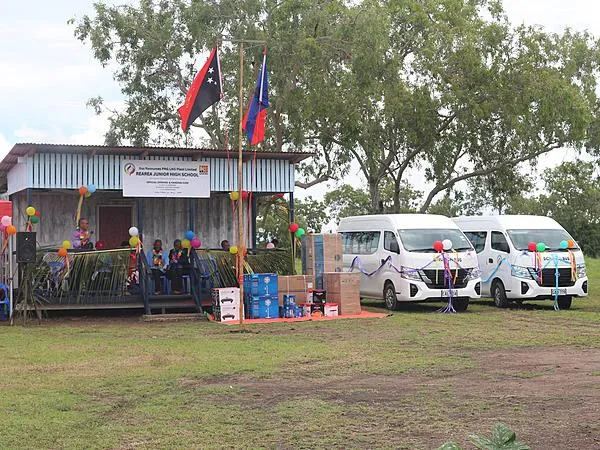
The Mineral Resources Development Company (MRDC), through its subsidiary Gas Resources PNG LNG Plant Limited, has successfully delivered a K2-million infrastructure project to the Rearea Junior High School, benefiting communities affected by PNG LNG Plant.

The project, which took five months to complete, was funded through MRDC’s Community Infrastructure Trust Fund and facilitated by the Community Infrastructure Trust (CIT) Team.

It includes a 1-by-4-in-1 classroom building, three duplex staff houses for the school, and two 15-seater buses, one designated as a school bus and the other as a church bus.

The official launch and handover ceremony took place on March 7 at Lealea in the Hiri-Koiari District of Central Province, marking another milestone in MRDC’s ongoing commitment to supporting landowner beneficiaries.

Speaking at the event, MRDC Gas Resources Chair Lady, Ulato Avei, reaffirmed the company’s dedication to community development and long-term growth.

“As the chairperson of Gas Resources PNG LNG Plant Limited, my directors and I have a main objective: to create a foundation for a better future in the four villages. We have taken a deliberate approach to focus on education and health,” Avei said.

The Principal of Rearea Junior High, Morea Aia, expressed gratitude for MRDC’s investment in education, emphasizing the impact of infrastructure improvements on student learning and overall school development.

MRDC engaged four contractors to ensure the successful completion of the project:

  • Buria Tech Limited – Double classroom construction
  • Lau Ita Limited – Duplex staff house 1
  • Kalova A1 Construction – Duplex staff house 2
  • GN Contractors – Duplex staff house 3

In an exclusive interview with PNG Business News, MRDC’s Avei mentioned the commitment to funding the construction of new science laboratories for the school. While the cost of this project is yet to be determined, scoping and documentation preparations are currently underway.

This development is part of MRDC’s continuous partnership with landowner beneficiaries, ensuring that essential services such as education and health are prioritized. The company said it remains committed to enhancing infrastructure and creating long-term benefits for the PNG LNG Plant site villages.

March 16, 2025

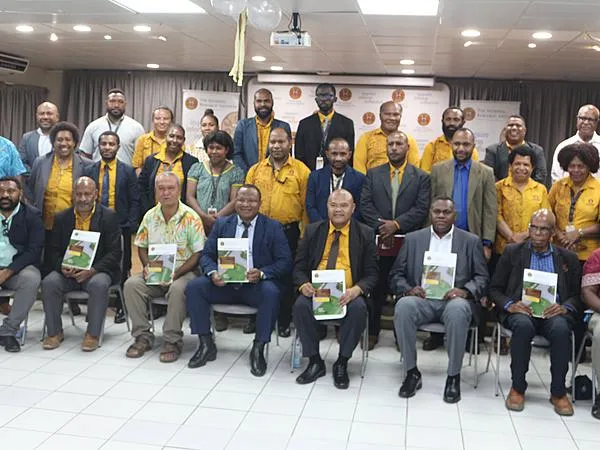
Minister for Higher Education, Research, Science, and Technology, Hon. Kinoka Feo, has reaffirmed the government’s commitment to research-driven national development with the launch of the National Research Institute’s (NRI) Corporate Plan 2024-2028 and Revised Strategic Plan 2021-2030 last March 6.  

The Corporate Plan is linked to the PNGNRI Strategic Plan 2021-2030; the MTDP IV 2023-2027 and other relevant Government plans and policies.  

Speaking at the launch at Port Moresby, Minister Feo highlighted the vital role of the NRI in shaping evidence-based policies and fostering innovation.

He emphasized that the newly launched Corporate Plan serves as an operational roadmap for the revised Strategic Plan 2021-2030, ensuring the institute’s work aligns with the government’s key policies, including the Medium-Term Development Plan 2023-2027 and Vision 2050.

Describing the Plan as more than just a document, Minister Feo called it a "blueprint and a call to action" for the country's intellectual and policy development.

He stressed that strategic research and innovation are critical to driving sustainable progress, adding that the Marape-Rosso Government strongly supports the integration of science and technology into national planning.

“This plan is a product of collaboration between government, researchers, policymakers, and stakeholders. It is through this unity of purpose that we will achieve our national goals,” he said.

Minister Feo commended the NRI for being the intellectual backbone of policymaking in Papua New Guinea. He acknowledged the importance of research in addressing emerging global challenges, noting that in an era of rapid technological advancements, think tanks like the NRI play a crucial role in bridging academic research with practical governance.

“You, the researchers and staff, are not just scholars, you are architects of national strategy. This plan embodies our commitment to turning knowledge into action, ensuring that evidence-based solutions drive our nation’s progress,” he said.

Attendees included the Council Members of the National Research Institute, Director of the National Research Institute, distinguished guests, management and staff of NRI, researchers, and members of the Council.

NRI Director Dr Osborne Sanida explained that the Institute has a motto of, “Inquire, Inform, Influence”, which is applicable across all research programs and non-research functions to ensure that it is the vision and underlying motto across its work.

The Corporate Plan is implemented through the development of Annual Work Plans, subject to financial and human resource constraints for each year. It covers the following key areas:

  • Mandate and governance of the Institute;
  • Vision, mission and core principles;
  • Management and operational areas of the Institute;
  • Organizational structure;
  • Research protocols and plan alignment;
  • Research Division Plan, comprising six research programs
  • Plans for cross-cutting initiatives;
  • Plans for hosted programs and projects;
  • Corporate Services Division Plan, comprising five sections;
  • Knowledge Management Division Plan, comprising two sections;
  • Plan for capital investments
  • Resourcing, assumptions and risk; and
  • Strategic Implementation Framework and Monitoring and Evaluation protocols.

“I thank everyone involved in the compilation of this document. The Corporate Plan would not have been possible without the direction and oversight of the PNGNRI Council and the collective contribution from the Institute’s senior executive management; research program leaders; and CSD and KMD section heads. It is a plan that we can all be proud of as we collectively developed it and now own the document and implement it as a team,” Dr Sanida said.

The Corporate Plan outlines key research priorities that will enhance national competitiveness. Minister Feo stated that expanding research capabilities, fostering interdisciplinary studies, and strengthening collaborative networks will be essential in positioning Papua New Guinea at the forefront of policy innovation.

“Our nation’s most valuable resource is its intellectual capital,” he noted. “From economic policy to social innovation, from technological advancement to sustainable development, the NRI will be at the center of strategic thinking.”

The plan also details specific objectives, including:

  • Defining critical research priorities,
  • Identifying necessary resources for implementation,
  • Establishing measurable performance indicators, and
  • Developing operational strategies for effective execution.

Minister Feo urged the NRI’s researchers, staff, and council members to embrace the Corporate Plan as a mission statement for national development, noting the institute’s role as a guiding force in policy decisions, using rigorous research to navigate the country through complex challenges and opportunities.

“As Nelson Mandela once said, ‘Education is the most powerful weapon which you can use to change the world.’ Today, we reaffirm our belief in the power of research, the strength of strategic thinking, and our collective ability to shape a brighter future,” he stated.

“Today, we make a commitment to the pursuit of knowledge, the advancement of innovation, and the realization of our shared vision for a prosperous and sustainable future,” he added.

March 13, 2025

PNG's education sector now offers more opportunities for students to pursue affordable, high-quality tertiary education in their own country with the official opening of the Philippines Christian University (PCU) Papua New Guinea Campus.

This University is part of a broader vision of the founder and Director of Waigani Christian College and member for North Waghi, Hon. Benjamin Mul, to provide quality education for country’s growing population, recognizing PNG’s need for more higher education institutions.

This initiative is partnership between PNG Christian University Ltd and the Philippines Christian University, aiming to provide internationally accredited university courses to students in PNG.  

The official opening of the University on March 5th also saw the presentation of two new 25-seater buses to the new administration of PCU-PNG Campus and 14 new classrooms opened.

MP Mul said: “Philippines Christian University is 79 years old and is one of the oldest universities in the Philippines that enrolls 36,000 students annually with 8 campuses around the world offering internationally recognized courses.”

“The partnership with Philippines Christian University will allow students in PNG to receive internationally accredited programs through utilizing online technology without having to leave the country,” he added.

The University marks the growth of the Waigani Christian College, which provided education from kindergarten to Grade 12 and is now moving into tertiary education.

Waigani Christian College Principal, Mr. Abakure Kaupa, said the idea of establishing a university had been under discussion for some time.

The turning point came during the school’s 10th anniversary celebration, attended by Prime Minister James Marape, the Minister for Education, and the Ministry for Higher Education. During this event, the school made its intentions clear, receiving initial encouragement from government officials.

Following this, PNG Christian University Ltd was registered as a company, allowing it to legally engage in educational partnerships. A Memorandum of Understanding (MOU) was signed with PCU on December 17, 2024, establishing a four-year collaboration (2025–2028).

Under this agreement, PCU's internationally accredited courses will be offered at the PNG campus, while PNG Christian University works towards meeting full accreditation requirements under PNG’s higher education laws.

PCU-PNG Campus will primarily offer online courses through the Philippines Christian University, utilizing upgraded internet-equipped classrooms at the Waigani campus. Initial courses will exclude law, nursing, and medicine due to regulatory and facility constraints.

However, other undergraduate programs will be available, with a minimum enrollment requirement of 30 students per course for classes to commence.

The first intake was originally planned for March 2025 but has been delayed until June 2025 due to ongoing registration processes with the Department of Higher Education, Research, Science, and Technology (DHERST). The minimum GPA for admission will be 2.6 or higher, depending on the program.

To ensure accessibility, tuition fees will be structured to be affordable while maintaining quality standards, MP Mul said.

Discussions are underway with the Government's Higher Education Loan Program (HELP) to enable students to access financial support.

Beyond the university partnership, Waigani Christian College is also focusing on Early Childhood Teacher Education, a key initiative aligned with PNG’s 1-6-6 education policy.

This program will operate independently of PCU and will be guided by the PNG Department of Education curriculum.

The government has recognized only three institutions in PNG to offer early childhood teacher training:

  • University of Goroka (UOG)
  • PNG Education Institute (PNGEI)
  • YWCA Early Childhood Education College

Waigani Christian College is now set to become the fourth recognized higher education institution, following a PGK 5 million commitment from the Minister for Education, Lucas Dekena. The college has already engaged consultants from UOG to develop course materials, and lecturers are in place to commence training.

MP Mul emphasized that the goal is not just to provide higher education but to ensure high-quality standards. The university will work closely with DHERST and the Department of Education to ensure compliance with national regulatory frameworks.

Plans are also in place to expand infrastructure, including a multi-story university building to accommodate growing student numbers, he added.

With the University’s first-degree programs expected to launch by mid-2025, PCU-PNG Campus provides an alternative pathway for students who may not have secured placements in PNG’s existing universities.

Vice Chancellor for Philippines Christian University-PNG Campus Dr. Margie Dela Cruz said the partnership marked a promising journey of academic exchange, innovation, and challenges.

She said, “We will use technology to its fullest potential in providing quality education.

March 13, 2025

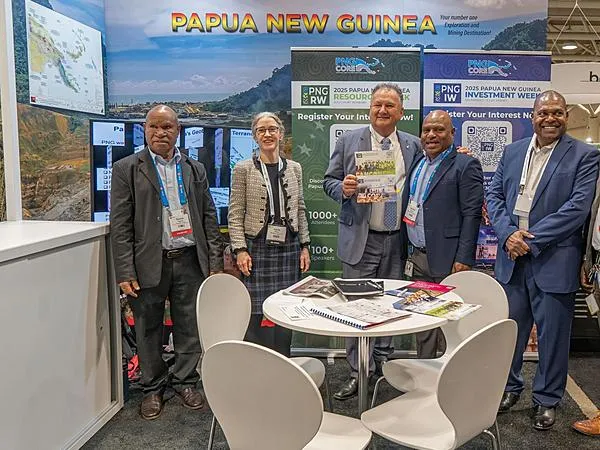
The PNG Chamber of Resources & Energy (PNG CORE), in collaboration with the Mineral Resources Authority (MRA), participated in the 2025 Prospectors & Developers’ Association of Canada (PDAC) convention, held in Toronto, Canada, from March 2-5.

PDAC is the world's largest mining conference, attracting over 27,000 delegates and featuring more than 1,100 exhibition booths.

The combined booth of MRA and PNG CORE was supported by expert geologists and industry executives who spent three and a half intense days engaging with the international investment community. They addressed concerns and attracted significant investment interest to Papua New Guinea.

PNG CORE is grateful for the participation of the Minister for Mining, Hon. Wake Goi (MP), and the Assistant Minister for Mining, who attended and participated in several government-to-government meetings, fostering mutually beneficial interests between respective countries.

"While it is impressive to attend the world's largest mining conference, I realise that the PNG Investment Week offers more engagement, networking, and relationship-building opportunities. This sentiment was shared by other participants who attended both events," said PNG CORE Events Chair and Councillor Mark McMonagle.

"We believe that many of these investors may attend the PNG Investment Week in Sydney in December this year to further explore their interest in investing in the PNG mining sector or servicing the mining sectors."

The industry acknowledges the challenges faced in recent years, including a decline in exploration activities and concerns over the depletion of mineral resources. These issues highlight the importance of attracting new investments and revitalising interest in PNG's mining sector. PNG CORE recognises the value of industry working closely with the government to address these challenges. Collaborative efforts are essential to overcoming obstacles and ensuring the sustainable development of the mining sector.

PNG CORE's participation in PDAC aligns with its strategic direction to promote investment through events, knowledge sharing, and convening. This initiative demonstrates the collaborative efforts of MRA and PNG CORE to show investors worldwide that industry and government are working together to promote the industry for the benefit of PNG's people and its investors.

March 12, 2025

The Special Economic Zone (SEZ) of the Konebada Industrial Park project is underway with the establishment of a fabrication and training facility known as the Central Industrial Center, Portion 152.

This project is spearheaded by Kumul Petroleum Limited (KPL) and is expected to create thousands of jobs and significantly boost the country’s manufacturing capabilities in the oil, gas, and mining industries.

The Konebada park, seen as an exciting step into economic, business and human resource development for Papua New Guinea, will be officially announced once completed, KPL said in a statement.

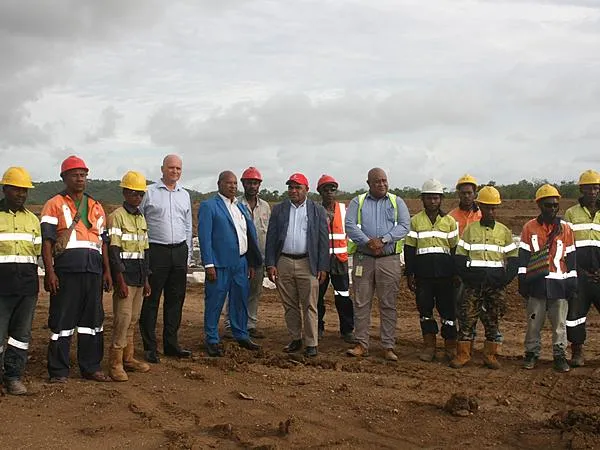
During a recent project-site visit with PNG Business News, KPL Managing Director Wapu Sonk spoke of the project’s vision, emphasizing that PNG must take ownership of its industrial development.

“We saw in the PNG LNG project how foreign workers and prefabricated materials dominated the sector. This time, we are investing in a local fabrication facility to ensure that PNG workers and businesses play a meaningful role in major resource projects,” Sonk said.

The facility will include a steel fabrication plant, where components such as pipes, vessels, and other industrial materials will be manufactured locally.

“We want to fabricate what goes into an LNG plant right here in PNG. But to do that, we need highly skilled people, which is why we are also building a world-class training center,” he added.

Maru: SEZ Project a ‘Game Changer’

Trade and Investment Minister Richard Maru commended Kumul Petroleum’s initiative, describing it as a “game-changer” for PNG’s economic future. He stressed the importance of transitioning from reliance on foreign-made components to local manufacturing and workforce development.

“For too long, we have been exporting jobs and importing finished products. This project aligns with the government’s vision to create skilled employment, increase revenue, and position PNG as a competitive industrial hub in the region,” Maru said.

The government has endorsed the SEZ over the project site, providing tax and duty-free incentives to attract investors in manufacturing, energy, and resource-related industries. A National Executive Council (NEC) submission for the SEZ’s formal approval is currently underway, which Minister Maru has viewed and expressed confidence the project will change the country.

“This SEZ will be structured to make PNG competitive against regional players like Indonesia, the Philippines, and China. When investors come into PNG and we start fabricating steel, we will be producing for the big companies in the oil and gas industry, and we have to be competitive with our pricing,” he said.

“We are dealing with global companies who have been in the industry for a long time, which is why KPHL needs government support to be able to compete on a level playing field with other competitors and attract the business. Our biggest need is to generate revenue and create jobs for the local people which this project will provide,” Maru explained.

“We have a well-educated workforce with strong English proficiency and a lower labor cost, making us an attractive destination for industrial investment,” he added.

Minister Maru said the two declared SEZ include the Paga Hill SEZ in town and the Konebada Petroluem Park at Porebada in Central Province outside of Port Moresby. The project is set up similarly to SEZs in China, Dubai, Japan, and the Philippines.  

Maru emphasized the long-term potential of the project, comparing it to industrial hubs in Dubai, China, and Malaysia.

“The vision here is to develop a full-fledged industrial park where companies can manufacture, assemble, and export goods. This is the beginning of a new era for PNG’s industrial sector,” he said, noting that it will consist of the two projects: a training facility and the fabrication factory.

The training facility aims to upskill workers in specialized construction, mining, and marine industry skills. According to Sonk, the center will initially support 1,000 direct jobs, with numbers expected to rise to 3,000 to 4,000 as the facility expands and operates in multiple shifts.

The broader industrial ecosystem could generate over 10,000 jobs, including indirect employment in supporting services like transport, catering, and logistics, he added.

The project site spans approximately 300 hectares, with 140 hectares reserved for further industrial development. Plans also include a cement batching plant, road upgrades, and a dedicated wharf to facilitate exports and reduce logistics costs.

“We are planning for large-scale manufacturing,” Sonk stated. “The road will be expanded to 14 meters to accommodate heavy loads, and we are considering a rail system to transport fabricated components directly to the wharf.”

Sonk and Maru invited investors to take advantage of the SEZ incentives and be part of PNG’s industrial transformation.

“This project is not just about Kumul Petroleum, it’s about creating an ecosystem where multiple industries can thrive,” Sonk said.

Maru urged PNG’s youth to seize the opportunities offered by the training facility. “We want to train Papua New Guineans to be globally competitive, just like Filipino workers who are sought after worldwide. This is our chance to equip our people with the skills to work on major projects both locally and internationally.”

Additionally, about 20 locations have been identified as potential SEZ in the country with only four expected to be free trade zones.

March 11, 2025

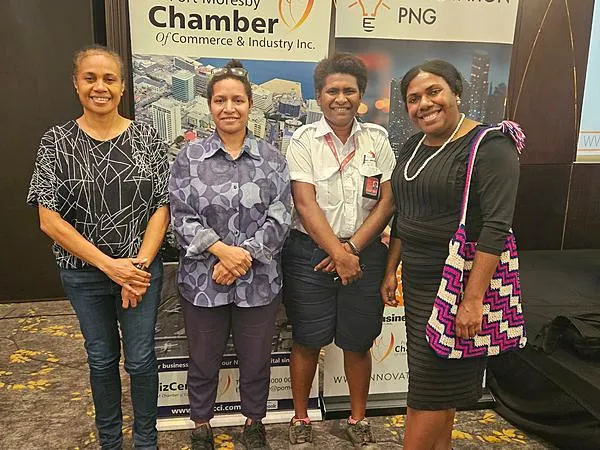
The Port Moresby Chamber of Commerce and Industry (POMCCI) and Business Advantage International recently hosted the “Women in Tech Business Breakfast,” part of the lead-up to Innovation PNG 2025.

The event showcased a distinguished panel of women excelling in the fields of finance, software development, aviation, and digital transformation.

 The event at the Lamana Hotel on February 27 recognised the achievements of women leading Papua New Guinea’s technology-driven sectors.

A highlight was the announcement of the shortlist for the 2025 Innovation PNG Awards, celebrating groundbreaking technological advancements in the country.

However, the real focus of the morning event was on the women driving innovation and their contributions to the country’s digital future.

The panel featured:

  • Keren Mahabi – Manager Strategic Intelligence, Kina Bank
  • Crystal Kewe – Founder & Chief Technology Officer, Crysan Technology
  • Priscilla Kevin – ICT ERP Consultant & President, PNG ICT Cluster
  • Lindah Eremas – Licensed Aircraft Maintenance Engineer, Air Niugini

Each panelist shared insights into their projects and the challenges and opportunities shaping their industries.

Pioneering Projects Driving Change

  1. Artificial Intelligence in Finance -- Keren Mahabi from Kina Bank highlighted how AI is transforming regulatory compliance, competition, and risk management in the financial sector. Her role involves tracking economic, social, and technological trends to provide strategic insights. She emphasized AI’s dual impact—creating new opportunities while introducing challenges that require proactive planning.
  2. Digital Health and Financial Inclusion -- Crystal Kewe discussed two major projects her company, Crysan Technology, is completing:
    1. A DFAT-funded Laboratory Information Management System for PNG’s Central Public Health Laboratory, streamlining testing for malaria, TB, HIV, and COVID-19. This project could lay the foundation for a nationwide public health information system.
    2. A personal finance app developed with the Centre for Excellence in Financial Inclusion (CEFI), designed to help over 300,000 graduates build financial literacy and a savings culture in PNG. Kewe also mentioned an upcoming digital transformation initiative in collaboration with the Department of Community Development, aligning with PNG’s national digital strateg
  3. Empowering Women and Protecting Innovation -- Priscilla Kevin of the PNG ICT Cluster emphasized the need for intellectual property protection for PNG innovators. She detailed efforts to establish technology transfer centers to support local inventions and prevent foreign entities from capitalizing on PNG’s ideas.

She also highlighted the digital literacy gap among women and youth, citing a 2022 initiative that trained 900 women entrepreneurs in ICT skills. Many participants lacked fundamental IDs, creating barriers to accessing digital services.

Additionally, the National ICT Incubation Program, a partnership with the Department of ICT, aims to fund local tech startups, ensuring PNG nurtures homegrown solutions instead of relying on mports.

  1. Aviation and STEM Careers -- Lindah Eremas, a licensed Aircraft Maintenance Engineer at Air Niugini, spoke about the rigorous training and high-pressure environment of aviation engineering. She leads a 14-person team in line maintenance, ensuring aircraft safety for hundreds of passengers daily.

She encouraged more young Papua New Guineans, especially women, to pursue careers in STEM, emphasizing the constant learning required in aviation as new aircraft and technologies emerge.

When asked what excites them about their industries, panelists pointed to AI, problem-solving, digital inclusion, and local innovation. Mahabi sees AI as a disruptive force, requiring creativity and courage to navigate uncertainty.

Kewe emphasized AI’s role in equalizing opportunities in software development, urging professionals to learn prompt engineering to work effectively with AI tools.

Kevin highlighted the potential of technology to improve government services and reduce costs for rural communities.

Eremas spoke about the sense of responsibility she feels ensuring aircraft are safe, recognizing the importance of air travel in a country with limited road connectivity.

The event reinforced a shared commitment to empowering women and youth in technology. From mentorship to education and digital inclusion, these female leaders are paving the way for a stronger, more innovative PNG. The event served as a powerful reminder of the vital role women play in shaping the country’s technological and economic future.  

Innovation PNG Awards Shortlist Announced

Towards the end of the meeting, the shortlist for the Innovation PNG Awards 2025 was announced.

PNG’s brightest minds in business and government were recognized, with the finalists selected for their groundbreaking solutions across various sectors, reflecting the country’s growing commitment to innovation and technological advancement.

The awards, now in their third year, celebrate creative problem-solving through new ideas and technology.

Among this year’s innovations are Artificial Intelligence (AI) applications for financial services, a new water system design for villages, climate-resilient engineering solutions, and a new machine for processing sago.

Winners will be announced at a Gala Awards Dinner on March 27 at The Stanley Hotel, Port Moresby, with the awards being held alongside the Innovation PNG 2025 conference on 28 March.

The Innovation PNG Awards are divided into three categories:

1. Small Business Award (Sponsored by Kina Bank)

  • Bright Horizon Solutions – Developed an app for creating ID cards, successfully trialed during the Pope’s visit to PNG.
  • Bobatom Tech and Consultancy – Created an online learning platform for Flexible Open and Distance Education.
  • Project Support Services / Productive Solar Solutions – Invented solar-powered mills for smallholder farmers, with export potential.
  • Environmental Health Development Agency – Designed a unique water station to assist village life.
  • Gotronical – Engineered a new sago extraction machine.
  • Apeketon Business Hub – Supports SMEs on Lihir Island in collaboration with Australian Business Volunteers.

2. Large Business Award (Sponsored by Remington Group)

  • Markham Culverts – Developed Geosynthetic Cementitious Composite Mats (GCCMs) as a sustainable alternative to concrete.
  • Kramer Asia-Pacific (PNG) Ltd – Integrating climate-resilient engineering solutions.
  • Nasfund – Using AI to improve back-office efficiencies.
  • CreditBank PNG – Implemented a tech-driven customer onboarding system.
  • TISA Bank – Introduced an instant account-opening solution for walk-in customers.
  • MiBank – Created a new agency model for financial services outreach.

3. Digital Government Award (Sponsored by Nasfund)

  • Green Finance Centre – Established under the Bank of PNG to facilitate green financing.
  • Department of ICT – Developed an online police clearance system with biometric integration.

In a media release, Mark Pesce, Chair of the awards judging panel, emphasised the impressive diversity of entries this year.

"The range of innovations was nothing short of breathtaking. Over half of the entries came from small businesses, proving that innovation is thriving at the grassroots level in PNG," said Pesce.

March 09, 2025

Papua New Guinea’s economy is set to continue its strong recovery in 2025, fueled by robust resource exports, a record trade surplus, and solid government spending, according to the latest PNG Westpac Wailis, a quarterly economic update providing in-depth insights into the country’s economy.

However, economic challenges remain, including persistent inflation, currency depreciation, and global trade uncertainties.

The National Statistical Office (NSO) revised PNG’s 2023 GDP growth from 3.0% to 3.8%, reflecting stronger-than-expected performance in crude oil and natural gas production. This revision has led to an upward adjustment in 2024 GDP growth to 4.3% from the previous estimate of 3.7%. For 2025, GDP is forecast to grow by 4.7%, slightly lower than the earlier 5.1% projection due to base effects.

Sectoral Growth Projections (2021-2027)

Data from Westpac’s forecast highlights the growth trends across primary, industrial, and service sectors:

  • Mining & Quarrying: After recovering from a -11.6% contraction in 2021, the sector grew 5.1% in 2022 and is projected to expand by 3.6% in 2025.
  • Construction: Buoyed by resource projects, the sector recorded 13.4% growth in 2022 and is expected to maintain momentum with a 5.0% expansion in 2025.
  • Telecommunications & ICT: One of the fastest-growing sectors, increasing by 15.5% in 2023, is set to continue double-digit growth as Vodafone and Starlink expand services.
  • Wholesale & Retail Trade: Forecast to grow 3.8% in 2025, reflecting higher consumer spending due to government expenditure and trade sector expansion.

Inflationary Pressures Persist Across Regions

PNG continues to battle persistent underlying inflation, which reached 5.4% year pace in the December 2024 quarter, up from 4.4% in September 2024. Headline inflation was just 0.7% in the year due to falling betal nut prices.  The underlying inflationary pressure largely stem from increases in:

  • Alcoholic Beverages & Tobacco (+6.4% year and +21.5% year respectively)
  • Transportation (+3.5%), with fuel prices being year volatile lifting 20.3% in the year to the June quarter before dropping 7.1% in the year to December.
  • Food & Beverages (+4.8% year), with cereal prices up 6.8% and dairy products rising by 5.0% in the year to December.

Inflation has varied significantly across PNG’s regions:

  • Goroka, Hagen and Madang recorded the highest inflation at 7.2% in the year to December, more than double the national average.
  • Lae experienced deflation (-4.3% year), continuing a downward trend from -6.3% in the year to September 2024.
  • Port Moresby saw almost stable prices at 0.5% in the year to December, demonstrating less price volatility than other provinces.

Trade Surplus Reaches Record High as Imports Decline

PNG’s trade balance reached an all-time high, with merchandise exports rising by 10% while imports fell by 20% in the first three quarters of 2024.

The September quarter alone recorded a trade surplus of K9.1 billion, driven by gold, copper, and agricultural exports.

Export Performance by Commodity (2024)

Gold exports surged by 47%, reaching K9.2 billion in the first three quarters of 2024, supported by high global gold prices and the reopening of the Porgera mine.

Cocoa and coffee prices hit record levels, but despite strong prices, coffee exports fell by 47% in volume due to  declining production by PNG producers.

Furthermore, agricultural exports rose by 13%, boosted by strong cocoa and marine product shipments. LNG exports declined 6% in the first three quarters of 2024 but rebounded in the last quarter, especially with Japan increasing its LNG purchases.

On the import side the 20% drop can be attributed to, at least in part, to foreign exchange shortages making it difficult for businesses to source international products. The largest declines were seen in:

  • Food & Live Animal imports (-30%)
  • Mineral fuels & lubricants (-37%)
  • Manufactured goods (-25%)

Westpac warns that unless foreign exchange liquidity improves, import constraints are likely to persist into 2025 affecting consumer and business supply chains.

Bank of PNG Holds Kina Facility Rate at 4.0% Due To inflation Concerns

The Bank of Papua New Guinea (BPNG) has decided to keep the Kina Facility Rate (KFR) unchanged at 4.0% following its February Monetary Policy Committee (MPC) meeting. The central bank had previously raised the KFR by one percentage point in September 2024 to curb inflationary pressures amid a sound economic outlook.

With inflation remaining persistently high, analysts anticipate the possibility of further interest rate hikes in the coming months. The next Monetary Policy Statement, scheduled for release on March 31, will provide an updated assessment of economic conditions, potential interest rate changes, and the overall outlook for the PNG economy.

The Bank of PNG has maintained its strategy of a managed depreciation of the Kina through its "crawling peg" exchange rate system. In December 2024, the Kina weakened from 0.2516 to 0.2500 against the US dollar, followed by further declines to 0.2494 in mid-January and 0.2492 in early February.

The Kina has appreciated against the Australian dollar and Japanese yen due to the strengthening of the US dollar, particularly after Donald Trump’s return to the US presidency. However, this appreciation has increased pressure on the Kina to depreciate further against the greenback.

January saw a notable increase in foreign exchange auction volumes conducted by the central bank, rising to K400 million, up from K259 million in December. This suggests an effort by BPNG to provide liquidity to the market while managing exchange rate fluctuations.

Westpac projects that the Kina will continue its gradual depreciation through the first half of 2025, reaching 0.2402 by mid-year. However, a potential appreciation is expected toward the end of 2025 as large-scale resource projects bring in significant foreign exchange inflows.  

The bank’s latest forecasts predict the Kina at 0.2450 by March 2025, falling to 0.2405 by mid-year, before stabilizing and strengthening in 2026, reaching 0.2600 by December 2026.

  • USD: Expected to depreciate to 0.2405 by June 2025, before stabilizing in late 2025.
  • AUD: Kina projected to fluctuate between 0.3879 - 0.4056 in 2025.
  • JPY: Kina remains stable, around 37.04-37.98 per 100 JPY.
  • Global Risks: US Tariff Threats and Commodity Price Volatility

Westpac highlights that the Trump administration’s new protectionist policies pose risks to global trade. While PNG’s direct exports to the US are minimal (less than 1% of total exports), the indirect impact on major trading partners (China, Japan, and Australia) could disrupt commodity markets and supply chains.

In response to US-imposed tariffs, China introduced a 15% tariff on US coal, LNG, and crude oil, which could affect global energy markets, potentially impacting PNG’s key resource exports.

With economic conditions evolving, stakeholders will closely watch the upcoming March 31 Monetary Policy Statement for further guidance on interest rates, currency stability, and the broader economic outlook for the country.

Commodity Price Forecasts (2025)

  • Gold prices to remain high at $2,870/oz in Q1 2025 before slightly easing to $2,850/oz by year-end.
  • Copper prices to remain above $9,100/t, benefiting PNG’s exports.
  • Brent crude oil to average $70-$75 per barrel, with potential fluctuations based on global trade policies and geopolitical events.

Moreover, the 2025 National Budget includes a 5.4% increase in government spending, aimed at boosting economic growth. Key focus areas include:

  • Education, Health, and Law & Justice: Increased funding for social sectors.
  • Infrastructure & Transport: Reduction in budget allocations, despite the need for improved connectivity.

Government revenue is expected to rise by 10.8% in 2025, supported by strong economic activity and tax collections. However, foreign exchange constraints remain a challenge, impacting the government’s ability to finance essential imports and projects.

Although the country faces challenges in inflation, currency depreciation, and global trade uncertainties, PNG’s economic outlook for 2025 remains positive with strong growth expected in mining, agriculture, telecommunications, and construction.

The trade surplus and strong commodity exports provide a buffer against external shocks, but economic policies must address inflationary pressures and foreign exchange liquidity to ensure sustainable long-term growth, as the report states.

PNG is well-positioned to continue its growth trajectory while being aware of global economic uncertainties, with careful economic management and policy interventions.

The full PNG Westpac Wallis report for February can be found HERE
March 06, 2025

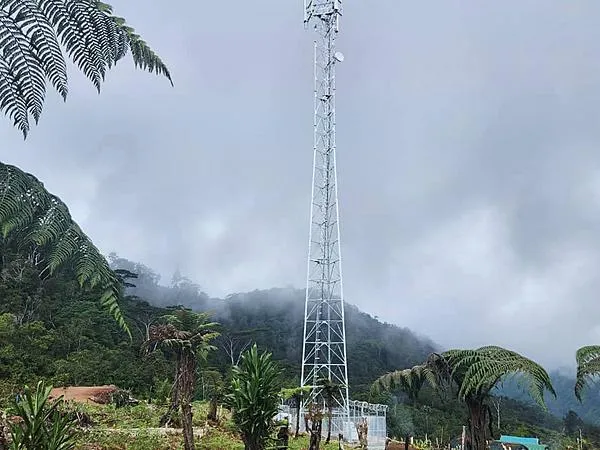
Digicel PNG recently announced a major milestone in its mission to enhance connectivity across Papua New Guinea. Since April 2022, Digicel PNG has significantly expanded its network, reaching all 21 provinces and the Autonomous Region of Bougainville, enabling more Papua New Guineans to get connected.

Over the past two years, Digicel PNG has built 115 new mobile towers and upgraded 96 mobile towers to 4G LTE, achieving a 20% increase in its 4G LTE coverage, thereby solidifying its position as the largest 4G network in the country. This expansion has resulted in the network covering over 80% of the population of Papua New Guinea, including both rural areas and major urban centers such as Port Moresby, Lae, Mt Hagen, Wewak, and Kokopo.

"This expansion underscores Digicel PNG’s dedication to bridging the digital divide and fostering economic and social development across Papua New Guinea," said Tarik Boudiaf, CEO of Digicel PNG. "By extending our mobile network to all 21 provinces and the Autonomous Region of Bougainville, we are making significant strides towards enabling every Papua New Guinean to get access to reliable and high-speed internet. Digicel has the largest network coverage in the country."

The deployment of new towers has been strategically balanced across the Highlands region, in Momase, in NGI, and in the Southern region, bringing the new coverage to almost a million people.

"We recognize the critical role that connectivity plays in today’s digital age," continued Tarik Boudiaf. "Our new builds and upgrades, especially targeting rural areas, help to ensure that remote communities are not left behind. In fact, the majority of our mobile network upgrades have been concentrated in the Momase and Southern regions, with the New Guinea Islands and Highlands regions also benefiting significantly."

"By investing in our network infrastructure, we are not just improving connectivity; we are contributing to the overall development of Papua New Guinea," added Tarik Boudiaf. "Whether it’s through facilitating better communication, supporting remote education, or enabling digital commerce, our network plays a vital role in the nation’s progress."

This expansion is part of Telstra’s commitment to Papua New Guinea, following its acquisition of Digicel Pacific in July 2022. This acquisition reflects Telstra’s dedication to supporting sustainable economic growth in the Pacific region.