Strengthening transparency, governance, accountability and compliance across Papua New Guinea's extractive sector is critical to attracting investment, ensuring resource-owning communities receive a fair share of development benefits and supporting sustainable economic growth.
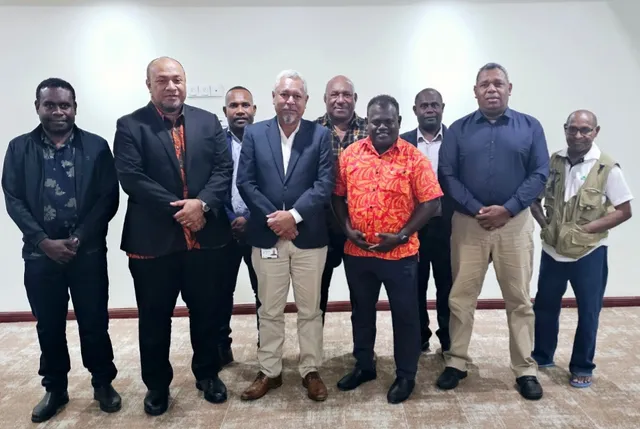
The issues were highlighted during Session 10A – Governance & Economic Standards at PNG Resources Week 2026, held on Wednesday, 15 July, at APEC Haus in Port Moresby. Moderated by Institute of National Affairs Executive Director Paul Barker, the session was held under the theme "Strengthening Transparency, Governance and Compliance to Build Trust and Investment Confidence."
Barker said resource developments inevitably generate both benefits and costs, but the overall gains must outweigh the impacts. Achieving this, he said, requires transparent investment arrangements, equitable benefit-sharing, strong oversight and active participation from government, industry and civil society.
He said these measures promote community harmony, reduce conflict and create a more stable investment environment while supporting employment and broader economic opportunities. The session also sought to identify practical measures to strengthen governance, anti-corruption efforts, legal certainty, financial integrity and regulatory compliance across Papua New Guinea's resource sector.
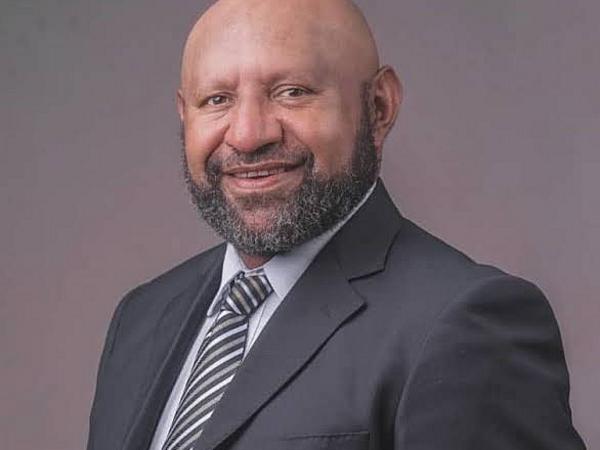
A keynote presentation was delivered by Papua New Guinea Extractive Industries Transparency Initiative (PNG EITI) Executive Director George Kauli, who outlined the organisation's role in improving transparency and accountability across the country's mining, petroleum and gas industries.
Kauli said the Extractive Industries Transparency Initiative (EITI) is a global standard promoting transparency, accountability and good governance in countries with extractive industries. As of 2025, the EITI Standard was being implemented in 57 countries, including Papua New Guinea.
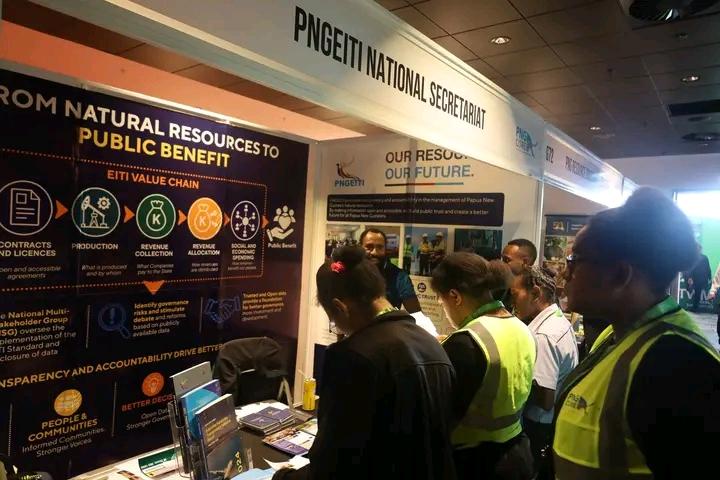
Under the framework, extractive companies and government agencies are required to publicly disclose contracts and licences, production and export data, revenue collection and allocation, beneficial ownership, social and environmental expenditure, subnational payments and state participation.
PNG EITI operates through a multi-stakeholder governance model comprising government agencies, extractive companies and civil society organisations responsible for overseeing implementation of the EITI Standard.
Government representatives include the National Petroleum Authority, Department of Mineral Policy and Geohazards Management, Internal Revenue Commission, Customs, Treasury and the Department of National Planning. Industry members comprise mining and petroleum companies, while civil society is represented by organisations including the Consultative Implementation and Monitoring Council, PNG Council of Churches, National Council of Women, GINA and members of the PNG Resource Governance Coalition.
Kauli said the collaborative model strengthens transparency by promoting collective decision-making, improving policy coordination and reinforcing public trust and accountability.
PNG EITI reporting covers the entire extractive value chain, from the award of licences and contracts through exploration, production, exports, government revenue collection, benefit distribution and community development spending.
The reporting framework captures production volumes, exports, taxes, royalties, dividends, revenues earned by state-owned enterprises, corporate social responsibility projects, employment, gender participation and the sector's contribution to the national economy.
Kauli said the extractive sector remains one of Papua New Guinea's largest contributors to government revenue, export earnings, foreign direct investment, infrastructure development, employment and economic growth.
However, he said the country's natural resource wealth can only deliver its full value when revenues are managed transparently, institutions remain accountable and resource-owning communities receive their rightful share of the benefits.
A core function of PNG EITI is independently reconciling payments reported by extractive companies with revenues received by government agencies.
Kauli said taxes, royalties and other statutory payments reported by companies are matched against records held by recipient agencies, including the Internal Revenue Commission. Any discrepancies identified are published in the annual EITI Report, enabling regulators, communities and other stakeholders to seek clarification and strengthen accountability.
He said the reconciliation process helps citizens better understand how resource revenues are managed while providing developers with greater certainty through improved transparency and community trust.
Kauli added that predictable governance and credible public disclosure reduce investment risk and support long-term sustainable development across the extractive sector.
Since Papua New Guinea joined the EITI in 2013, the National Secretariat has published 12 annual EITI reports, with the latest, covering 2024, released in March 2026. Work on the 2025 report is under way and is expected to be completed early next year.
Kauli also outlined Papua New Guinea's progress towards embedding the EITI framework in national legislation.
Following a National Executive Council (NEC) decision in 2011, a working group was established to facilitate the country's membership of the EITI. In 2013, the NEC formally approved Papua New Guinea's participation in the global initiative, with the Treasury Minister leading its implementation.
Further NEC decisions in 2017 directed government agencies responsible for regulating the mining and petroleum sectors to implement EITI recommendations and corrective actions.
In 2019, the NEC approved the National Policy for Transparency and Accountability in the Extractive Sector, which called for two new laws: an Establishment Bill to create the PNG EITI Commission and a Reporting Bill to strengthen compliance with EITI reporting requirements.
Kauli said the draft Establishment Bill has been completed, while consultations on the Reporting Bill are expected to begin later this month before both Bills are submitted to Parliament.
He noted that PNG EITI implementation remains voluntary until the legislation is enacted.
Kauli also highlighted PNG EITI's partnership with the Japan International Cooperation Agency (JICA) and the Auditor-General's Office to strengthen confidence in extractive revenue reporting.
The initiative introduces an Agreed-Upon Procedures (AUP) framework under the International Standard on Related Services (ISRS) 4400, enabling independent verification of extractive revenue data without requiring a full financial audit.
Under the arrangement, government agencies submit extractive revenue data to the Auditor-General's Office, which independently verifies the information before its findings are incorporated into PNG EITI's annual reports.
Kauli said the process provides greater assurance over the accuracy and reliability of publicly disclosed revenue information.
Another key initiative is PNG EITI's expansion into subnational reporting to improve transparency over royalties, equity payments and benefit-sharing arrangements involving provincial governments, local-level governments and customary landowners.
Kauli said previous reporting had focused largely on national-level payments, leaving significant gaps in reporting benefits flowing directly to communities.
To address this, PNG EITI has begun incorporating EITI reporting provisions into Community Development Agreements, Memoranda of Agreement and other benefit-sharing arrangements for resource projects. This will enable payments made by companies to be reconciled with amounts received by provincial governments and landowner groups.
Awareness programmes were conducted in East New Britain, Madang and Morobe provinces in 2025, followed by Enga and Southern Highlands provinces this year. Additional provinces will be included in future reporting.
Kauli encouraged resource developers, government agencies and regulators to adopt EITI standards across agreements and operational processes, saying greater transparency throughout the resource value chain would help identify governance gaps, reduce revenue leakages and maximise benefits for Papua New Guineans.
He also confirmed that Papua New Guinea is undergoing its latest international EITI validation, which began in April 2026. A draft validation report is expected to be presented to the Multi-Stakeholder Group before the final assessment is completed later this year.
The session underscored the importance of internationally recognised governance standards, transparent reporting and institutional accountability in ensuring Papua New Guinea's natural resource wealth delivers inclusive economic growth, strengthens public trust and supports a more competitive investment environment.