Papua New Guinea's agriculture sector is targeting a K30 billion economic contribution, one million new and better jobs, and the participation of 450,000 micro, small and medium enterprises (MSMEs) by 2033, as the Government moves to transform smallholder farming into commercial production and expand private-sector investment.
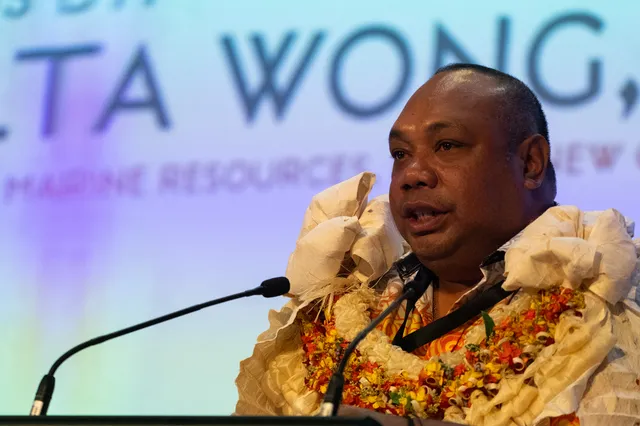
Minister for Agriculture John Boito outlined the Government's strategy in an exclusive interview with PNG Business News, identifying commercial agribusiness partnerships, improved rural market access, transport infrastructure and accessible commercial credit as key requirements for unlocking the sector's economic potential.
The targets form part of the National Agriculture Sector Plan (NASP 2024–2033), backed by a K15.115 billion implementation framework and aligned with the Medium Term Development Plan IV (MTDP IV 2023–2027). The plan focuses on food security, downstream processing and increasing rural household incomes.
"Strengthening agriculture means putting genuine economic opportunity directly into the hands of ordinary Papua New Guineans," Boito said. "By driving this massive structural transformation, the Marape-Rosso Government is intentionally ensuring that agricultural growth directly implements the Prime Minister's 'One Million Jobs' initiative to lift rural communities out of poverty."
He said agriculture remained fundamental to PNG's economy, supporting more than 80% of the population through food security, rural household income and foreign exchange earnings.
Commodity exports and employment
Boito highlighted that oil palm, coffee, cocoa and coconut generate approximately K2 billion in combined export value, accounting for nearly two-thirds of the country's agricultural exports.
Coffee engages more than three million smallholder farmers and household dependents, with production currently around 789,000 green bean bags annually. Cocoa supports more than 1.5 million people, with smallholders accounting for more than 95% of the 53,000 tons exported.
Coconut and copra provide livelihoods and food security for approximately 2.6 million people, particularly in maritime and coastal communities. Smallholders contribute 95% of average annual copra production of 92,000 tons, of which approximately 21,000 tons are exported as copra and 71,000 tons milled locally into copra oil for export, generating average annual revenue of K200 million.
Oil palm remains PNG's most valuable commercial agricultural export, producing between 600,000 and 700,000 tons annually. It is also the only major tree-crop sector experiencing steady growth in formal employment and expanded acreage.
"While global prices have tripled or quadrupled over recent years, our national tree-crop production volumes have remained stubbornly flat," Boito said. "This is exactly why we are modernizing the sector. We cannot rely on subsistence-level farming alone; we need a 40% to 60% lift in tree-crop output achieved through commercial scaling, structured farmer cooperatives, and mechanized farming."
PACD-2 to expand smallholder commercialization
Improving smallholder productivity requires access to high-yielding planting materials, modern agronomic advice, climate-smart irrigation, processing machinery and reliable commercial buyers.
The Government is advancing preparations for the World Bank-led Agriculture Commercialization and Diversification Project Phase Two (PACD-2), which will operate under the national Agri-Connect platform.
The six-year project is valued at least $250 million (approximately K1 billion) and is expected to expand agricultural support across all 22 provinces.
Boito stressed that PACD-2 must avoid institutional isolation and operate in close coordination with provincial governments, District Development Authorities (DDAs) and local Open MPs.
"We are demanding rigid, seamless coordination with our Provincial Governments, District Development Authorities (DDAs), and local Open MPs," he said. "Development projects must respond directly to exact priorities on the ground. Operational slowdowns will not be tolerated as we accelerate critical service delivery ahead of the 2027 National General Election."
The Government is working with development partners, including the World Bank, Asian Infrastructure Investment Bank (AIIB) and International Fund for Agricultural Development (IFAD), to incorporate external credit facilities into the 2027 National Budget.
PACD-2 will extend beyond coffee and cocoa to include small livestock, fresh horticulture and spices such as vanilla, alongside climate-resilient road rehabilitation to connect remote farming communities with urban markets.
PACD-1 delivers more than 42,000 jobs
Boito pointed to the completion of PACD Phase One on June 30, 2026, as evidence of the value of public-private partnerships in generating rural employment.
The project directly benefited 123,184 people and generated more than 42,000 jobs through 75 strategic partnerships across 12 provinces. It also delivered 23 kilometers of market access roads in the Autonomous Region of Bougainville, East New Britain, Simbu and Southern Highlands.
"The results of Phase 1 prove that commercial alliances work," he said. "With PACD-2, we are expanding this blueprint nationwide to drive commercial credit access, de-risk private agribusiness investments, and ensure our farmers operate with sound business records and dependable sales relationships."
The project also generated K102 million in agricultural sales, with implementation now supported by strengthened monitoring, Joint Budget Committees and the digital Agriculture Management Information System (AMIS).
Institutional reforms and domestic food production
Boito said the Government was also strengthening institutional coordination through the Department of Agriculture and Livestock's (DAL) newly operationalized 2026 Corporate Structure Reform, designed to separate executive leadership, portfolio oversight and field-level operations while reducing duplication.
The Secretary for Agriculture and Livestock has also proposed a Renewable Sector Cluster Committee to the National Monitoring and Coordination Authority (NMCA). The proposed committee would bring together agencies across agriculture, forestry, fisheries, tourism and renewable energy to address shared constraints involving transport, electricity, land, water, finance and market access.
Boito clarified that the committee remained a proposal intended to improve coordination rather than replace existing agency responsibilities.
Increasing domestic food production is another priority, particularly fresh produce, staple crops and livestock products, to reduce reliance on imported agricultural products.
He highlighted the Fresh Produce Development Agency's (FPDA) work on seed potatoes and bulb onions as an important foundation for expanding local supply. Rice, grains and livestock development would also require suitable land, water, feed supplies, competitive production costs and reliable buyers.
Agricultural, food and live animal exports reached K1.752 billion in the second quarter of 2025, highlighting the sector's contribution to national trade.
Women, youth and digital agriculture
The Government's modernization program also aims to create opportunities for women, young entrepreneurs and local businesses through technical services, mechanized farming and downstream processing.
Boito identified digital technologies, including drone and satellite farm mapping, automated crop monitoring, digital recordkeeping and SMS-based market information systems, as important tools for improving transparency and productivity.
He reaffirmed the Government's commitment to ensuring women, who play a central role in fresh food production and market activities, have equal and protected access to rural finance, technical training and leadership positions in producer cooperatives.
Meeting EU export requirements
Boito said expanding agricultural exports would depend on quality, traceability and compliance with international market requirements, particularly the European Union Deforestation Regulation (EUDR).
Under the regulation, large and medium businesses must comply by December 30, 2026, while micro and small enterprises must comply by June 30, 2027. Companies placing coffee, cocoa, rubber or palm oil on the EU market must demonstrate that their supply chains are geolocated and deforestation-free.
To address compliance challenges facing smallholder farmers, DAL is digitizing farmer registrations and product movements, while working with industry stakeholders and the European Forest Institute on high-precision mapping and gap analysis.
The Government is also supporting the Proofminder agroforestry pilot with local cocoa growers, combining ground-truthed plot boundaries with satellite imagery dating back to 2020 to produce field-specific compliance certificates.
Boito said improving quality must begin at the farm level through better planting materials, rehabilitation of aging trees, farm management, harvesting, fermentation, drying, processing and grading.
He also identified opportunities in domestic value-adding, including coffee roasting, cocoa products, coconut products, tea, fresh produce processing and packaging. Producer organizations and cooperatives could help consolidate supply, maintain quality and negotiate better arrangements with buyers.
"Our task is to bring production, traceability, biosecurity, food safety, quality, and market access together," Boito said.
Addressing rising living costs, Boito said strengthening domestic food production and improving the distribution of nutritious food remained essential to reducing pressure on households.
DAL is working with the Asian Development Bank (ADB) on fresh food marketing systems, focusing on collection, transportation, storage, food safety, commercial seed quality and market access.
One proposed initiative is a cold-chain marketing pilot in Eastern Highlands Province, anticipated from 2027, subject to approval, funding and implementation arrangements.
The proposed initiative would transport fresh produce, including cabbage, carrots and potatoes, from the Highlands to 10 provincial coastal urban centers each week, while moving lowland produce such as fish, coconuts and mangoes to up to seven Highlands provincial centers.
The initiative aims to reduce post-harvest losses, improve regional food distribution and provide farmers with more reliable markets.
Boito said the challenge was to protect agricultural production and distribution networks against climate shocks, including El Niño, by embedding climate-resilient farming systems across rural PNG.