When the power stops, the impact goes far beyond the lights. Equipment stands idle, communications are disrupted and work can come to a halt. For businesses planning their next project or reviewing their backup power, the question is simple: how can we keep operating with greater confidence?
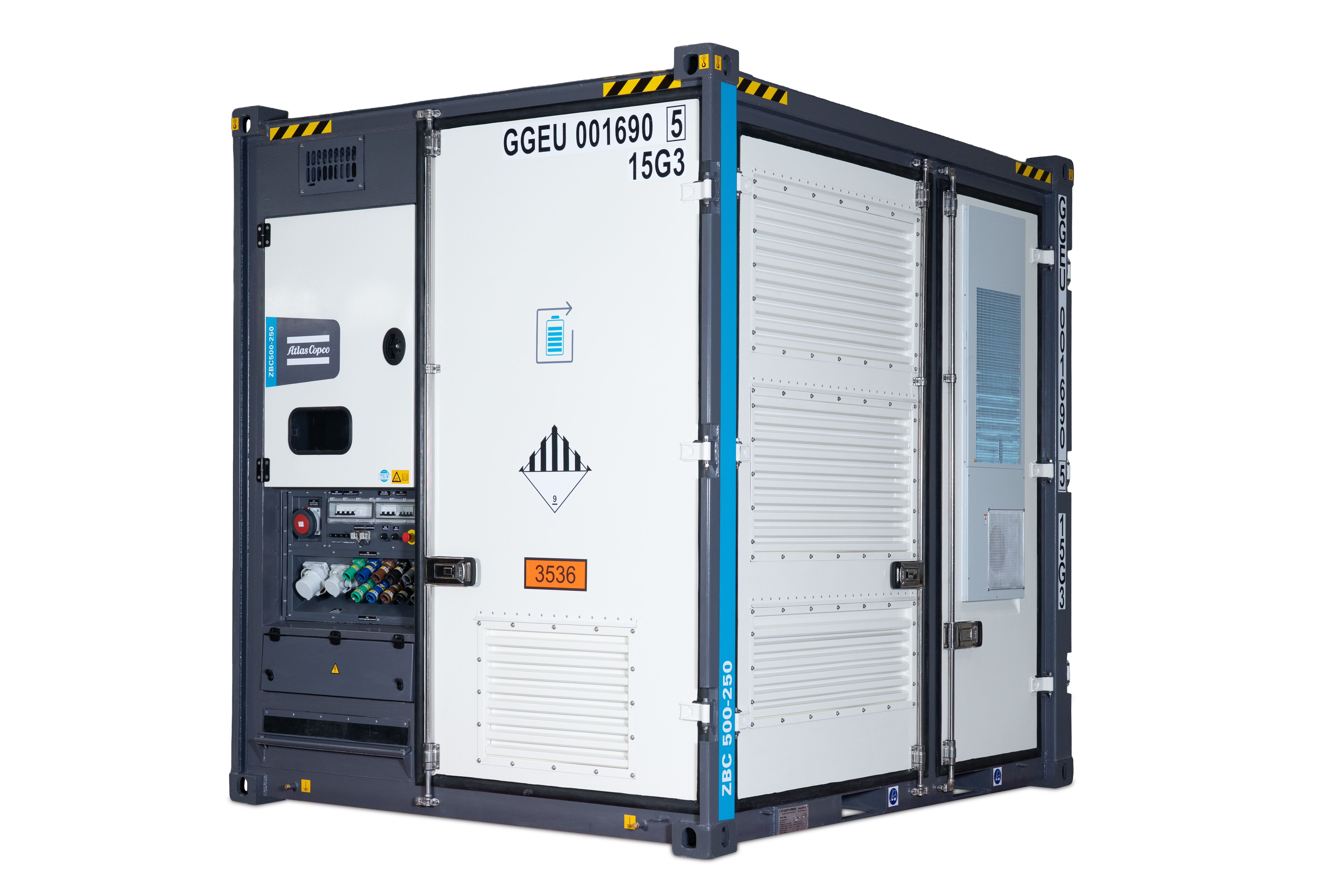
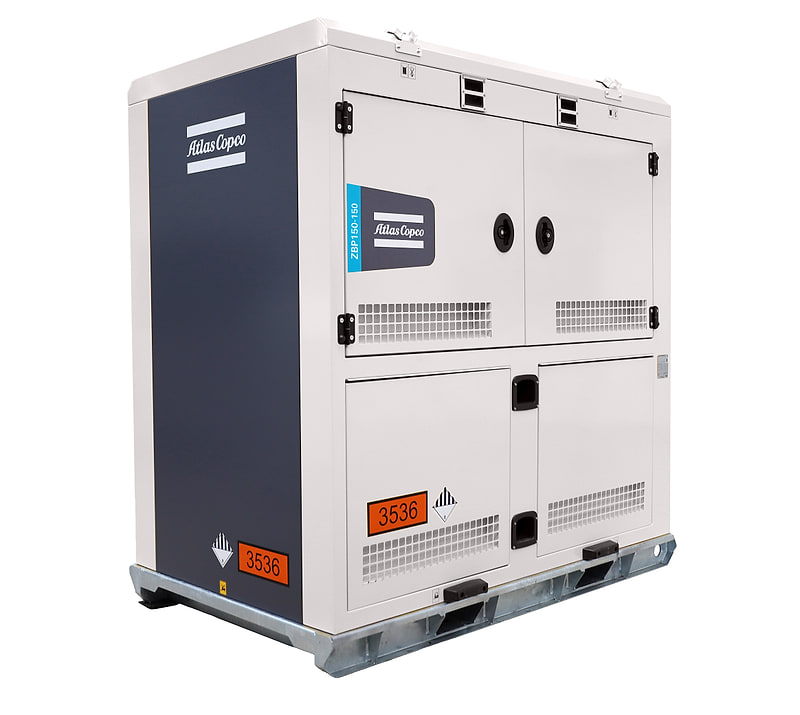
High Arctic is bringing that conversation to Papua New Guinea with Atlas Copco’s ZBP and ZBC battery energy storage systems (BESS). As the authorised distributor of Atlas Copco Power Technique products in PNG, High Arctic provides a local route to battery storage, power generation, sales, rental and aftermarket support.
The message is not that every generator needs replacing. It is that businesses have more options: battery power where it makes sense, generators where they are needed, and intelligent hybrid systems that bring them together.
Stored energy. Practical resilience.
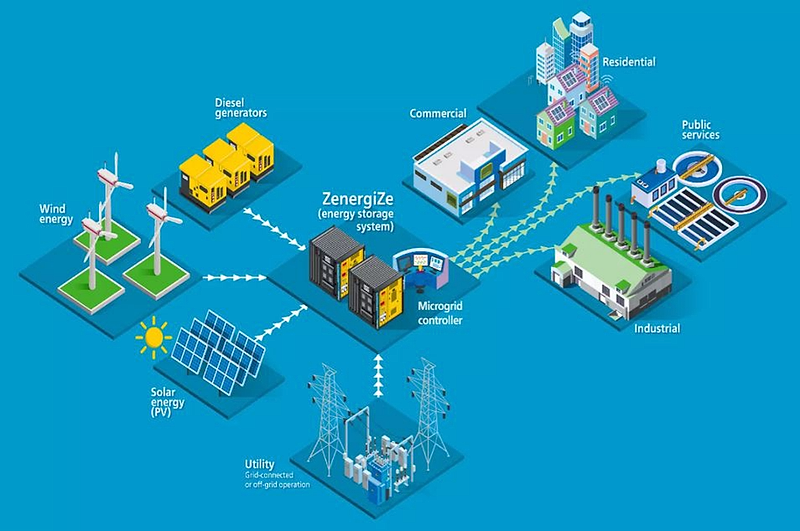
A BESS stores electricity from a generator, the grid or renewable sources such as solar, then supplies it when needed. It can serve as a charged standalone power source or work within a hybrid installation, supporting off-grid operations and supplementing a limited grid supply.
For outage resilience, a properly configured battery system can support selected critical loads while another power source becomes available. Required transfer time, backup duration and battery charge determine the right arrangement—whether the priority is essential communications at a small facility or critical equipment on a larger site.
If you’re subject to an unreliable power sources the ZBP and ZBC battery energy storage system can be configured to provide uninterrupted primary power.
Match the power to the work
Consider a mine site: large motors starting on crushers, conveyors and dewatering pumps can create brief but significant surges, while production demand climbs when processing equipment and workshops run together. The same challenge can arise in a beverage bottling plant or manufacturing facility, where production lines, air compressors and refrigeration compete for power during busy periods. When production slows or equipment stops, demand falls—but generators sized for the busiest periods can remain running inefficiently at lighter loads. Different industries, the same balancing act: enough power for the peaks, without unnecessary fuel use when demand drops.
Battery storage offers another approach. In a suitably designed hybrid system, it can supply low loads and help meet peaks, allowing the generator to operate more efficiently and reducing unnecessary engine hours. That can mean less fuel consumed, fewer servicing requirements and less engine noise during battery-only operation. Atlas Copco cites fuel savings of 30 to 90 per cent and up to 70 per cent fewer generator running hours in hybrid applications, but actual results depend on the load profile, equipment selection and operating strategy.
Atlas Copco’s ECO Controller is built into the ZBP and ZBC ranges. It manages the connected energy sources and monitors power output, helping the system respond as demand changes. The ZBC range can also work with generators from different manufacturers, subject to compatible controls and project design. This opens the possibility of adding battery storage to an existing generator fleet rather than replacing it. Remote control and FleetLink™ telematics, together with integration with third-party monitoring systems, provide further visibility of the power setup.
A conversation for every industry
Battery storage is not reserved for major resource projects. Smaller worksites, local businesses and public facilities can also have power needs that suit a battery-based solution.
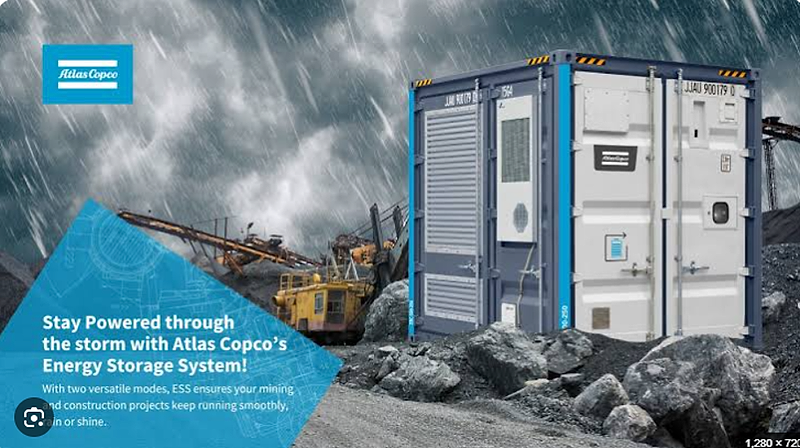
Beyond production loads, opportunities include accommodation and support services at mining and oil and gas projects, temporary construction power, peak-demand support at ports, and backup for telecommunications equipment. In commercial and residential buildings where grid reliability is a challenge, battery storage can help keep business activities and everyday life running—from air conditioning, refrigeration and televisions to lighting, communications, security systems and water pumps. A solution can be designed to supply selected circuits or support the wider building, with the loads covered and backup duration determined by system sizing and available battery energy.
An outage is not the only challenge: sometimes the grid connection is available but cannot meet a short period of high demand. A suitably configured ZBC system can act as a buffer, supplementing the available supply during peaks. This approach can support charging electric vehicles and battery-powered machinery—a further application to assess as equipment electrification develops.
Storage can capture solar electricity for later use, extending its value beyond daylight generation. Battery-only operation also avoids engine exhaust at the point of use; overall emissions depend on how the battery is charged.
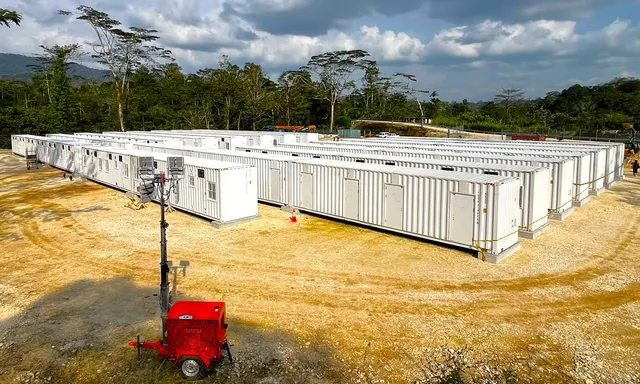
Explore hybrid power options with High Arctic: battery storage linking generators, renewables and the grid to different users. Illustrative system—not a specific PNG installation.
From kilowatts to megawatts
Atlas Copco’s battery energy storage portfolio extends from the portable ZBP 2000 (2 kVA, 2 kWh) and canopy-style ZBP units from 15 to 150 kVA, to the containerised ZBC range from 250 kVA up to the ZBC 1000-1200, delivering 1 MW of power with 1,200 kWh of energy capacity. For projects requiring more power, up to eight ZBC 1000-1200 units can be connected in parallel to deliver a combined output of up to 8 MW, subject to configuration and operating conditions. Portable and canopy options bring battery power within reach of smaller applications, while the containerised ZBC systems support demanding industrial operations. The range is not simply about scale—it is about choosing the right system for the job.
Power, expressed in kW or MW, describes the loads a system can supply; stored energy, expressed in kWh, helps determine runtime. A smaller operation does not need a megawatt-scale solution, and a high starting load does not tell the whole story. High Arctic can discuss the appropriate model, configuration, PNG availability and delivery timing for each application.
Global technology. A local starting point.
High Arctic’s role goes beyond introducing a new product range. Its established PNG operations, together with support from Atlas Copco’s regional technical specialists, provide a foundation for helping customers select and support practical power solutions in-country.
That discussion starts with practical details: what must keep running, how demand changes through the day, existing generators or grid connections, and any plans for solar. Together, these establish where battery storage can add value.
High Arctic is opening a wider conversation about battery power in PNG—from smaller everyday applications to major industrial projects. The aim is practical: help businesses find a better way to keep working and manage their energy needs.
What needs to keep running when your power supply cannot keep up? Talk to High Arctic about Atlas Copco ZBP and ZBC battery energy storage and hybrid power options for your PNG operation.