

Papua New Guinea’s Minister for Petroleum, Jimmy Maladina, has reaffirmed major reforms and significant project progress in the country’s petroleum sector, announcing that 2026 will be a pivotal year for exploration, licensing and LNG project development.
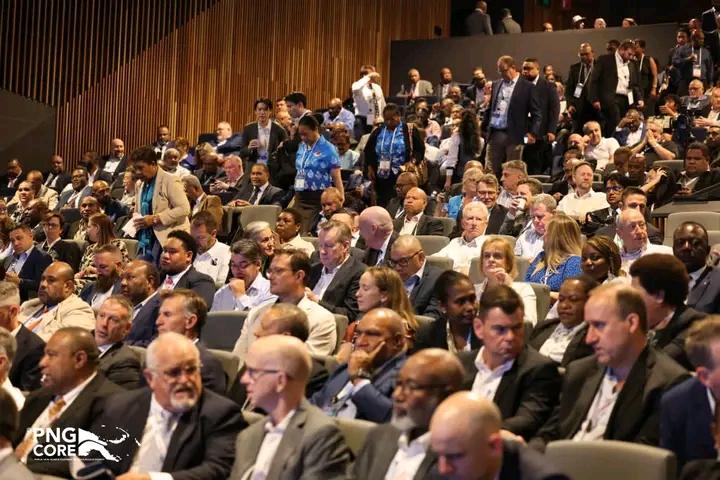
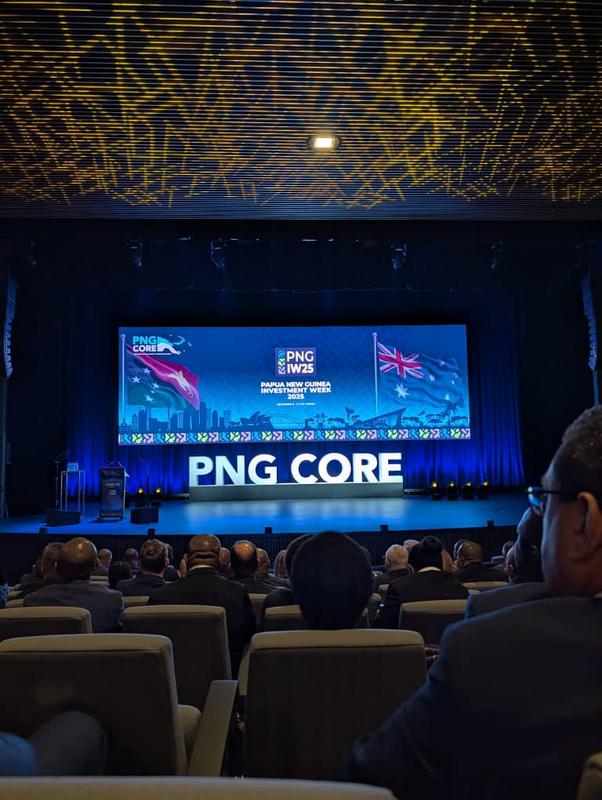
Speaking at the PNG Investment Summit in Sydney, Maladina said the Marape–Rosso government’s commitments to institutional reform and fiscal policy changes, first announced during the 2024 conference, are now taking shape and positioning PNG as a competitive petroleum investment destination.
Maladina confirmed that the National Petroleum Authority (NPA) has been formally established under the National Petroleum Authority Act 2025, passed by Parliament on 12 March 2025.
The NPA replaces the former Department of Petroleum and Energy and now operates as PNG’s regulator and administrator for the petroleum industry. Its inaugural board was recently appointed by Cabinet and sworn in last month.
Full administrative establishment of the NPA, including an internationally benchmarked organisational structure and systems, is expected to be delivered in the first and second quarters of 2026.
Production Sharing Contract Reforms Progressing
A core element of the government’s petroleum reform agenda is the move to Petroleum Production Sharing Contracts (PSC).
Maladina said the Production Sharing Contract Fiscal Policy White Paper has already been approved by the National Executive Council, and the legislative process will begin in the first quarter of 2026 following consultations now under way with industry. He emphasised that the PSC model offers contractual clarity for investors on cost recovery, profit sharing and government take, and aligns PNG with regional practice. Prime Minister Marape’s position that the state take will be around 55 per cent remains central to the reform.
Maladina assured industry that existing projects with Gas Agreements and fiscal stability provisions will be “grandfathered” under the Oil and Gas Act, and that the NPA will implement PSC arrangements with consistency and discipline.
“The NPA will implement it with consistency and discipline,” he said.
Tackling Licence Warehousing and Introducing Competitive Bid Rounds
Maladina said that when he assumed the role nearly two years ago, licence warehousing was a major issue, restricting entry by credible investors.
To address this, he has moved to a closed and well-managed licensing system through auctions or bid rounds, supported by moratoriums over selected basins to increase acreage value.
The first major initiative is under way in the offshore Gulf of Papua, which is under ministerial reservation. The NPA is now in discussions with vendors and strategic partners to prepare for PNG’s first block bid round in 2026.
Maladina also announced a significant step to advance long-stalled prospects in the Western and Gulf Provinces. On 27 November 2025, he issued a Ministerial Policy Direction under the NPA Act to address fragmented development of marginal and stranded gas fields in the region. He instructed the NPA, Kumul Petroleum Holdings Ltd and all PRL licensees to collaborate in preparing a coordinated development framework.
The NPA will lead this process and report back within six months. This work will produce an Aggregation and Development Plan, which will evolve into a comprehensive Gas Master Plan for PNG, aimed at improving infrastructure efficiency and unlocking value for the state and local communities.
PNG Downstream Processing for Future Developments
Downstream processing is also being positioned as an important component of future development. Maladina said opportunities for marketing, commercialisation and downstream value creation will be captured through the Gas Master Plan. He confirmed that under the Petroleum Sector National Content Policy, the NPA will now take a more active role in institutional, regulatory and legislative processes to support national participation.
Papua LNG Project Update
Providing a detailed update on major petroleum projects, Maladina said the Papua LNG Project is progressing strongly. Joint Marketing has been signed by Kumul Petroleum Holdings, MRDC and TotalEnergies, and the Sales and Marketing Agreement is on track for completion in February 2026.
The Papua LNG Development Forum has commenced and will continue in January and February 2026, while TotalEnergies is advancing financing with significant momentum.
The Conservation and Environment Protection Authority has issued all required environmental permits. On 4 December 2025, TotalEnergies and its joint venture partners submitted full revised licence applications to the NPA, signalling substantial progress in field development planning, costing and implementation. The NPA will now conduct due diligence ahead of licence issuance.
Maladina said the government remains committed to maintaining momentum for a Final Investment Decision (FID) in 2026.
Development Forum preparations for Papua LNG have begun, with the NPA consulting provincial governments, local-level governments and District Development Authorities. High-level consultations will be held in Kerema, capital of Gulf Province, in late January 2026, followed by licence-based landowner meetings along the project footprint.
The process will culminate in a Papua LNG Project Development Agreement between the state, affected provincial and local governments and landowners. Maladina emphasised that under PNG’s laws, no petroleum licence will be granted without both a Development Agreement and environmental permits, and that once licences are issued, developers may proceed to FID.
The Minister also reported steady progress on the P’nyang LNG Project, noting that Papua LNG will anchor the next phase of development, with P’nyang to follow using shared infrastructure and benefiting from stable policy settings that enable scale and cost reductions. In addition, the Pasca A Project is advancing through FEED and is preparing for a possible FID in the third quarter of 2026, marking what would be PNG’s first offshore production and a benchmark for future offshore developments.
Maladina said 2026 will be an important year for PNG’s petroleum sector, with several major exploration wells and investment decisions expected. A deep-water exploration well, Mailu-1, will be drilled in the first quarter of 2026 by TotalEnergies and Petronas. The Papua LNG FID remains targeted for 2026. The Pasca Gas Project’s FEED is expected to conclude next year, with FID anticipated in the third quarter. Progress towards commercialisation of the Stanley Gas Field is also expected in 2026.
Larus Energy and its partners plan to drill the Nanamarope offshore well by the fourth quarter of 2026, while ExxonMobil’s promising Wildebeest Prospect in the onshore Gulf Province is expected to see drilling commitments progress next year.
Maladina said he intends to announce block releases for new bid rounds by the fourth quarter of 2026, following the full establishment of the NPA and enactment of the Production Sharing Contract reform legislation.
In closing, Maladina assured investors that PNG’s fiscal terms will remain attractive and that production sharing reforms will deliver returns comparable with other jurisdictions. He reaffirmed that existing partners remain fully protected under their current fiscal terms and encouraged prospective licence holders to commit to seismic programmes and drilling.
“Our direction is steady. Our reforms are progressing. Our projects are strong. We offer a clear pathway for long-term investment. We welcome partners who value stability, clear regulation and dependable delivery,” he said.


