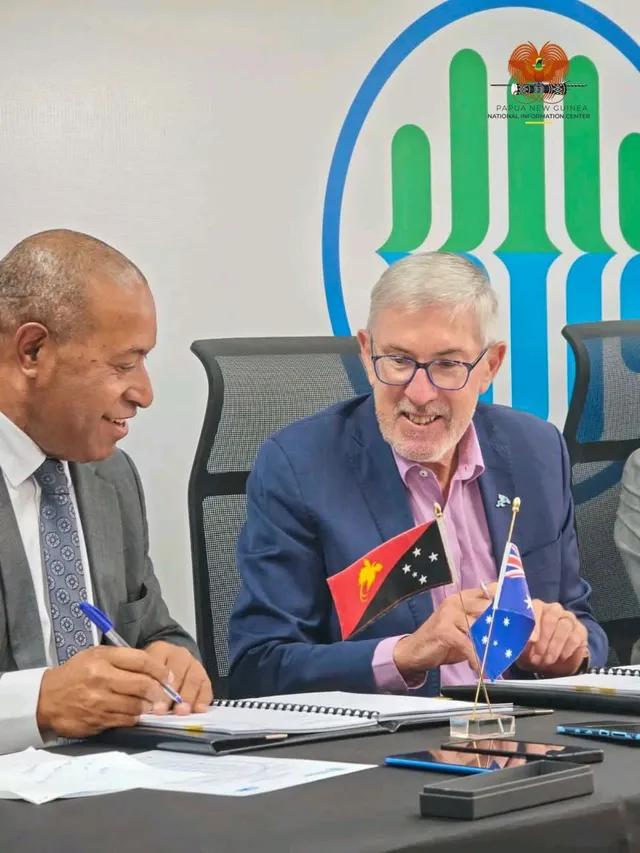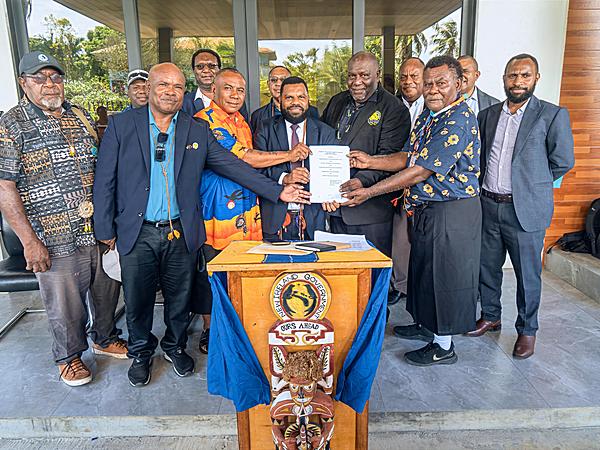
The long-awaited Community Development Agreement (CDA) for the Simberi Mining Project has finally been signed, marking a significant milestone for the Simberi and wider Tabar Island communities after three decades of negotiations and delays.
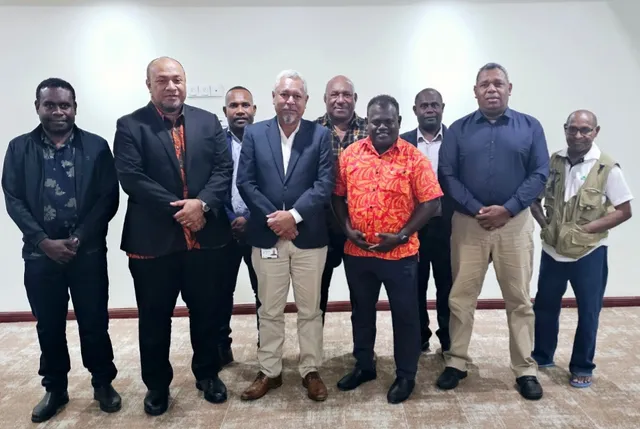
The agreement was signed on Aug. 28, 2026, at the New Ireland Provincial Government Assembly in Kavieng, bringing together the State, New Ireland Provincial Government (NIPG), Sentral Niu Ailan Local Level Government (SNALLG), Simberi Mining Area Association (SMAA) and Simberi Gold Company Pty Ltd (SGC).
The signing marks the latest step in a process that began with the first CDA in 1996.
Mining Minister Solen Loifa signed on behalf of the State, while New Ireland Governor Byron Chan signed for the New Ireland Provincial Government.
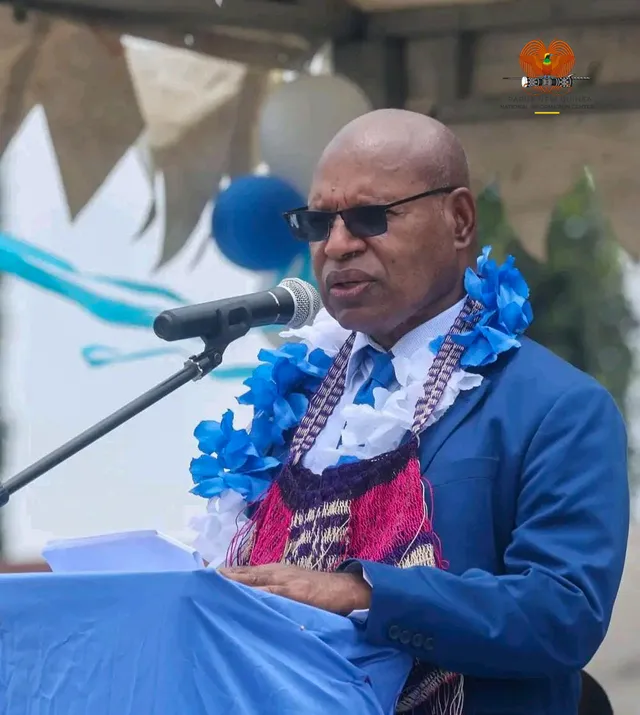
SNALLG President Terence Kamari signed for the local-level government, while SMAA Chairman Pius Vaket Maris signed on behalf of the Simberi mining area landowner association.
Simberi Gold Company Country Manager Randy McMahon represented SGC at the ceremony. However, the company did not sign the agreement because of an administrative hold-up and has indicated it will do so at a later date.
The CDA has undergone an extended process of review, consultation and statutory consideration since the original agreement was signed in 1996.
The agreement was reviewed in 2012 and finalised in 2013. Between 2014 and 2016, statutory approvals were sought for fiscal and legal clearance, alongside the preparation of the Business Development Plan and Training and Employment Plan.
In 2017, the National Executive Council approved implementation of the agreement through NEC Policy Decision No. 95/2017.
Implementation was subsequently delayed after the New Ireland Provincial Government sought increased benefits under arrangements including the Special Support Grant (SSG), Infrastructure Development Grant (IDG) and Tax Credit Scheme (TCS).
Further delays were caused by internal disputes within the Simberi Mining Area Association, the COVID-19 pandemic and a court case over SMAA leadership in 2023.
The signing on Aug. 28 now allows the parties to move towards implementing their commitments under the CDA, with the agreement expected to provide a framework for community development and the distribution of benefits from the mining project.
Benefits and long-term development
Loifa congratulated all parties for reaching the agreement and commended them for their patience, understanding and cooperation throughout the prolonged process.
He also urged Simberi landowners and communities to take a long-term view of the benefits generated by mining.
The minister said the gold resources on the islands are finite and will eventually be exhausted, making it essential to invest current mining benefits in sustainable projects and businesses.
Such investments, he said, would help ensure future generations continue to benefit from the resources after mining operations end.
Mineral Resources Authority Acting Managing Director Harry Kore reaffirmed the authority’s commitment to facilitating implementation of the CDA.
Kore said the MRA would continue working closely with all stakeholders, particularly landowners, to ensure benefits are delivered in accordance with the agreement.
For the New Ireland Provincial Government, the signing also marks a significant achievement for landowners who, according to Governor Chan, had missed out on benefits for about 10 years while the agreement remained unresolved.
Chan congratulated all parties and particularly acknowledged Simberi landowners for their patience throughout the lengthy process.
Landowners welcome historic agreement
For SMAA Chairman Pius Vaket Maris, the signing represents more than the conclusion of a lengthy administrative process. He described it as a historic achievement and the beginning of a new chapter for the people of Simberi Island and the wider Tabar community.
“Today is a proud day for the people of Simberi Island and the wider Tabar community. We are not simply signing a Community Development Agreement — we are signing a new chapter in the history of our people,” Maris said.
He said the wealth generated from Simberi’s mineral resources must translate into lasting improvements in the lives of the people living in the mining area.
As chairman of the association, Maris said he carries the hopes and aspirations of thousands of people across Simberi and the wider Tabar Island group, including previous generations and the children who will inherit the islands after mining has ceased.
He acknowledged that the community’s relationship with large-scale mining has brought both opportunities and challenges.
While development is welcome, Maris stressed that land cannot be viewed solely as an economic resource.
“Land is identity, history, culture, livelihood and the foundation of the future,” he said.
He said the responsibility of the current generation is to safeguard the land for those who come after them.
“Our ancestors did not inherit land to sell it away; they held it in trust for future generations. Likewise, we hold it in trust today for those who will come after us. That is why this agreement is so important,” Maris said.
He acknowledged that reaching the agreement required extensive discussions, consultations and negotiations, including difficult conversations among stakeholders.
However, he said the parties were ultimately able to reach agreement through mutual respect and a shared commitment to progress.
With the CDA now signed, the focus shifts from negotiation to implementation.
For the Simberi and Tabar communities, the agreement is expected to provide a structured pathway for community development and stakeholder benefits while strengthening the relationship between the mining operation, government and landowners.
The signing also renews the focus on converting finite mineral wealth into sustainable economic opportunities that continue supporting communities beyond the life of the Simberi mining operation.