

The Department of Prime Minister and National Executive Council (DPMNEC) has officially launched its Electronic Funds Transfer (EFT) Payment System as part of the government's efforts to modernise public-sector financial management, improve efficiency and strengthen accountability.
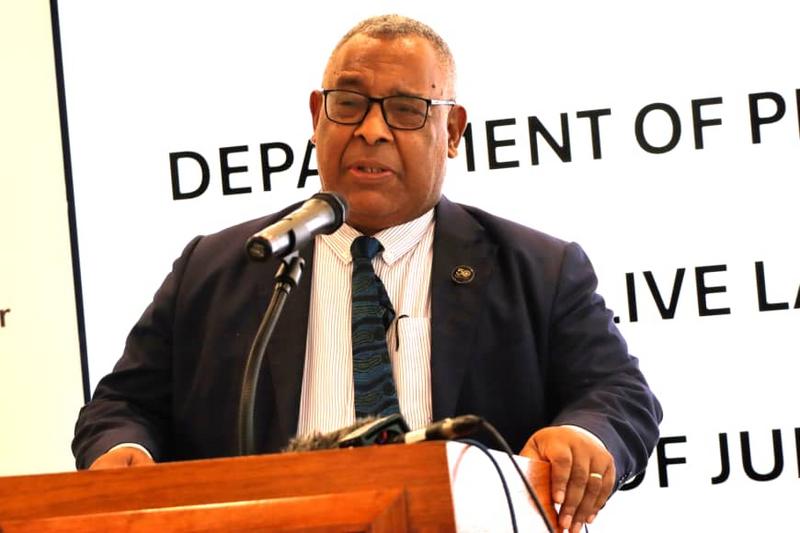
The announcement was made by Chief Secretary to Government Ivan Pomaleu during the official launch of the EFT Payment System on Friday, June 12, at Melanesian Haus in Port Moresby, marking the department's transition from traditional cheque payments to electronic fund transfers.
Pomaleu said the reform stemmed from a directive issued on March 13, 2025, following the Department of Finance's presentation of its 2025 Annual Plan during the Prime Minister's Review Meeting on Feb. 10, 2025. Under the directive, DPMNEC was selected as the first pilot agency to move away from manual cheque payments and adopt electronic payment arrangements.
He described the transition as more than an administrative change, saying it represents a significant milestone in transforming how government conducts business and manages public funds.
"For many years, government agencies have continued to rely on cheque payments long after the private sector and ordinary citizens moved to electronic banking platforms," Pomaleu said.
He noted that most Papua New Guineans no longer use cheques and that many businesses have adopted paperless operations and direct deposits, making it necessary for government agencies to meet the same standards expected of businesses and citizens.
According to Pomaleu, the previous cheque-based payment process required officers to physically collect cheques, visit banks, queue for deposits, wait for clearance and provide receipts before transactions could be completed. He said the process created unnecessary delays, administrative burdens and inconvenience for both government agencies and suppliers.
The new EFT system addresses many of these inefficiencies by allowing funds to be transferred directly into verified supplier bank accounts through secure banking channels.
Pomaleu said the reform would deliver faster payment processing, stronger security controls, improved transparency and accountability, better visibility over government cash flows, lower operational costs and greater support for paperless government operations.
Electronic transactions also generate automatic audit trails and more reliable financial reporting while reducing risks associated with physical cheque handling, including lost, misplaced or stolen cheques.
While highlighting the efficiency gains, Pomaleu stressed that the reform is fundamentally about strengthening financial governance.
"The objective is not simply to move money electronically, but to ensure that every payment is properly authorised, properly verified, properly recorded and paid to the correct recipient account," he said.
He warned that while EFT removes many risks associated with cheque payments, it introduces new risks related to the accuracy and integrity of supplier banking information.
To mitigate those risks, DPMNEC has incorporated stringent Know Your Customer (KYC) requirements and internal governance controls into its financial management processes.
Under the new arrangements, suppliers must declare and verify their nominated bank account details before being registered in the payment system. Supporting documentation must be submitted and independently verified before approval. Once approved, account details will be locked and managed only by officers with administrator-level authority.
Pomaleu directed that no supplier banking details be entered, amended or activated without completion of the prescribed KYC process, independent verification and administrator approval.
He said segregation of duties, account verification protocols and administrator controls would serve as critical safeguards under the new payment environment.
"Electronic transfers make payments faster. They do not justify haste. Speed must never come at the expense of control," he said.
To ensure compliance, Pomaleu said his advisers would conduct periodic random reviews of EFT transactions and associated procedures to confirm that appropriate controls remain in place.
He added that the rollout aligns with broader administrative reforms within DPMNEC aimed at using technology to improve service delivery, decision-making and government operations.
Pomaleu commended DPMNEC advisers, finance officers, the Department of Finance, banking partners and other stakeholders for their contributions to implementing the reform, noting that they had transformed a policy directive issued in March 2025 into an operational reality.
He also linked the initiative to Papua New Guinea's Reset PNG @ 50 reform agenda and the country's 50th Independence Anniversary celebrations.
According to Pomaleu, the EFT system supports Big Bet No. 10 and Quick Win No. 414, which seeks to enable government payments through any bank or mobile platform.
"As we move forward, we must continue to challenge outdated practices and embrace reforms that improve efficiency, transparency and public confidence in government," he said.
"Today we are retiring a process of the past and embracing a system fit for a modern public service."
Pomaleu said DPMNEC's transition from cheque payments to EFT demonstrates the department's commitment to leading by example, embracing reform and operating to the same standards expected of the citizens and businesses it serves.
He formally launched DPMNEC's Electronic Funds Transfer System and declared the department's transition from cheque payments to EFT.


