

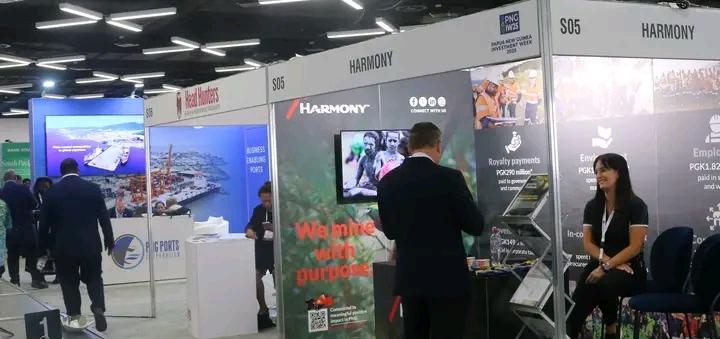
Papua New Guinea’s mining sector continues to underpin the national economy and is positioned for a new phase of growth, reform, and sustainable investment, Acting Managing Director of the Mineral Resources Authority (MRA) Harry Kore said during the regulator’s forum, PNG’s Mining Sector Update, at Investment Week on 8 December in Sydney, Australia.
Addressing an audience that included government representatives, regulators, PNG resource owners, extractive industry leaders, and investors, Kore outlined the central role mining continues to play in PNG’s economy.
He said PNG’s geological setting along the boundary of the Pacific and Australian tectonic plates has endowed the country with a world-class mineral base. He described mining as the backbone of the economy, highlighting that in 2024 alone the sector generated PGK17 billion in foreign export revenue, accounting for about 40 percent of PNG’s total exports.
Mining has contributed around 50 percent of the country’s foreign exchange in recent years and more than 25 percent of national GDP, while directly employing about 30,000 mine workers. These figures, he said, demonstrate the sector’s vital role in supporting government services, livelihoods, and local development across the country.
The MRA is committed to ensuring this contribution continues so Papua New Guinea remains a globally relevant mining jurisdiction for generations to come.
Performance of Operating Mines
Despite global market volatility, Kore said PNG’s seven operating mines continue to perform strongly, reinforcing the country’s resilience as a mining investment destination.
“Ok Tedi, our longest-running copper mine, continues to deliver consistent production and high economic value, particularly for Western Province and the national economy," he said.
Following reopening efforts, Porgera is regaining momentum. Restoring this major gold producer has been one of the PNG mining sector’s successes in recent years, regardless of the challenges it faces.
Lihir remains a world-class gold operation with strong production outlooks, supported by continued investment in operational efficiency. Ramu NiCo, PNG’s only nickel-cobalt operation, has stabilised and continues to supply critical minerals essential for global energy transition technologies.
Hidden Valley continues to support locally owned SMEs and regional development in Morobe Province, while Kainantu, driven by strong resource grades, is expanding and demonstrating PNG’s potential for high-grade gold systems as it transitions toward a tier-one project. Simberi, meanwhile, continues its turnaround and remains a major employer in New Ireland Province as it transitions from oxide- to sulphide-based mining.
Collectively, Kore said the seven operating mines contributed PGK17 billion to the PNG economy in 2024, a figure expected to rise in 2025. Over the past five years, they have generated 50 percent of the country’s total foreign exchange, with a single mine accounting for half of that contribution.

Safety Performance and Legislative Reform
Kore highlighted improvements in mine safety under the Mining (Safety) Act 1977 and the Mining (Safety) Regulation 1935, which are administered by the MRA. While acknowledging challenges in enforcing outdated legislation, he said the authority continues to regulate the industry effectively and requires compliance with international engineering and technical standards and industry best practices.
According to the MRA’s acting managing director, fatal accidents across operating mines declined from eight per year to zero between 2017 and 2022, with similar improvements recorded across other safety indicators. PNG’s safety record, he said, now stands higher than many mature mining jurisdictions globally.
He acknowledged the mining industry for working closely with the MRA to achieve these outcomes and announced that the authority will host the National Emergency Response Challenge Competition in November 2026. The MRA also addressed gender inclusion in the industry, noting longstanding requests from industry regarding underground work for women.
Kore announced, “I am pleased to announce that once the State Solicitor gives his legal clearance we will submit the revised Mine Safety Bill to the next sitting of Parliament for enactment. We will remove that provision so our professional female miners can work underground like their male colleagues.”
Real-Time Monitoring and Data Transparency
Amendments to the Mining Act 1992 in 2020 introduced real-time monitoring of mineral production and sales receipts, marking a major shift for the sector. All operating mines are now connected to the MRA Data Center, except one that is currently undergoing the connection process.
Access to live production data has significantly improved transparency compared with past uncertainties surrounding mineral production. The MRA has also commenced reviewing metal sales contracts and auditing sales receipts, calling on industry players to support these processes to ensure accurate payment of royalties, levies, and taxes.
Structural changes are also underway within the MRA to recruit and empower professionals responsible for auditing minerals from production through to sale.
Major Projects
Beyond existing operations, Kore said PNG is preparing for a new wave of transformational mining developments.
Wafi-Golpu, one of the world’s largest undeveloped copper-gold projects, is expected to become a major investment for the country, with arrangements for key agreements nearing completion. He said the government remains committed to advancing the project through a stable and transparent framework.
The Frieda River copper-gold project, another globally significant resource, also holds the potential to reshape the economic landscape of northwestern PNG, with ongoing work to ensure development aligns with environmental safeguards, community aspirations, and national goals.
Together, Kore said these projects represent tens of billions of kina in potential investment and signal to the world that PNG is ready for responsible and sustainable mining growth.
The national government has decided to merge the Department of Mineral Policy and Geohazards Management with the MRA, bringing policy, regulation, geological data, licensing, and oversight under one institution.
The merger aims to create a stronger, more efficient, and accountable regulatory system while assuring industry that ongoing MRA operations will not be disrupted during the transition.
Mining Act Review Targeted for 2026
A major priority under the new structure is the completion of the long-awaited review of the Mining Act 1992. Mr. Kore elaborated that the revised legislation is expected to be finalised and launched in 2026, modernising PNG’s regulatory framework to reflect global best practice, investor-friendly processes, stronger environmental and social safeguards, clarity for landowners and developers, and support for critical minerals and new technologies.
He described the reform as one of the most significant milestones for PNG’s resources sector in more than three decades.
Aligned with the conference theme of promoting sustainable investment, Mr. Kore said PNG is committed to ensuring mining creates shared value through improved environmental management, enhanced community benefits, downstream processing where viable, stronger transparency, and climate-resilient strategies.
PNG recognises that global capital increasingly flows to jurisdictions that demonstrate governance, stability, and sustainability, adding that the country is deliberately building that environment.
PNG Open for Business
PNG stands at a pivotal moment, with strong operating mines, major projects ahead, and a unified regulator marking a new chapter of opportunity and transformation.
Kore told international partners and investors, “PNG is open for business.” He added that investor confidence would be met with clarity, predictability, and professionalism, while assuring citizens that mining would remain a cornerstone of national development managed responsibly and transparently.
Inviting renewed engagement with the sector, Mr. Kore said, “To our investors, mining companies, infrastructure providers, financiers, we at MRA invite you to look at PNG with fresh eyes.”
He urged stakeholders to explore MRA databases, bring forward capital and technology, and partner with PNG to unlock new discoveries.
“Together, let us deliver value not just in metal output but in sustainable development, jobs, national revenue, and shared prosperity for PNGs people. Let us make Minerals Ready for Investment more than a theme let it be the legacy we build together.”


