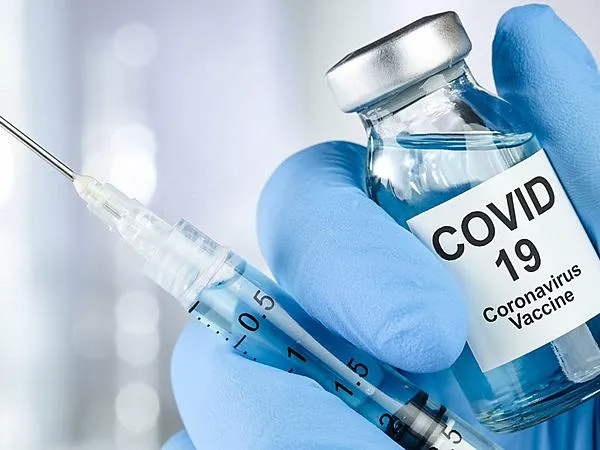
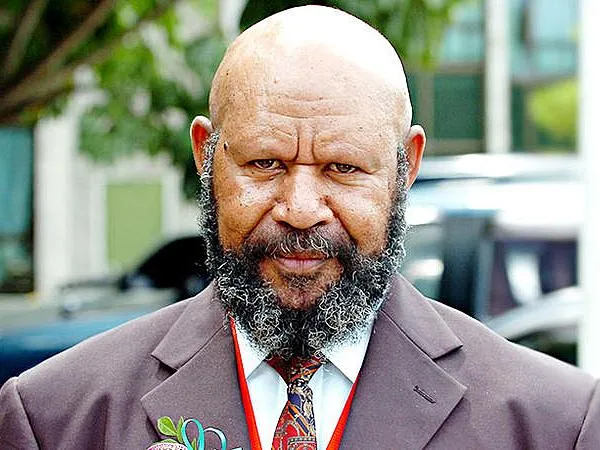
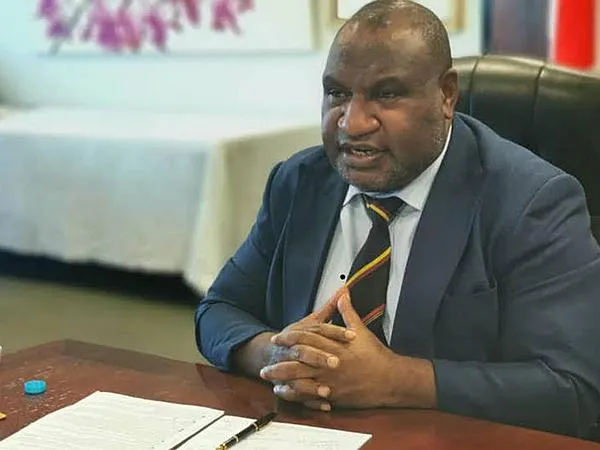
Prime Minister Hon. James Marape stated in Parliament recently that vaccination is “not mandatory” for the people of Papua New Guinea.
He said this in response to a petition to Government recently calling for no vaccination, no mandatory vaccination and for the Pandemic Act to be done away with.
A debate then ensued with most MPs, including those in Opposition, supporting and commending PM Marape for the way he was handling COVID-19.
PM Marape also stated that the “no jab, no job” policy of the private sector was not one of his Government.
“I want to make it clear again that vaccination is not mandatory in our country,” he said.
“How many times will we stand here and repeat that vaccination is not mandatory?”
“We have not made vaccination mandatory since Day 1.
“I want to tell everyone in the country: Do not listen to misinformation that vaccination is mandatory, in as far as Government policy is concerned.
“We respect our people’s right to freedom of choice, especially when it comes to sensitive matters like this.”
PM Marape said vaccination was mandatory in other countries, such as Fiji, where over 80 per cent of people had been vaccinated and was now opening up to the world.
“We have not made vaccination mandatory, but we have made vaccination available to whoever wants to receive it,” he said.
“That policy still stands, so what some people are saying that vaccination is mandatory is not true.”
PM Marape said the Government was closely monitoring yesterday’s protest march to find out who was behind it.
He said Parliamentary standing orders do not allow for Parliament to respond to ultimatums given by protestors, like yesterday’s organisers, who gave 48 hours for Government to respond.
PM Marape said hid response was made to clarify confusion and misinformation.
Whilst making response on the 'no jab, no job' and vaccination issues , PM Marape said leaders of these groups are most welcome to go to National Control Centre (NCC) "to get to know what exactly we are doing for in as far as COVID-19 fight is concerned going forward" .
PM Marape said Police could have not allowed yesterday’s protest to go ahead, “ because we have to be aware that such crowd gatherings allow the spread of COVID-19”.
He said the protest was led by a few prominent NGOs who had a long association with politicians, and suggested that instead of such, they could give their suggestions to the NCC which was open 24/7.
PM Marape said while his Government supported work place safety, the “no jab, no job” policy was one of the private sector.
“However, we now have a new work place protocol,” he said.
“If there was no pandemic Act, the Controller would not have the power to do this.
“Under this new protocol, regular testing of employees would be amongst new measures to allow for those who do not want to vaccinated to be at work unless they are COVID-19 positive."
Article courtesy of Department of PM&NEC
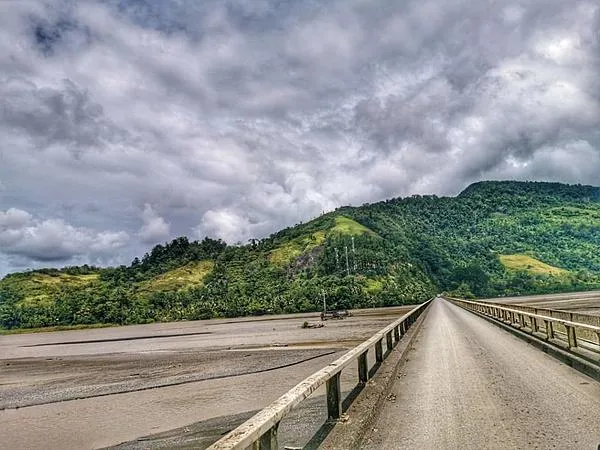
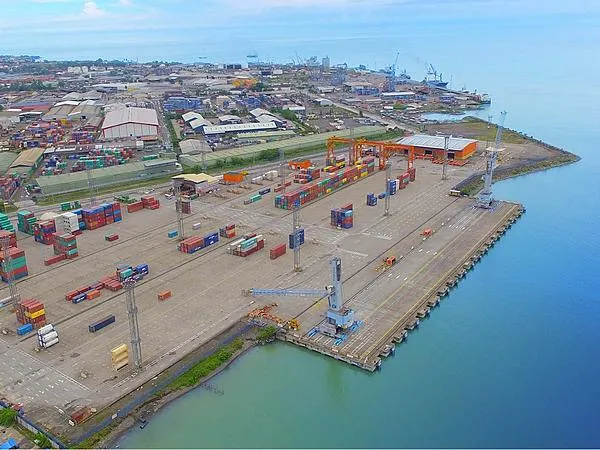
Photo credit: PM James Marape News Page - The Markham Bridge outside Lae
Prime Minister Hon. James Marape says he is not deliberately delaying work on the Bulolo Highway, as claimed by former Bulolo MP Samson Napo and other critics.
He said this after Napo, in a very-misleading and defamatory statement circulated on mainstream and social media, accused the Prime Minister of playing politics in the Bulolo Highway by holding on to K66 million allocated by the Australian Government for road maintenance.
PM Marape said the Bulolo Highway was so badly damaged and would cost far more than the K66 million for just a cosmetic makeover, hence, his Government would add another K50 million to bring the total up to K116 million.
He said he verified this for himself when he drive from Mumeng to Lae recently after attending a Wafi-Golpu landowners’ meeting.
PM Marape said his Government would add another K50 million on top of the K66 million from Australia for a permanent and lasting road to serve the people of Huon Gulf, Bulolo and Menyama districts who live along the Bulolo Highway.
“There is no deliberate delay by me on work on the Bulolo Highway, as falsely claimed by Napo, except that we are working with Works Department to see if that K66 million contract can be varied to do not just maintenance but permanent rehabilitation work,” PM Marape said.
” This is especially the section from Mumeng to Markham Bridge outside Lae that I drove on in my last visit to Mumeng.
“The K66 million given by Australia is a lot of money, and on top of this, we have another K50 million to invest in this important economic road.
” People must know that the Australian maintenance contract of K66 million is not for permanent work, but road maintenance.
“We are working for a permanent solution, especially on the sections I felt were totally ruined, and would not be addressed by a maintenance run that would be ruined with the next rain.
“We can do a better, permanent road and we are getting Works and Australian High Commission, plus our lawyers, to see how these contracts can synergise
“We are working with Works to reconfigure the scope of the road, so we do permanent reconstruction on this badly-damaged road than just cosmetic maintenance.
” After advice that we could overlay the K66 million maintenance contract with a reconstruction contract, especially for the section from Mumeng to Markham Bridge, we are working on a reconstruction contract for that specific section.
” Works Manager in Lae knows about this interest of the National Government to do a permanent upgrade of Bulolo Highway, so I call on ill-informed commentators like Samson Napo – who do not know the background – not to be quick to make false allegations.
“We are a Government going to rural places such as Bulolo, Wau, Gairaina and Menyama with better roads just like we are doing in the rest of the country.
” The K66 million from Australia for the Bulolo Highway would not have gone there if my Government did not point them there, or any other places in PNG they are working in now, so I ask Mr Napo and others who have criticised without knowing the facts to apologise.”
Article courtesy of PM James Marape News Page
According to estimates provided by the Chinese Embassy, last year's trade volume between PNG and China totalled US$3.21 billion (about K11 billion).
PNG's exports to China totalled US$2.29 billion (K7.85 billion), while imports from China totalled US$920 million (K3.1 billion), indicating a trade surplus.
In order to boost bilateral commerce, the two nations are also discussing a free trade deal.
Fanhua Zeng, China's ambassador to PNG, had stated that the free trade agreement process should be expedited.
He said that as a result of this, the two nations' commercial relations will improve following the Coronavirus (Covid-19) outbreak.
China imports a large amount of PNG LNG, believed to be over 300 million tonnes per year, as well as other items including lumber.
“It is important that even in this time, we give some impetuous to our trade relations,” Zeng said.
“For example, we want to have this free trade agreement with PNG so it’s a process we have to negotiate.
“But we want to accelerate this process so that when the pandemic is over, we can have better trade relations.
“PNG is rich in resources like gas, oil, timber and fisheries, and China has a big market.
“So we can cooperate closely. We import a lot of LNG gas from PNG and a lot of timber.”
Reference: The National (16 November 2021). “PNG-China trade volume reached K11billion last year”.
Recently in Port Moresby, the Department of Information and Communication Technology wrapped up a three-day National ICT Summit on a high note.
The summit, according to DICT Secretary Steven Matainaho, was successful in gathering much-needed data that would educate and confirm existing government thinking and drive the formulation of suitable policies to speed the digital transition toward a digital economy.
According to Matainaho, the department is pleased to have a responsive minister who is constantly available, which is critical in moving the ICT industry ahead.
He stated that all of the discussion and debating is over and that the ICT department and the ICT community would now focus on delivering the expected National ICT Policy 2022.
ICT Minister Timothy Masiu has informed all stakeholders that a draft National ICT Policy 2022 would be presented to Cabinet in early 2022.
He stated that the National ICT Policy 2022 should not only incorporate the summit's results but also establish a course for supporting small and medium businesses.
“The summit makes a milestone for the ICT Ministry in that, as we carry on from the digital government transformation agenda in 2020 to 2021. We are now refocusing 2022 towards our efforts on ICT as a driver for social and economic development,” he said.
Masiu praised all stakeholders for helping to make the summit a success, as well as the audience members who engaged in meaningful conversations and interactions over the three-day event.
He stated that the ministry will be able to put together better policies for the people as a result of their thoughts and suggestions.
“I expect that this Summit will be an annual event that will be held at the same time each year and we look forward to engaging with all stakeholders in such upcoming events,” he added.
References: Post-Courier (15 November 2021). “National ICT Summit A Success”.
Photo credit: RNZ - Mining Minister, Johnson Tuke
As a growing economy, the government of Papua New Guinea is open to international investment, with no limits on who may do business with them, but they must adhere to the country's rules.
This is according to Johnson Tuke, the Mining Minister, who just signed a blanket Memorandum of Understanding (MoU) with a Simon Energy Resource Co. P.R. China Ltd. of P.R. China.
In terms of mining developments in PNG, the firm is a Jaxin Group upstream oil and gas subsidiary.
In response to the government's recent request for additional foreign investment in PNG's mining and oil and gas industries. One of China's largest and fastest-growing firms, the Jaxin Group, has reacted by showing interest in investing in PNG's different resource development initiatives.
The Jaxin Group has stated a strong desire to pursue investment possibilities in both petroleum and mining ventures.
Minister Tuke and the Ministry of Mining have agreed to sign a Memorandum of Understanding in order to speed up the process of finding possibilities and moving forward with investment decisions. Last Friday, the deal was finalized.
Minister Tuke said: “The signing is an undertaking that we want to be a partner and so as the investor. This is a stepping-stone and beginning, we cannot commit ourselves into actions without coming to a mutual understanding.”
The signing, he remarked, is a testimonial to what will be done in the future.
“As the Minister responsible for Mining, I am giving my enormous support in working with the investor as long as it is within the guidelines of operating business in PNG by virtues of the law and undertakings we have,” Minister Tuke said.
The agreement will open the path for economic prospects within the Ministry, albeit no particular projects have been selected for harnessing.
Foreign Direct Investment, according to the government, is a vital link in the movement of foreign investment monies from one nation to another. It establishes the foundation for long-term commercial and investment interests and relationships.
“The government is not confined to anybody or any particular investors who have got the expertise and know-how and who is willing to invite investors into PNG to be a partner.
“We readily available it depends on whatever business it is, but in this case as the Minister for Mining, I am prepared to work with the investor on behalf of the government,” added Minister Tuke.
PNG sees this strategic investment as a substantial boost to the PNG economy, he added, because China is one of the world's fastest-expanding economies.
Reference: Loop (15 November 2021). “Govt Signs Deal With Chinese Investor”.
Photo credit: PNG World Expo 2020
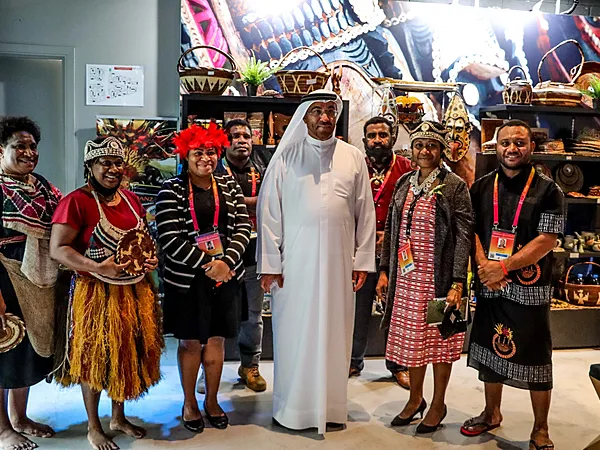
Papua New Guinea received the first state minister from the United Arab Emirates on the 10th of November at its pavilion in the world expo in Dubai.
His Excellency Ahmed Al Sayegh, Minister of State and Chairman of Abu Dhabi Global Market (ADGM) graced the PNG pavilion with his presence as part of his expo pavilion visit.
The Minister was received by the PNG Pavilion Assistant Manager and Acting Marketing Director of Tourism Promotion Authority Ms. Alice Kuaningi and PNG Protocol, Accreditation and Media Liaison Officer Ms. Nerolyn Kuamugl.
In a tour of the pavilion, Ms. Kuaningi took the Minister through each section of the pavilion and explained to the Minister the storyboard outlined through the pictures of the natural beauty of Papua New Guinea.
His Excellency Ahmed was amazed about the beauty of PNG, especially the culture and traditions, natural resources and the environment.
The Minister thanked the country of PNG for participating in the expo and making its presence known in the UAE saying that there were potential areas for further collaboration between the two countries. He pointed out the key issues of visa and travel which he said needed to be sorted out soon.
Visa issues and travel connectivity are some of the issues being worked on while the PNG expo team is in the Middle East for the world expo.
As part of Papua New Guinea’s tradition, Ms. Kuamugl presented a Sepik bilum (bag) packed with PNG Products including coffee, tea, chocolate and pure water and thanked His Excellency for taking time out and for choosing to visit the Papua New Guinea pavilion.
Article courtesy of the PNG World Expo 2020
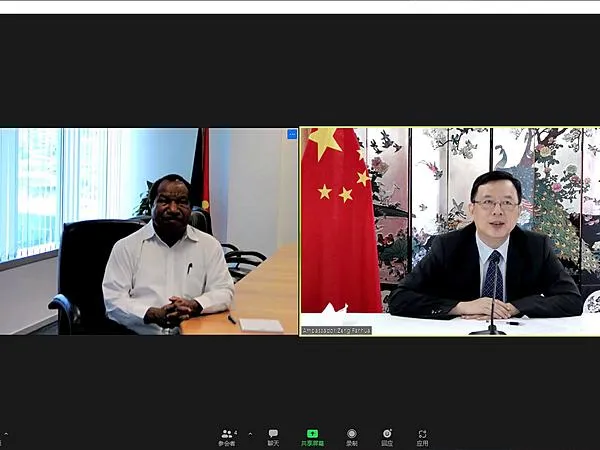
Photo credit: China Embassy in PNG - On 2 November, Chinese Ambassador Zeng Fanhua held a virtual meeting with Minister for State Enterprises William Duma. Both sides exchanged views on further deepening practical cooperation between China and PNG.
The Chinese ambassador to PNG, Fanhua Zeng, said the process of hastening a free trade agreement between the two countries has begun.
According to Fanhua, this would assure that the two nations' commercial relations would improve following the Coronavirus (Covid-19) outbreak. PNG exports roughly 300 million tonnes of liquefied natural gas to China each year, as well as other goods including lumber.
“It is important that even in this time we give some impetus to our trade relations,” Fanhua said.
“For example, we want to have this free trade agreement with PNG. It’s a process we have to negotiate but we want to accelerate it (so that) when the pandemic is over, we can have (better) trade relations.
“PNG is rich in resources like gas, oil, timber and fisheries and China has a big market.
“So we can cooperate very closely and both countries can benefit from it.”
Because of climate change, on timber, he said, “we have to do something in the area of forestation”.
“We know that PNG wants to do something in that area so we can cooperate not in direct import and exports of timbers but we can cooperate in the production (of timber) we can export to China.
“There is a big market in China and the products of PNG are very important and very good.
“I see great potentials in trade and economic relations between our two countries.”
Reference. The National (10 November 2021). “China, PNG ‘fast-tracking’ deal”
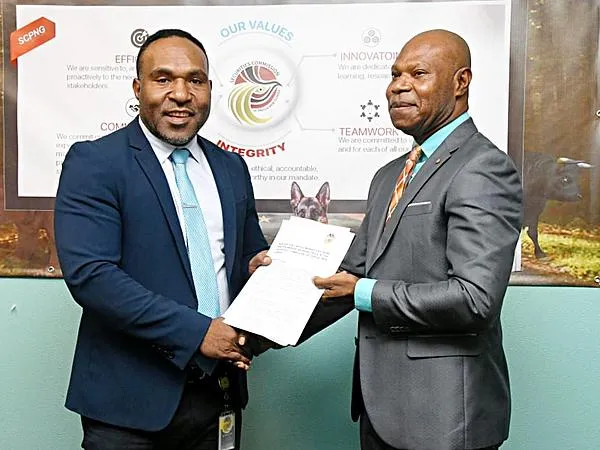
Prime Minister James Marape has expressed his delight at the news that a four-year leadership dispute at the Securities Commission of Papua New Guinea has been settled.
The commission is in charge of the organic capital market's growth and development. According to the PNG National Stock Exchange (PNGX) Markets Ltd, this has been a significant impediment to the growth of the capital market in the nation and the capacity of enterprises, large and small, to access capital.
The PNG Securities Commission stated in a statement that the industry has been plagued by uncertainty for the previous four years due to a power struggle between two former commission chairman over the governing body's leadership.
As a result, it is critical that the leadership of this regulatory body is not misunderstood by the stakeholders.
Over the last four years, that leadership has been lacking, and attempts to resolve it have been hampered by court orders.
Marape stated that his government could now proceed with the merger of Oil Search and Santos, as well as efforts to liberalize and restructure Papua New Guinea's National Stock Exchange.
At Marape's request, Christopher Taylor Hnanguie, a former chairman who had initiated legal action, agreed to drop the case.
Hnanguie, a former Asian Development Bank economist with 25 years of experience in the industry, was named executive chairman in mid-2017.
He was removed from office, however, less than a year into his term, prompting him to seek legal redress.
“My noble intention to create the commission and develop our capital market and the securities industry was disrupted by an unlawful decision to remove me from office,” Hnangui said.
“While my actions at the time I made the decision to fight was a matter of principle, in hindsight, I now recognise that our acts or omissions have, over the years, hurt the securities industry.”
At the request of the prime minister, Hnanguie claimed he had subsequently reconsidered his position.
On the other hand, PNGX chairman David Lawrence said: “PNGX looks forward to developing a constructive and respectful working relationship with the PNG Securities Commission under Salmon-Minak’s leadership.
“We hope to work quickly and constructively with Salmon-Minak to assist the commission to create and develop a promising future for the capital markets and securities industry. We will also move quickly to modernise the listing rules for the current market and to establish new markets and products.”
Meanwhile, the commission will continue under the leadership of current acting executive chairman Robert Minak.
Reference: The National (9 November 2021). “Resolution brings certainty to market: PNGX”.
Photo credit: Loop PNG - Australian High Commissioner Jon Philp
Over the next five years, Australia will expand its climate finance contribution to AU$2 billion (about K5.07 billion).
According to the Australian High Commission, this represents an increase of AU$500 million (K1.2 billion) above its previous commitment of AU$1.5 billion (K3.8 billion) and a doubling of Australia's climate funding pledge for 2015-20.
Climate change is already having an influence on countries in the Indo-Pacific.
Over the next few decades, intensifying cyclones, high heat, extended fire seasons, and rising sea levels will continue to have an impact on food and water security, as well as livelihoods.
This pledge, according to Australian High Commissioner Jon Philp, continues Australia's good track record of collaborating in the area to enhance resilience to the consequences of climate change.
“Papua New Guinea is our closest neighbour,” he said.
“We are family, friends, neighbours and partners and your future is our future.
“It is critical for our region’s (Pacific) stability and prosperity,” Philp said.
“Given the particular vulnerabilities to climate change facing our Pacific family, this doubling will see at least AU$700 million (about K1.7 billion) flowing to meet the Pacific’s needs.
“Australia’s assistance will support efforts to enhance climate resilience for future infrastructure investments, including roads, schools and bridges.
“Our commitment will also support local communities to better prepare for and recover from disasters, and address climate-related water and food security challenges.”
Philp stated that Australia will increase its investments in nature-based solutions, such as protecting and repairing mangroves and woodlands, to assist local populations in maintaining sustainable livelihoods and disaster preparedness.
Reference: The National (9 November 2021). “Australia increasing climate funds to K5bil”.
Photo credit: PNG PM Media
Prime Minister James Marape stated that the country has room for one or two more banks.
Marape said the Government was looking at the Bendigo bank model where firms may operate under a franchise when introducing the PNG Think Tank's online crowdfunding concept last week to gather funds to establish a PNG small-to-medium enterprise (SME) bank.
PNG Think Tank's crowdfunding campaign has already garnered over K30 million in pledges as a first step toward entering the banking industry.
“This idea is not bad and there is space for one more or two more banks in our country,” Marape said.
“For us, a nation of some nine million people, the volume and turnover as far as business is concerned has a need for more banks and the concept of crowdfunding for a bank that is owned by Papua New Guineans is not out of place in the present economic and banking needs.
“It is a step in the right direction.
“Whatever you want to do, so long as you do it correctly and the platform is equal to anyone who wants to participate and should they have a share in this business venture, open it up, everyone gets involved and mobilise your funding.
“As far as public policy is concerned, for a seed capital, the Government can step in if the intention is honest.
“There is also a concept that we are looking at called the ‘Bendigo’ concept in Australia where you have one licence but you have franchises who are operating and this can be an alternative.
“Our Government is in the business of trying our best at retaining money in country.
“All Forex (foreign exchange) we mobilise come in and we try to retain the money and capital that doesn't go outside and that includes owning banks that has addresses in our country.”
The head of the PNG Think Tank group, Samson Komati, said there was a large gap in the banking industry, which was currently dominated by commercial and micro banks.
According to Komati, there are no banks for agriculture, logging, fisheries, SMEs, and other industries, thus the SME bank was created to fill a need and reach out to the unbanked.
Reference: The National (9 November 2021). “Space for more banks: PM”.
Photo credit: Marc Dozier
According to the PNG National Statistics Office, Papua New Guinea's current price gross domestic product (GDP) for 2019 was K83.8 billion, up 5.6 per cent (K4.4 billion) over 2018. (NSO).
Jennifer Balen, head of the NSO accounting branch's combined accounts division, said that current price GDP, or nominal GDP, reflects changes in output, quantities, and prices.
According to Balen, the following industries contributed to the growth in 2019:
“These four industries alone are responsible for about K3.3 billion of the total increase,” Balen said.
According to Balen, GDP climbed by 4.5 per cent to K65.7 billion in constant prices, up from K65.7 billion in 2018.
Vanine Nouairi, the chief of the NSO's combined accounting branch's economic statistics section, claimed the country's constant price or real GDP climbed by 67% (K26.3 billion) from 2009 to 2019.
PNG's economy, according to acting national statistician John Igitoi, has been rising at a remarkable rate in recent years, particularly in the previous decade.
“In 2018, the economic value of the country was at that time was K62.9 billion.
“In 2019, you have K65.7 billion in constant price.
“So there is a significant growth,” Igitoi said.
NSO recently released the 2019 GDP figures.
“The National Statistical Office has been producing this document every year,” Igitoi said.
“The national accounts basically track the development progress of Papua New Guinea and how much each sector has contributed over the years.
“Each sector has significant contributions and over the years there are a lot of changes among different sectors.”
Reference: The National (5 November 2021). “GDP increased by 5.6pc in ’19”.
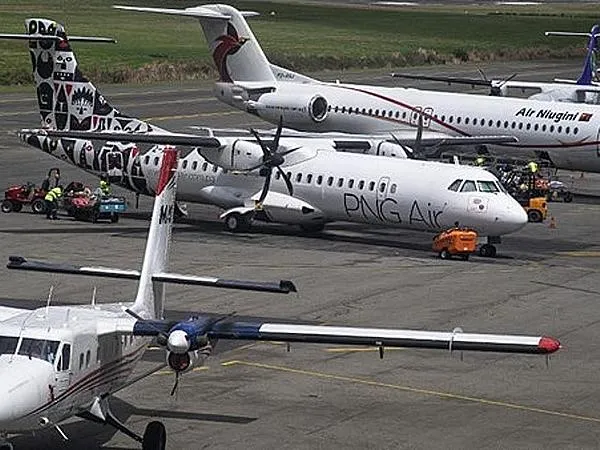
Link PNG has received permission from the Independent Consumer and Competition Commission for a code-share agreement with PNG Air Limited, except the Joint Operations Agreement.
On April 9, 2021, Link PNG applied for approval under Section 70 of the Independent Consumer and Competition Commission Act 2002 to engage into and give effect to a proposed Joint Operations Agreement, which involves the provision of a proposed five-year Code-share Agreement with PNG Air.
The proposed JOA, according to the application, is for the aim of coordinating flight schedules, fleet allocation, operating and maintenance of services, and charter airline operations between the two airlines, among other things.
The suggested Code-Share Agreement was for the purpose of free-sale.
Paulus Ain, ICCC Commissioner and Chief Executive Officer, stated that the ICCC recognized the following markets as relevant:
– The domestic market for scheduled or regular passenger transportation services;
– The market for domestic air freight services is competitive.; and
– The market for domestic air charter services to destinations within Papua New Guinea.
“Overall, the ICCC has considered that only the proposed Code-share Agreement should be authorized with a number of conditions aimed at minimising the likely anti-competitive effects and ensuring the two airlines continue to compete in the long term.” Mr Ain said.
“The ICCC has considered that the proposed JOA should not form part of the authorisation, because it would lessen competition and result in greater detriment than benefit.”
Reference: Post-Courier (5 November 2021). “Link PNG Gets Ok To Codeshare With PNG Air”.
In the following years, the Papua New Guinea Ports Corporation Ltd (PNG Ports) claimed its network of ports will be receiving multi billion kina worth of restoration.
A substantial portion of infrastructural development funds will be distributed to ports, namely those operated under PNG Ports' community service obligation (CSO).
The rehabilitation and renovation of the ports is part of PNG Ports' 30-year ports infrastructure master plan, which was just announced.
The Australian government will provide a large portion of the cash through a K1.5 billion infrastructure finance facility for the Pacific.
During the commissioning of the master plan in June this year, a memorandum of understanding (MoU) was signed between Australia and PNG, according to PNG Ports.
During a series of talks held at the several CSO ports, PNG Ports managing director Fego Kiniafa explained the infrastructure investment to stakeholders.
Stakeholders expressed concerns about the present status of ports and the need to upgrade them to contemporary facilities.
“Work on implementing the master plan has already begun,” Kiniafa said.
“The master plan was done following a structural and safety assessment which identified serious structural failings that required immediate rehabilitation.
“We have only 30 years to rehabilitate all 15 ports.
“It is not easy, however, PNG Ports is confident in delivering the rehabilitation projects under the guidance of our infrastructure master plan and through partnerships with qualified contractors in country and abroad.
“Ports are the lifeline of this nation and we intend to make them safe, competitive, modern, profitable and operationally efficient.”
Kinafa said 80 per cent of PNG’s ports did not make money and were run as CSO ports.
“These ports rely on the revenue from Lae and Motukea (Port Moresby), Rabaul, Kimbe and Madang to fund their existence.”
CSO ports, he noted, needed continual repair and maintenance.
Shippers, freight forwarders, stevedoring providers, shipping agencies, Customs, the National Agriculture and Quarantine Inspection Authority, importers, exporters, and those in the logistics and supply chain industries are all stakeholders in PNG Ports.
Aitape, Alotau, Buka, Daru, Kavieng, Kieta, Lorengau, Oro Bay, Vanimo, and Wewak are the CSO ports for PNG Ports.
Reference: The National (2 November 2021). “PNG Ports to rehabilitate 15 ports with funding from Aust”.
Photo credit: PNG Buzz
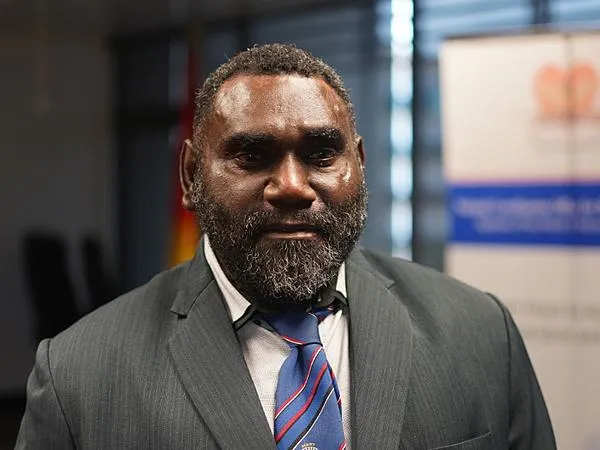
President Hon. Ishmael Toroama has congratulated all Members of the Fourth Bougainville House of Representatives for completing the first year in office since the inauguration in 2020.
President Toroama made this statement during parliament this week, highlighting that September 29 this year marked the first year of the Toroama-Nisira government in office. He described the first year as an eventful one.
“The past year has been an eventful year marked by our triumphs as well as challenges and tragedy,” he said.
“In the last twelve months our government has progressed our Independence Mission from a seemingly impossible concept into a reality driven by our people in our constituencies. We have mapped out an economic roadmap and the administration is well on its way to reform.”
President Toroama acknowledged the challenges that were faced in the first year in office, and described these challenges as perennial saying that his government in the past year has worked hard to mitigate.
President Toroama also acknowledged the loss of two of its senior Members.
“The House suffered its greatest tragedy in the loss of our two senior members of parliament in the Late Hon. Raymond Masono who passed away and the Hon. Charry Napto who has gone missing at sea. The memory of these two great men is embedded in our drive for a better and independent Bougainville,” he said.
In the first year in office, the Toroama-Nisira government has achieved several milestones under the President’s Six Point Strategy that has put Bougainville on the path to rebuilding its socioeconomic and political capacities.
A key milestone was the agreement reached on the independence timeline during the second Joint Government Consultations this year in Wabag.
“Based on the successful outcome of the 2019 Referendum results our government through the consultations, has outlined our position on independence and we have agreed with the National Government on a timeline for the final political settlement for Bougainville that must not happen before 2025 and no later than 2027,” President Toroama said.
On the economic front, much work has been progressed to realign the government’s economic priorities to be proactive to suit Bougainville’s current revenue generation abilities.
“We have introduced a new macro-economic model under the Bougainville Blue Print to create a self-sustaining economy through the development of our resources and encouraging foreign investment. We have embarked on several high impact projects through this initiative. The Department of the President and BEC is currently cooperating with other economic sector departments to articulate the vision of the government on creating a fiscally self-reliant Bougainville,” Toroama outlined.
In this first year, the Toroama-Nisira government has also made critical changes in its ministerial leadership to ensure progress and development.
“If a government fails to evaluate itself and institute change then it is bound to become complacent, corrupt and it loses its focus to serve the best interest of its people,” he said.
President Toroama says his recent decision to reshuffle ministries in his cabinet was to address pressing issues that have gained prominence in the last twelve months including continuation of public service reforms towards independence readiness, response to COVID-19 pandemic and improvement of law and order on Bougainville.
Photo credit: Department of PM&NEC
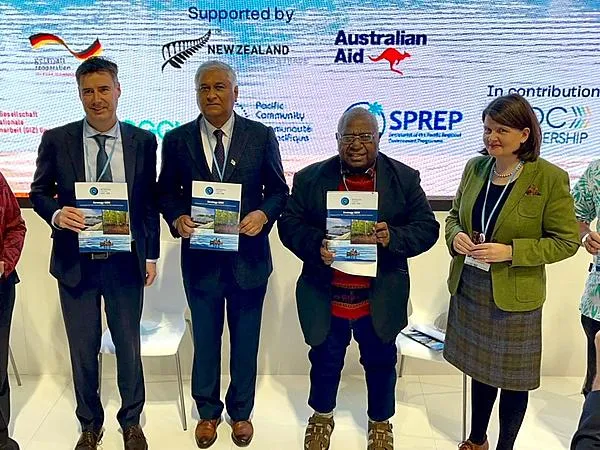
The Prime Minister’s Special Envoy to the 26th Conference of the Parties, Hon. Wera Mori, says Papua New Guinea anticipates on firmly drawing tangible outcomes from the COP26 Leaders’ Summit, in Scotland.
He made these remarks during the first day of the COP26 Leaders’ Summit (Monday), where he intends to make a bold stand, reiterating Prime Minister Hon. James Marape’s country statement on climate change, delivered in New York, during the United Nations General Assembly, in September.
He said our bold statement at the summit would be 'Enough of talk. Let's take action. We need to walk the talk.”
“Papua New Guinea, like many small island developing states in the Pacific and the world, suffer the consequences of emissions by industrialized countries, which we are not responsible for.
“Now, we have our oceans – The Blue Pacific, being destroyed, where our seas have become acidic.
“Rising sea-levels are washing away coastlines on many of our small islands,” Minister Mori said.
He said PNG refuses to attend COP summits with little result.
“Our seas are being destroyed. Our food security from our oceans is being threatened from over saturation of carbon pollution.
“These problems are entirely from industrialized countries’ contribution to the destruction of our oceans, resulting in the bleaching of our coral reefs, affecting spawning grounds for our high-class tuna.
“We experience severe patterns of global warming, induced weather variations, basically creating challenges to our infrastructures,” Minister Mori said.
He made this remarks on the sidelines of the COP26 to international media such as UK Channel 5, among others.
He said by the same token, as a country that is host to seven per cent of global biodiversity and over one per cent of land mass of global landmass, Papua New Guinea feels that it is
our objective to see actual actions taken to address these crises.
“From the outcomes of this Climate Summit at the end, PNG and other countries that are vulnerable to the impacts of climate change, must know how and when they can access this
climate funds, which is supposed to be a $100 billion per annum.
“And therefore, it is only important and proper that we obtain positive outcomes from this climate summit or, we may find that there is no benefit from such global meetings, and that
there is no point in attending and participating in future COP meetings.
“Consequently, we need to show to the world that we are serious on combatting climate change and carbon emissions, as these problems aren’t caused by us but by the global
community,” Minister Mori said.
He also met with the executive director of the Global Climate Fund (GCF), Yannick Glemarec, on the margins of the summit, to best discuss how PNG could effectively drawdown
on climate funds that are available.
“In fact, GCF have country projects that are currently being implemented in PNG.
“I have also asked for further meetings with GCF to ensure that processes are better understood,” Minister Mori said.
In attendance with him were the Member for Moresby Northwest Hon. Lohia Boe Samuel and Member for Talasea Hon. Francis Maneke.
As for the other MPs, they have been participating and will continue to participate in various important meetings aligned with our environment and climate change goals.
Oro Governor, Hon. Gary Juffa also met with the Director General for International Centre for Research in Agroforestry (ICRAF), Mr Tony Simons, to further discuss their forest
conservation management project in Managalas, Oro Province.
The host country agreement with ICRAF will be formalized this week, on the sidelines of the COP26 Summit.
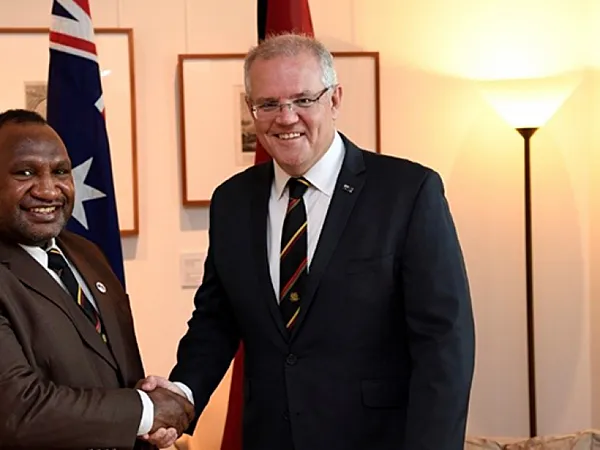
Photo credit: Department of the Prime Minister and Cabinet - Prime Minister of Papua New Guinea James Marape and Australian Prime Minister Scott Morrison
Australia and Papua New Guinea have agreed to join forces to create an efficient and accessible carbon market for the region under the Indo-Pacific Carbon Offsets Scheme.
Following talks with PNG’s Special Climate Envoy and Minister for Environment, Conservation and Climate Change, Hon. Wera Mori in Glasgow, Minister for Industry, Energy and Emissions Reduction, Hon. Angus Taylor announced PNG would be one of the first international partners to join the scheme.
Minister Taylor said: “Papua New Guinea has been longstanding leader on climate change, making a major contribution to the preservation of global forests. Australia is a world leader in emissions measurement and inventory management,” Minister Taylor said.
“The partnership will see our two countries share expertise to ensure Papua New Guinea is internationally recognised as a source of high-integrity carbon mitigation outcomes.”
Minister Mori said: “The signing of the MOU this morning between Papua New Guinea and Australia on Cooperation to Build Capacity for Participation in Global Carbon Markets is significant for us as a country to engage in the Indo-Pacific Carbon Offset Scheme which Australia is launching today.
“Papua New Guinea’s engagement in this scheme is critical given our on-going work on REDD plus in preparation to develop carbon markets and the country’s engagement under Article 6 of the Paris Agreement once concluded including our conservation efforts.
“While the negotiations are yet to be concluded in Article 6, Papua New Guinea agrees to a robust carbon trading system that is fair and promotes environmental integrity and sustainable development.
“The Government of Papua New Guinea congratulates Australia on the launch of the Indo-Pacific Carbon Offset Scheme and assure of our commitment through the Australia -PNG Climate Action Plan.”
Under the Indo-Pacific Carbon Offsets Scheme, Australia will share technical expertise in carbon accounting with countries in our region to enable them to meet new Paris Agreement emissions reporting obligations.
The scheme will deliver renewable energy and nature-based solutions projects to support neighbouring countries to reduce emissions and grow their economies.
Australia has also entered an early partnership with Fiji.
“Our partnership with Papua New Guinea will include a focus on encouraging private sector participation in carbon market activities, and emissions reduction projects that showcase Papua New Guinea’s potential for high-integrity offsets,” Minister Taylor said.
Minister Taylor said he and Minister Mori also discussed ambitions for COP26, and bilateral cooperation on energy access and on blue carbon.
The discussions and signing took place on the side-lines of COP26 on Wednesday 03 November 2021 and builds on the existing Australia PNG Climate Action Plan and complemented by recent passage of the Climate Change (Management) (Amendment) Bill 2021.
Follow on LinkedIn:
PNG Business News
Be the "First" to get our exclusive Digital Magazine & Weekly Newsletter.