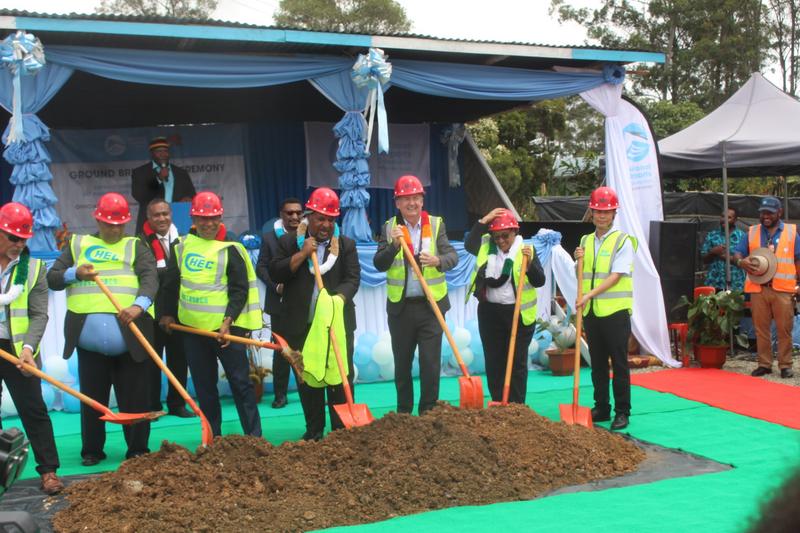
A major infrastructure investment aimed at strengthening aviation capacity in Papua New Guinea’s Highlands region has officially commenced, with Civil Aviation Minister Wake Goi launching the K39.4 million Kagamuga Airport runway upgrade on April 28 in Western Highlands Province.
The project, described as a critical national priority, will see the existing bituminous seal replaced with a more durable asphalt concrete overlay designed to improve safety, increase aircraft capacity, and support long-term economic activity in the region. Funding for the works is being provided internally by the National Airports Corporation (NAC).
Speaking during the launch ceremony in Mt. Hagen, Minister Goi expressed appreciation to the leaders and people of Western Highlands Province, as well as neighboring provinces including Simbu and Enga, for their patience amid longstanding demand for a runway capable of handling larger aircraft.
He said Kagamuga Airport remains a strategic transport hub, positioned as the country’s second most important airport after Port Moresby and central to business, tourism, and government connectivity in the Highlands.
NAC Acting Managing Director Dominic Kaumu outlined the technical scope and economic significance of the project, confirming that K4 million has already been paid to China Harbour Engineering Company (CHEC) to facilitate the mobilization of materials and equipment.
Kaumu said the upgrade is essential to support Air Niugini’s ongoing fleet transition, including operations involving Boeing 737 aircraft and the new Airbus A220, which carries 138 passengers compared with the 100-seat Fokker 100 currently in service. He noted that the increased capacity is expected to improve regional passenger movement and airline efficiency.
He added that the project must be completed by December 2026 to accommodate the expected Christmas travel peak, which traditionally places heavy demand on Highlands air services.
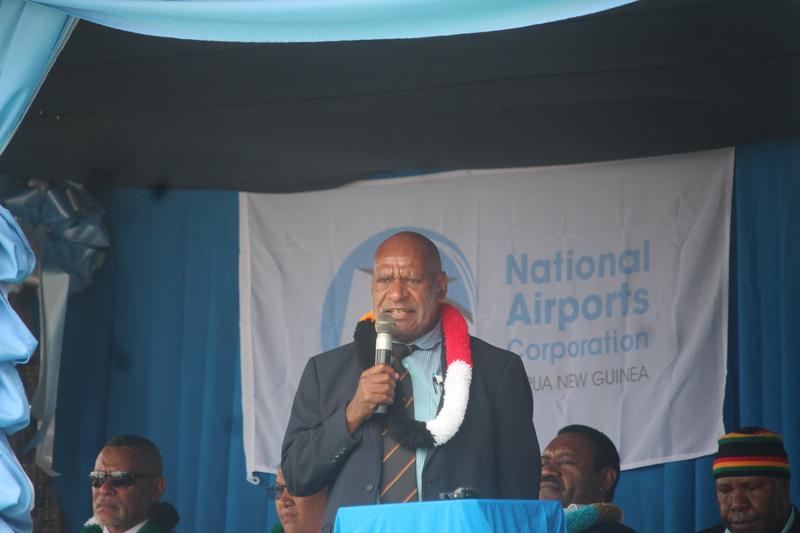
Western Highlands Governor Wai Rapa welcomed the project, describing the upgrade as long overdue and emotionally significant for the province. He said delays in improving the runway had caused “sleepless nights” for both him and the local business community.
Rapa highlighted Kagamuga Airport’s role as a vital economic artery, noting that an estimated three to four million people transit through the province, placing pressure on public infrastructure and services. He called on contractors to ensure high-quality workmanship, adding that previous runway improvements had not stood the test of time.
He also urged surrounding communities and security agencies to support uninterrupted construction activity and ensure the safety of workers on site.
In addition to the runway works, Goi announced broader airport precinct reforms aimed at improving order and safety. These include the relocation of informal markets and the enforcement of a ban on betel nut and cigarette sales within the airport car park and terminal areas, effective next week.
He said the measures form part of a wider modernization agenda aligned with the Civil Aviation Development Investment Programme Phase III (CADIP III), which will include future runway extensions and terminal upgrades starting in 2028.
Goi also called on CADIP III cadet and training programs to prioritize Mt. Hagen, stressing the importance of building a skilled local workforce capable of managing upgraded, international-standard aviation facilities in the Highlands.
The minister said the combined reforms and infrastructure upgrades mark a new phase of development for Kagamuga Airport, positioning it to better serve both domestic and future international aviation demand.