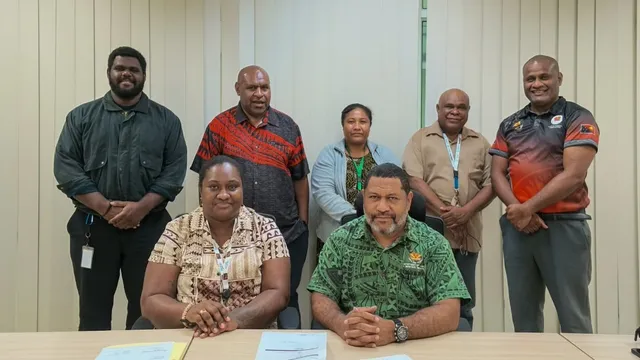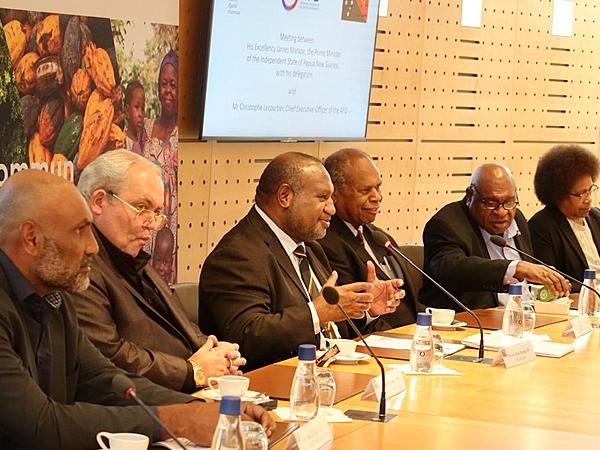
Papua New Guinea is nearing the signing phase for the redevelopment of the Port of Rabaul following high-level talks in Paris between Prime Minister James Marape, French development agency Agence Française de Développement, or AFD, French government officials and European development partners.
The discussions, held on May 19, focused on infrastructure development, renewable energy, biodiversity conservation, green finance and broader economic cooperation between PNG and France.
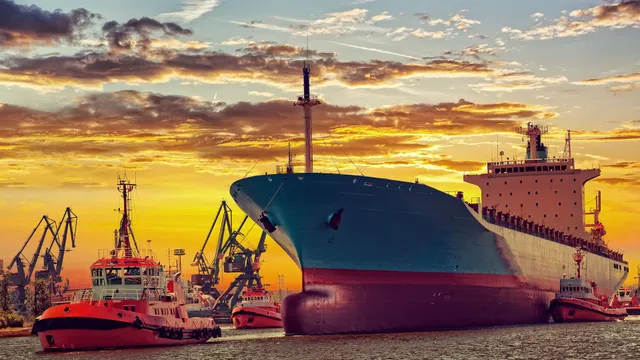
Marape said financing negotiations for the Rabaul port redevelopment were approaching completion after the project recently received National Executive Council approval. The project is jointly financed by AFD, the European Investment Bank and the European Union under a broader “green port” strategy.
“Before the volcanic eruptions of 1994, Rabaul was regarded as one of the most beautiful natural harbours in the world,” Marape said.
“The restoration and redevelopment of Rabaul is not just for East New Britain Province, but for the whole country and the Pacific region.”
The prime minister said the government aimed to transform Rabaul into a regional import-export hub, Pacific redistribution centre and modern green port supporting tourism, trade, manufacturing and downstream processing industries.
Marape said industries linked to cocoa, fisheries, sustainable timber processing and renewable energy could emerge around the redeveloped port infrastructure.
“We want economic activity surrounding the port — processing our cocoa, our fisheries products, and our timber sustainably here in Papua New Guinea before export,” he said.
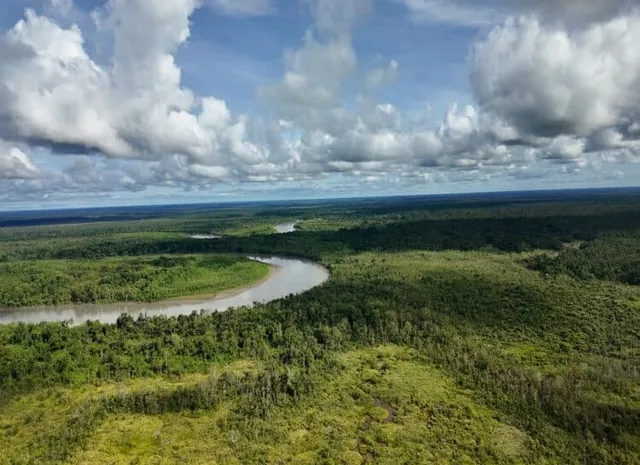
The discussions also covered climate and biodiversity cooperation under the SoNG Project — “Solwara na Graun blo Pipol” — a PNG-France initiative backed by AFD and development partners supporting marine conservation, forest preservation and community-based climate resilience programmes.
“Papua New Guinea possesses some of the last remaining pristine biodiversity on Earth,” Marape said.
“We have around six percent of the world’s biodiversity in our forests and oceans. These are not only PNG assets — they are assets for humanity.”
Marape also outlined PNG’s ambitions to expand hydro, solar and geothermal energy generation as part of a longer-term transition away from fossil fuels. Discussions included renewable energy partnerships, battery technology research, green finance and reforms within PNG Power Ltd.
“There is enormous opportunity in battery technology, clean energy innovation, and renewable energy systems,” he said.
The prime minister also called for greater collaboration between French universities and the Papua New Guinea University of Technology in renewable energy and battery technology research.
Marape said PNG’s partnership with France would continue to strengthen beyond current political leadership.
“What we are doing today is building bridges into the future for our children and grandchildren,” he said.