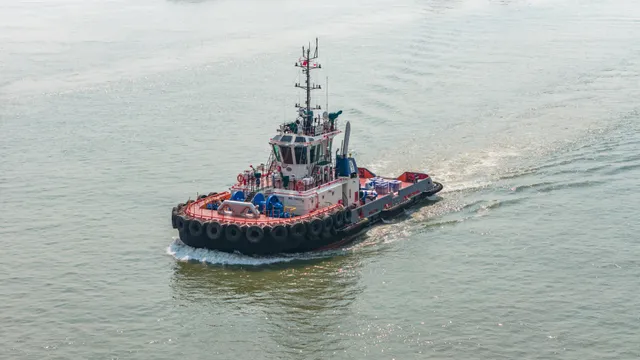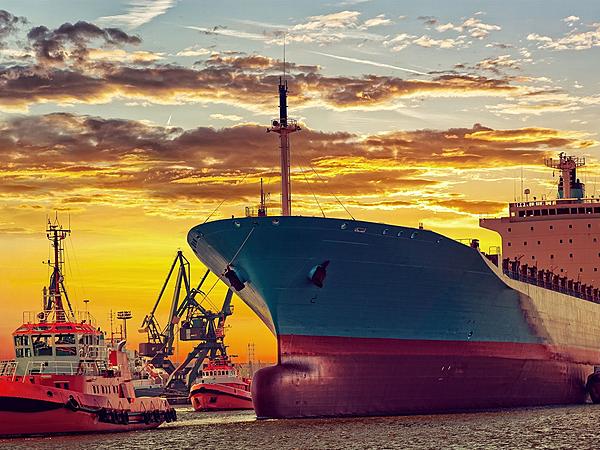
Papua New Guinea’s maritime future will depend not only on vessels and infrastructure, but also on the strength of the businesses that support the industry from within. Local capability — spanning technical service, equipment support and operational coordination — will be critical in building a more resilient and efficient maritime economy. This is where JJ Ship Equip Agencies Ltd (JJSEA) is positioning itself as a key local partner.
For JJSEA, local capability is fundamentally practical. “We see local capability as the ability to solve real maritime problems inside Papua New Guinea with local knowledge, local people, local responsiveness and stronger in-country support systems,” the company says. This goes beyond market presence to reducing reliance on slow external processes and strengthening domestic support systems. In practice, it includes dependable supplier access, effective coordination, technical understanding and consistent follow-through. For the wider industry, stronger local capability means greater continuity, less downtime and improved operational resilience.
This perspective has shaped the company’s evolution. JJSEA has moved from a straightforward marine supplier into a more integrated support provider, reflecting what the PNG market requires. “Operators do not only need items delivered; they need help with urgency, technical fit, sourcing complexity, compliance expectations and operational coordination,” the company explains. As a result, JJSEA has invested in supplier relationships, practical knowledge and service capability, positioning itself as a problem-solving partner rather than a transactional vendor.
Shipping companies in Papua New Guinea operate in a demanding environment defined by distance, remote routes, unpredictable weather, infrastructure constraints and procurement lead times. These challenges are compounded by reliance on foreign sourcing and rising compliance expectations. JJSEA addresses this by providing a responsive local point of contact. “We give clients a practical local point of contact that can help source equipment, coordinate support, advise on urgency, manage follow-up and keep communication moving when time matters,” the company says. In this context, reducing operational friction is a core part of the value it delivers.
A defining feature of JJSEA’s approach is its focus on coordination. Rather than treating supply as a standalone transaction, the company engages with the broader operational context — including vessel schedules, locations and technical requirements. “In many cases we act as a coordination point — aligning suppliers, technical parties, logistics and delivery timing so the operator can resolve the issue with less disruption,” it notes. This also extends to forward planning, particularly around inspections, maintenance and known operational bottlenecks. In PNG, where procurement alone rarely solves operational challenges, coordination and follow-through are essential.
As the maritime sector modernises, expectations are rising. Operators are placing greater emphasis on product quality, documentation, traceability and technical reliability, alongside more professional service standards. JJSEA observes “stronger demand for product quality, better documentation, more reliable technical support, greater traceability, and more professional operational follow-up.” In response, it is strengthening supplier discipline, improving documentation standards and expanding its ability to support more technically complex requirements. The company views this shift as positive, noting that modernisation will depend not only on vessels, but also on the quality of the support ecosystem around them.
Since its establishment in 2015, JJSEA has expanded its presence across Lae, Port Moresby, Rabaul, Madang, Kimbe and Buka, while building relationships with a wide range of operators, including Consort Express, Pacific Towing, Steamships, Swire, P&O Maritime and Lutheran Shipping. While it does not disclose financial metrics, its growth is reflected in increased market reach, repeat business and rising demand for dependable local support.
Partnerships are central to strengthening this capability. JJSEA operates within a broader ecosystem involving vessel operators, regulators, ports, classification societies, technical providers and international suppliers. “No single business can do that alone,” the company says, emphasising the need for collaboration. It works with stakeholders including the National Maritime Safety Authority and technical partners to support both client outcomes and broader industry development.
Looking ahead, JJSEA’s priorities over the next three to five years focus on strengthening service depth and reliability. These include expanding technical capability, improving inventory planning, investing in people and systems, and enhancing collaboration with credible partners. The aim is to build “a more capable local maritime support platform” that can serve commercial operators and coastal shipping more effectively across Papua New Guinea.
As the sector evolves, the importance of capable local businesses will continue to grow. JJSEA’s trajectory reflects a broader shift towards stronger domestic solutions, higher standards and more resilient support systems. By combining local knowledge with practical service delivery, the company is contributing to a more dependable and self-sustaining maritime sector — one that supports both economic activity and national connectivity.