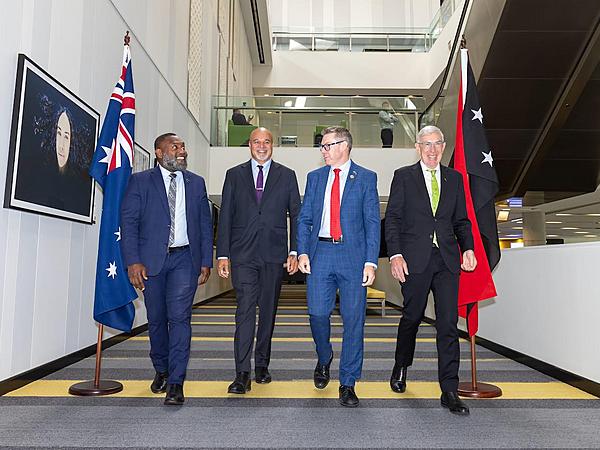
Australia has announced a major new push to support Papua New Guinea’s telecommunications and digital infrastructure sector, with Australian Minister for Pacific Island Affairs Pat Conroy outlining plans aimed at accelerating economic growth, expanding business opportunities, and improving nationwide connectivity in PNG.
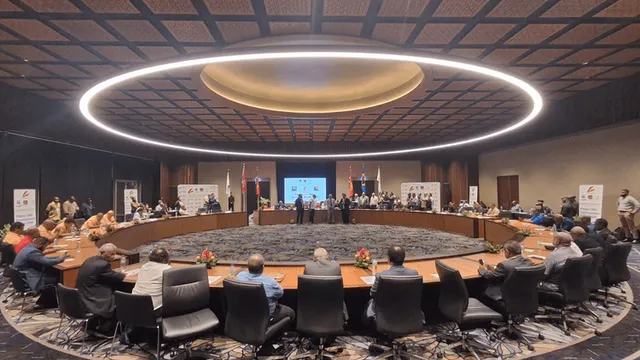
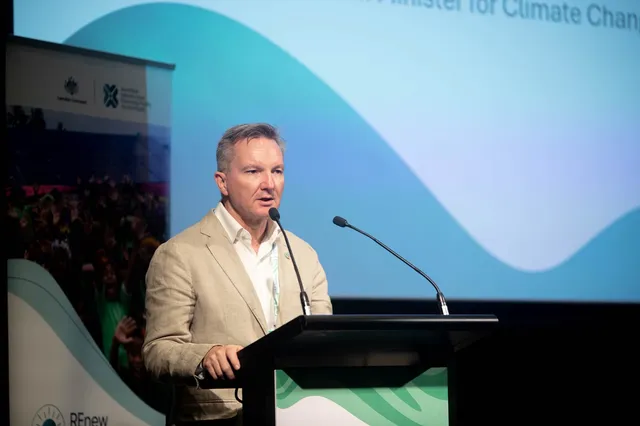
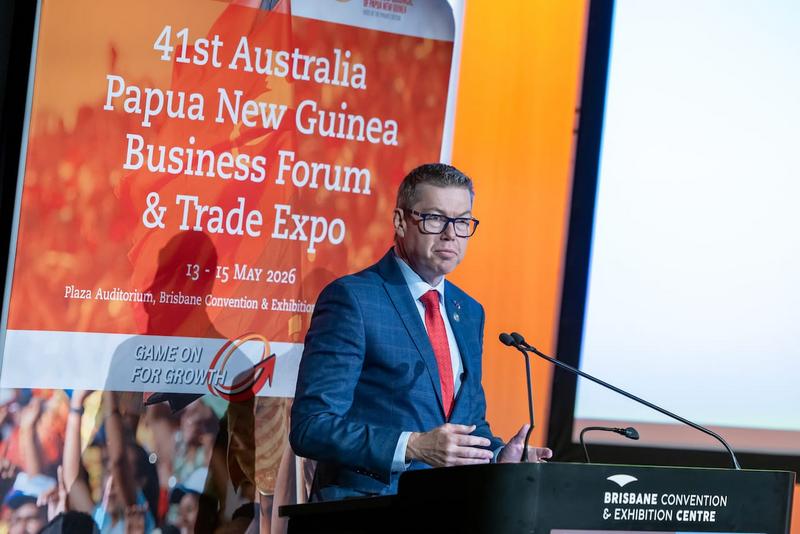
Speaking at the 41st Australia Papua New Guinea Business Forum and Trade Expo on May 20, 2026, Conroy said digital connectivity would play a critical role in PNG’s long-term economic transformation, with improved telecommunications infrastructure expected to drive investment, reduce business costs, expand financial inclusion, and create tens of thousands of jobs.
The minister said PNG stood to gain significantly from investment in digitisation and telecommunications reform, citing projections that effective digital transformation could lift the country’s GDP growth to more than 4.5 percent between now and 2035.
According to figures outlined in his speech, this could contribute an additional K85 billion to the economy, create more than 130,000 jobs, and support the establishment of over 45,000 new businesses.
Conroy said widespread and affordable internet access had the potential to double PNG’s non-mining growth rate while transforming economic activity across all 22 provinces.
“We know that for PNG, investing in effective digitisation could elevate GDP growth to over 4.5 percent between now and 2035, adding K85 billion to the economy, driving the creation of more than 130,000 jobs and over 45,000 new businesses,” he said.
He described telecommunications infrastructure as essential for development rather than a luxury, saying affordable and reliable internet services were now fundamental to education, healthcare, trade, investment, financial services, and business operations.
“Connectivity supports businesses, industries, and jobs, and helps inform, engage, and empower people,” Conroy said.
The Australian minister highlighted the significant digital access challenges currently facing PNG, emphasising that only around 36 percent of the population has consistent mobile coverage, while internet penetration remains at approximately 32 percent, largely concentrated in Port Moresby and Lae in Morobe Province.
He said PNG’s internet penetration lagged behind every ASEAN and Pacific neighbour, while internet access costs were among the highest globally relative to income levels, placing services beyond the reach of more than 80 percent of the population.
“High service costs, plus expensive installation and maintenance costs, further limit access and industry development,” he said.
Despite those challenges, Conroy said improved connectivity could unlock substantial economic and entrepreneurial potential across PNG, particularly in rural and regional areas.
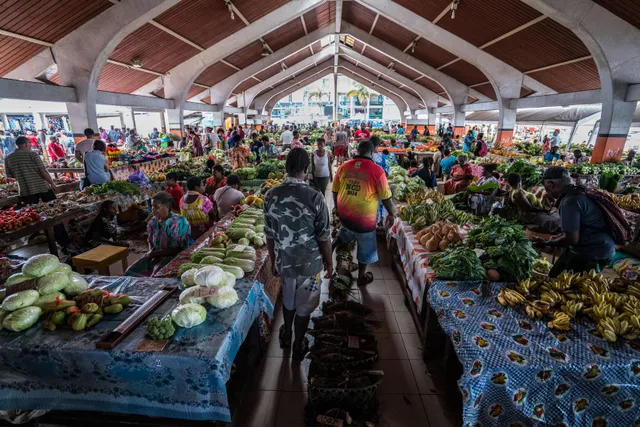
He reflected on visits to marketplaces in locations including Wewak and the Highlands, where he witnessed what he described as the strong entrepreneurial spirit of Papua New Guineans.
“I’ve seen the spirit of business that is there and that needs to be harnessed by giving connectivity to the people,” he said.
“When it’s done well, it drives development. It reduces the divide between cities and rural areas, and it reduces costs for businesses.”
Telecommunications blueprint launched
A major announcement during the forum was the launch of the Telecommunications Blueprint process, a joint PNG-Australia initiative first agreed to during the Australia-PNG Ministerial Forum in Canberra last year.
The blueprint is intended to provide a long-term roadmap for building a “connected, digital-ready nation” by identifying reforms, investment priorities, and regulatory measures needed to improve access, lower telecommunications costs, and strengthen cyber resilience.
Conroy said the initiative would support digital growth across sectors including health, education, tourism, and trade, while helping PNG maximise the value of data capacity provided through the Australian-funded Coral Sea Cable.
The blueprint process will be led by former Australian Competition and Consumer Commission chair Professor Rod Sims AO alongside PNG Department of Information and Communications expert adviser Jack Tomon.
Conroy said Australia would provide a “complete package of support” to PNG, including additional assistance for capital expenditure and support in strengthening market settings and regulatory structures.
He noted that Australia’s own experience demonstrated that achieving universal connectivity, particularly in remote areas, required close cooperation among governments, regulators, and the private sector.
The minister also highlighted the potential role of low-earth-orbit satellite technology in improving internet access in PNG alongside subsea cables and terrestrial telecommunications networks.
“That’s what the Blueprint is all about: how technology, business, government, and regulators can all work together to maximise connectivity,” he said.
New “Pukpuk” connectivity initiative announced
As part of broader digital infrastructure cooperation, Conroy announced that PNG and Australia would progress work on exploring additional secure internet cable connections into Port Moresby through what Acting PNG ICT Minister Peter Tsiamalili Jr. has named the “Pukpuk Digital Connectivity Initiative.”
The proposed initiative is expected to build on the Coral Sea Cable infrastructure and strengthen PNG’s international data connectivity capacity.
Conroy said any future investment under the initiative would add to the approximately A$2.5 billion Australia has already invested in digital connectivity projects in PNG.
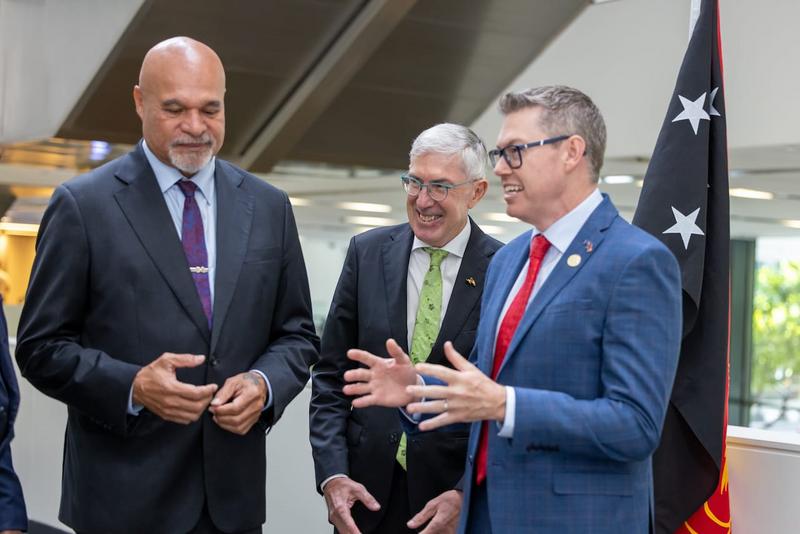
He further noted that Australia’s Infrastructure Financing Facility for the Pacific had committed more than A$1 billion to PNG’s critical infrastructure projects since 2019.
“These projects will in turn help grow PNG’s development, trade, investment, and our broader economic partnership,” he said.
Beyond telecommunications infrastructure, Conroy linked digital access to broader social and commercial opportunities, including increased participation in sports, education, and professional industries.
He referenced PNG’s planned entry into the National Rugby League competition in 2028, saying affordable internet access would allow people in rural and remote communities to follow the PNG Chiefs and access wider opportunities connected to sport and sports administration.
The minister also used the forum to emphasise the evolving strategic and economic relationship between PNG and Australia following the signing of the PNG-Australia Mutual Defence Treaty and broader bilateral alliance arrangements last year.
He described the agreement as Australia’s first alliance since the ANZUS Treaty more than 70 years ago and PNG’s first alliance with another country.
Conroy said the relationship between the two nations was increasingly focused on practical economic opportunities in trade, investment, infrastructure, and digital development.
“The underpinning principle among all this is, yes, we make investments based on the priorities of the PNG government,” he said.
“The PNG government is putting skin in the game. The PNG government, under wise budget management, is making investments, and Australia is pleased to be a partner and supporter of what the PNG government says are its priorities.”
“This is a partnership of equals — a partnership of equals that is now a partnership of allies.”