

Lion One Metals has reported a series of operational and technical developments at its Tuvatu gold mine in Fiji, signalling a transition toward improved processing capability and longer-term operational stability as the project moves through its ramp-up phase.
The Canadian-listed company, which owns and operates the Tuvatu Alkaline Gold Project on Viti Levu, recently confirmed the commissioning of a new flotation plant, regulatory approval for a key water management system, and clarified its mining approach amid market speculation.
The updates collectively underscore a shift from initial production challenges toward optimisation of throughput, recovery rates and environmental compliance.
Processing ramp-up under way
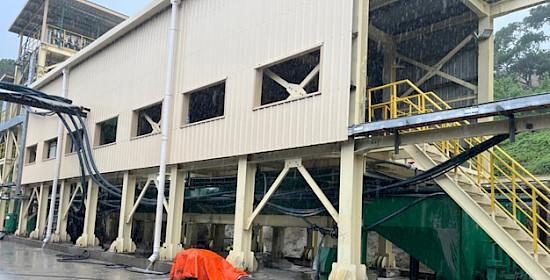
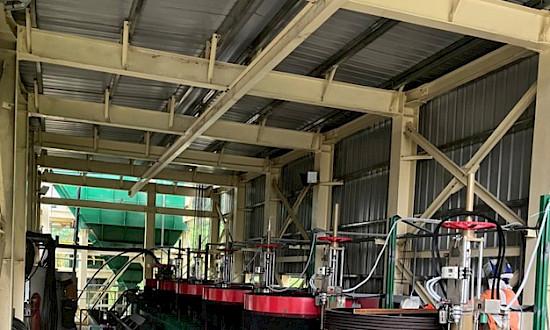
Lion One said it has successfully commissioned a new flotation plant — a critical upgrade designed to enhance gold recovery from sulphide ores at Tuvatu. The commissioning marks a milestone in the mine’s development, although the company cautioned that the plant is still in its early operational phase.
Chief executive Campbell Olsen described the commissioning as an important step forward, while acknowledging that performance improvements will take time as operators build experience with the flotation circuit.
The company said the focus has now shifted to ramping up throughput and improving recovery rates, with early-stage variability expected as part of the learning curve. Key priorities include refining reagent chemistry, strengthening operator capability and progressively increasing production toward design capacity.
Lion One emphasised that the ramp-up will be gradual rather than linear, reflecting a strategy centred on sustainable operational performance rather than short-term output gains.
The flotation plant introduces a new processing dimension at Tuvatu, enabling the treatment of ore types that were previously more challenging under conventional gravity-based systems. This is expected to support improved overall recovery rates as the operation matures.
Evaporator system addresses water management constraints
In parallel with processing upgrades, the company has approved the installation of an evaporator system to manage excess process water at the mine’s tailings storage facility (TSF).
The system is designed to address a longstanding operational constraint: the accumulation of treated water that cannot be discharged due to regulatory and environmental limits. While the existing treatment plant can reduce copper levels, other parameters — including total dissolved solids — remain above thresholds required for river discharge.
The evaporator will provide a controlled mechanism to remove excess water through enhanced evaporation, replacing reliance on natural evaporation and temporary storage solutions.
Lion One said the approach eliminates the need to discharge process water into the Sabeto River, reducing environmental risk and regulatory uncertainty. The system is expected to improve operational resilience, particularly during periods of heavy rainfall when water volumes increase.
Beyond immediate operational benefits, the company positioned the evaporator as a long-term infrastructure investment that strengthens its environmental, social and governance (ESG) profile and supports its social licence to operate.
Clarification on mining methods
Lion One also moved to clarify its mining strategy following market commentary, stating that it has not abandoned shrinkage stoping — a method previously associated with the Tuvatu deposit.
Instead, the company said it is adopting a flexible, multi-method approach, selecting mining techniques based on the geological characteristics of specific zones within the orebody.
This approach is intended to optimise ore extraction while maintaining operational efficiency and safety, reflecting the complex nature of the high-grade alkaline gold deposit.
The clarification aims to address investor concerns and reinforce confidence in the company’s technical strategy as it continues to develop the underground mine.

Operational context and outlook
The Tuvatu project represents one of the few alkaline gold deposits under active development globally, with Lion One positioning it as a long-life, high-grade asset. The operation includes an underground mine, processing plant, tailings storage facility and associated infrastructure.
Since commencing operations in late 2023, the project has faced a combination of technical, operational and organisational challenges typical of early-stage mining developments. The recent updates suggest a coordinated effort to address these constraints through targeted capital investment and process optimisation.
The commissioning of the flotation plant is expected to play a central role in improving gold recoveries, while the evaporator system resolves a critical bottleneck in water management — a key issue for many tropical mining operations.
At the same time, the company’s clarification on mining methods highlights an adaptive approach to ore extraction, which may be necessary to fully unlock the deposit’s potential.
Looking ahead, Lion One indicated that the ramp-up phase will extend over several months, with incremental improvements anticipated as systems are optimised and operational expertise deepens.
The company also signalled a commitment to transparent reporting during this period, noting that early production results should be interpreted in the context of a developing operation rather than a steady-state mine.
Regional implications
While located in Fiji, the developments at Tuvatu are being closely watched across the Pacific mining sector, where governments and investors are increasingly focused on balancing resource development with environmental safeguards and community expectations.
The adoption of closed-loop water management systems, in particular, reflects a broader industry trend toward minimising environmental impact and reducing reliance on discharge permits.
Similarly, the integration of advanced processing technologies such as flotation aligns with efforts to maximise resource efficiency and improve project economics in a competitive global gold market.
For Lion One, the coming months will be critical in demonstrating that these investments translate into stable production and improved financial performance.
If successful, the Tuvatu mine could emerge as a benchmark for modern gold mining operations in the Pacific — combining technical innovation, environmental management and adaptive mining practices within a single integrated project.


