

Papua New Guinea’s agricultural production and productivity have been in steady decline for more than two decades, and continued emphasis on policies and legislation will not reverse the trend unless there is a fundamental change in how farming is carried out on the ground, according to Farmers and Settlers Association President Wilson Thompson in an interview with PNG Business News.
Agriculture accounts for roughly one‑third of Papua New Guinea’s GDP and supports around 80 percent of the population through smallholder and cash‑crop farming. Coffee and cocoa remain the country’s main export commodities after palm oil, but export volumes and production performance have weakened over the long term.
Exports of coffee and cocoa, for example, fell significantly in the period from 2009 to 2018, with average annual declines of export volumes of around 6 percent per year for these crops. Agriculture’s share of total export earnings has also trended downward in recent decades as competitive pressures and production challenges have grown. (World Bank)
Thompson called for a renewed focus on rehabilitation of existing plantations and block‑holder areas, describing it as a faster and more practical way to increase export volumes than continued emphasis on policy frameworks alone.
He pointed specifically to rubber as a clear opportunity for production recovery.
“Rehabilitation of 2,000 hectares of rubber in Abau, Central, and 3,000 hectares of coffee at Arona Valley, Eastern Highlands Province, can give us additional volumes,” he said.
PNG’s cocoa sector has faced long‑running production challenges, including pests such as cocoa pod borer that emerged in the late 2000s and cut yields significantly in key provinces. Cocoa export tonnages fell from over 52,000 tonnes in 2008 to around 33,000 tonnes by 2015, although production later recovered somewhat. Cocoa remains a vital crop for rural incomes, but low and stagnant yields continue to limit growth.
Similarly, coffee production — historically the backbone of rural cash incomes — has declined relative to its past strength. Long‑standing issues such as ageing trees, pests and insufficient replanting have kept productivity low, and the nation’s share of global coffee exports has diminished over the last 20 years.
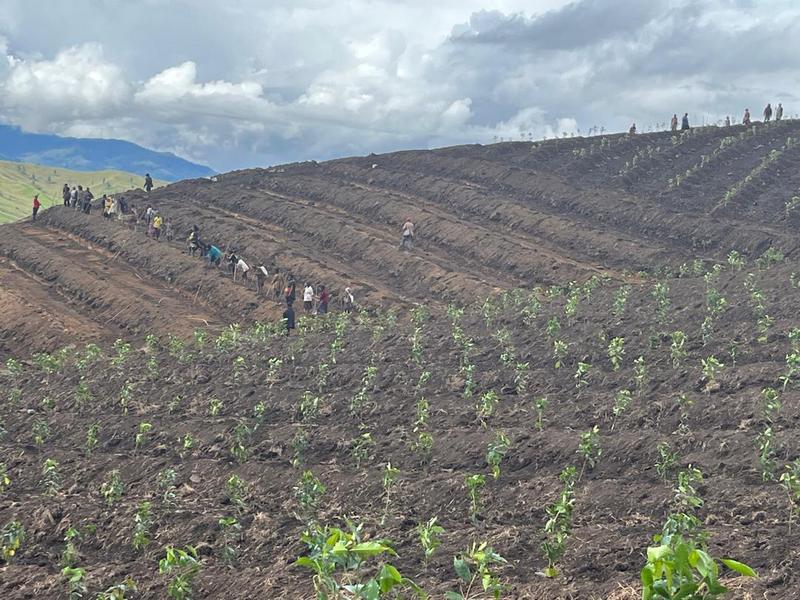
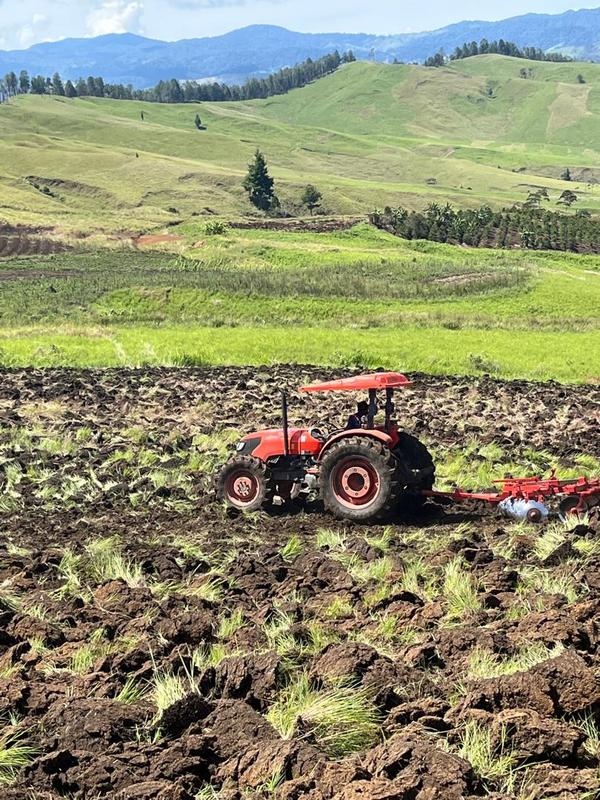
Thompson said key export crops including coffee, cocoa, coconut, rubber, spices and livestock were all recording declining outputs, warning that the sector was at a critical crossroads. He pointed out that agriculture in PNG performed better in earlier decades because of a strong focus on commercial farming systems that directly supported smallholders.
“Agriculture was progressing from the colonial era because they pushed commercial farming or plantations and blocks that supported the smallholders,” he said, adding that the model created scale, consistency and long‑term production discipline.
Thompson said the country could reverse current trends by prioritising large‑scale nursery development, coordinated planting programs and stronger extension services to support farmers during the crucial pre‑harvest years.
“We can change by engaging in massive nursery and planting efforts, maybe using machinery, and getting extension services down there to encourage growers to keep working for three to four years before harvest,” he said.
He further commented that isolated commercial investments, while positive, would not deliver national‑level impact unless matched by widespread smallholder participation.
“If Colbran Coffee Plantations is planting 200 hectares in one year, we cannot expect the figures to change if 2,000 farmers are not tending their 500 hectares in the same year,” Thompson said, highlighting the scale required to lift national production statistics.
According to Thompson, the downward trend in agricultural output is not new, noting that export volumes have been falling since the turn of the century.
“Whether it’s coffee or cocoa or rubber, I’ve said it — since 2000 the production and productivity and exports are declining,” he said.
He also questioned the effectiveness of long‑running donor‑funded programs, saying years of support had failed to deliver meaningful improvements.
“Even after 15 years of World Bank and other donor support to coffee and cocoa, the story has not changed, and we need to change our approach as we are not progressing,” Thompson said.
He concluded that continued discussions around policy frameworks and strategies, without action on the production side, would not address the sector’s core problem.
“Continuing to talk about policies and strategies, or producing more reports, will not solve the problem,” Thompson said. “We need to work on the production side, as whatever we produce is being sold.”
Thompson said restoring productivity through practical, coordinated action at the farm level was the only sustainable pathway to reviving PNG’s agriculture sector and strengthening its export performance.


